Everyday stories michi / dō
How to choose a meeting place that works for everyone
A useful meeting point needs more than a map pin. Share the entrance, the waiting spot and a simple plan for finding each other.
Wear this characterStart with a scene
“Meet at the station” sounds precise until you discover three exits and two cafés with the same name. A good meeting plan includes the part after arrival. Choose a recognisable entrance or a named place to wait, then describe it in one short message. Include the address or map link, but do not ask the map pin to explain which side of a large building you mean.
A closer look
Describe the last few minutes of the journey
Before choosing, ask what would make arrival easier for the people coming. That might include a step-free route, somewhere to sit, a quieter waiting spot or a place reachable without a car. Check current venue information and ask the venue directly when an important detail is unclear. Do not assume that a route familiar to you is straightforward for everybody, or that the nearest location on a map is the easiest to use.
Agree on a small fallback: where you will wait if a train is late, how long you expect to stay there and how to contact each other. Keep the message together instead of scattering corrections across several conversations. If the meeting point changes, state the new one clearly and ask for acknowledgement. A photograph of a public entrance can help when it shows a stable detail rather than a temporary crowd.
See it in words
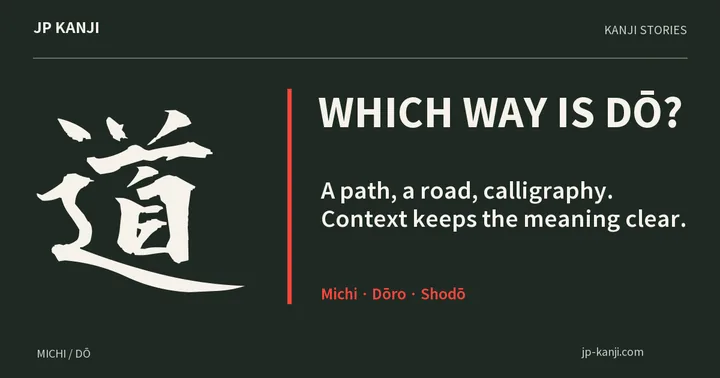
- 道
- michiA road or path
- 書道
- shodōCalligraphy
- 柔道
- jūdōJudo
A meaning to make your own
A thought to give
For the friend who always makes arrivals easier, a note could say: “You make it easy to find our way to one another.” A shared memory will keep the thought personal rather than turning them into the group’s permanent organiser.
Make a gift cardOne more question
Should I simply choose the geographical midpoint?
Use it as a starting suggestion, then compare actual routes, transfers, opening hours and individual needs. Equal distance does not necessarily mean equal effort. A clear agreement is more useful than a location that only looks fair on a map.
A character to carry with you 道
道 can mean a road or a path. Here it connects to the care involved in making a route understandable to someone else. The destination matters, but so does how people are able to get there.
Wear this character