Sayings & idioms michikusa o kū
The bookshop detour: what a small pause adds to a journey
A book catches your eye on the way home. That small pause leads to 道草を食う, a vivid expression about the time we spend along the way.
Wear this characterStart with a scene
On the way home, you notice a box of old books. You open one, and several minutes disappear. A welcome discovery or an inconvenient delay? In this scene we have imagined, the answer changes if a friend is waiting at the station. The same small stop can tell two different stories.
A closer look
A path is not always a straight line
道草を食う, michikusa o kū, means spending time on something else on the way to a destination. [2] Its traditional image is a horse slowing down to eat grass beside the road. [1] In a human conversation, look for the interrupted journey or task rather than a literal meal of plants.
When you tell someone about the stop, the details do the work: perhaps you found a book you had wanted for years, or perhaps you simply lost track of time. Explaining what caught your attention helps the listener understand why you paused. Translating an idiom works in a similar way: the speaker’s situation matters as much as the picture the words create.
See it in words
- 道草を食う
- michikusa o kūTo linger or get sidetracked on the way
- 道草
- michikusaRoadside grass; also a detour or delay
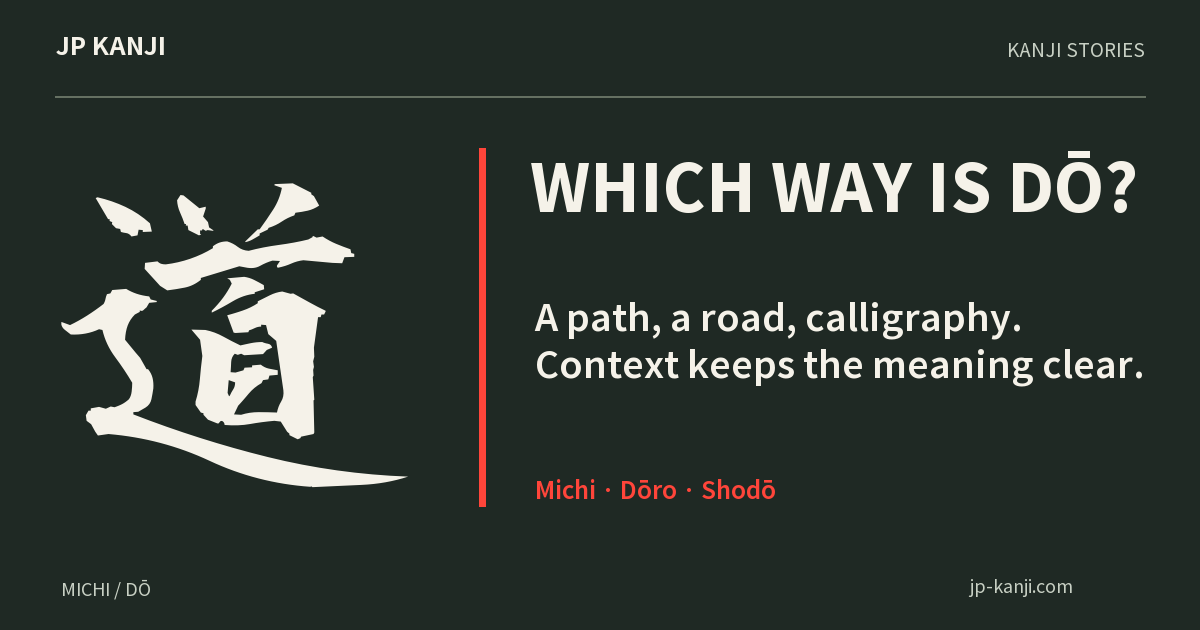
- 道
- michiA road or path
A meaning to make your own
A thought to give
“For the little places we would have missed by hurrying.” Add the name of a bookshop, bench or street you found together. A precise shared memory can make a simple road character feel personal.
Make a gift cardOne more question
Is 道草を食う always a compliment?
No. It can describe delay or wasted time. [2] When you mean a welcome discovery, explain what made the detour worthwhile instead of expecting the idiom alone to express your appreciation.
A character to carry with you 道
For us, 道 can leave room for both a chosen direction and an interesting detour. That personal association is broader than the idiom’s dictionary meaning. The garment prints the character for road, not an instruction to abandon your plans.
Wear this characterSources & editorial approach
Sources may be in Japanese or English.
Readings and cultural references are checked against the sources below. Styling and gift ideas are our suggestions. Written with AI assistance and source checks.