Style & making michi / dō
A map of the places that matter to two people
A bench, a corner and a meeting place can make a small map more personal than a perfectly measured route.
Wear this characterStart with a scene
Draw the route between three places you share with someone. Your sketch may give a favourite café far more space than it occupies on a real map. That is useful if the purpose is to tell a story, as long as you do not confuse it with a navigation guide.
A closer look
Map the memory, label the difference
Choose one memory per place. “Where we waited out the rain” is more distinctive than simply naming the café. Use a short caption and leave some space around it. The drawing can be simple: a few lines, a doorway and a bench may be enough to make the connection recognisable.
Ask the other person what they would add. They might remember a different turning point or a place you passed without noticing. Keep both accounts if they differ. For a map you intend to share publicly, leave out private addresses and other details that do not need to travel with the story.
See it in words
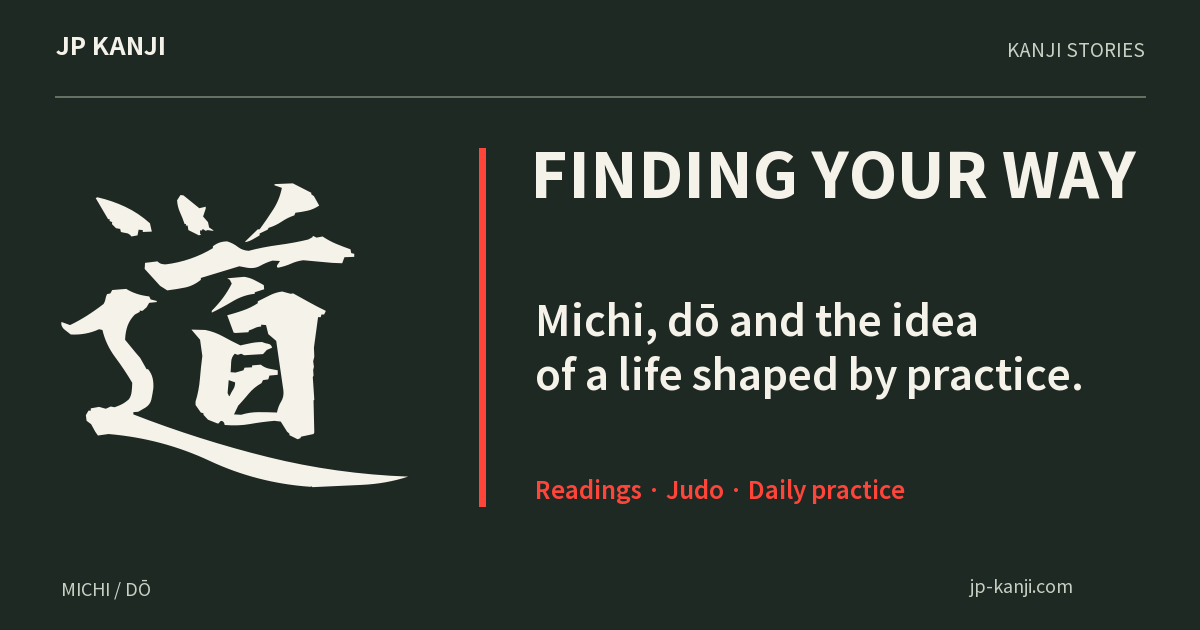
- 道
- michiA road or path
- 書道
- shodōCalligraphy
- 柔道
- jūdōJudo
A meaning to make your own
A thought to give
“Three places, more stories than we could fit on the page.” Give the map room for the recipient to add another place.
Make a gift cardOne more question
Does the map need to be geographically accurate?
It should be clear about its purpose. A memory sketch can distort scale; an actual route guide needs accurate directions. Label the sketch so the recipient knows which it is.
A character to carry with you 道
道 means a road or way. Paired with a personal map, the single character can hold a route made meaningful by the people who walked it.
Wear this character