EN · Language
English日本語DeutschFrançaisItalianoEspañol

Everyday stories michi / dō

Choosing between two creative projects without choosing your whole future

Two appealing ideas can become easier to compare when the decision is about the next experiment, not a permanent identity.

Wear this character

Start with a scene

You have time for one small project and two ideas you like. A photo series would let you explore a familiar street; a short comic would let you practise dialogue. The question becomes heavy if you turn it into deciding which kind of artist you must be forever.

A closer look

Choose the next stretch of road

Compare the projects using the same three questions: what would you like to learn, what materials are already available, and what could you complete in a manageable version? Keep the answers concrete. “Make three pages” tells you more than “become more creative”.

Choose a first experiment and give the other idea a place to wait. Write the next possible action beside it so you do not have to reconstruct the idea later. After the experiment, look at what you learned before deciding whether to continue. A first choice can provide information for a second one.

See it in words

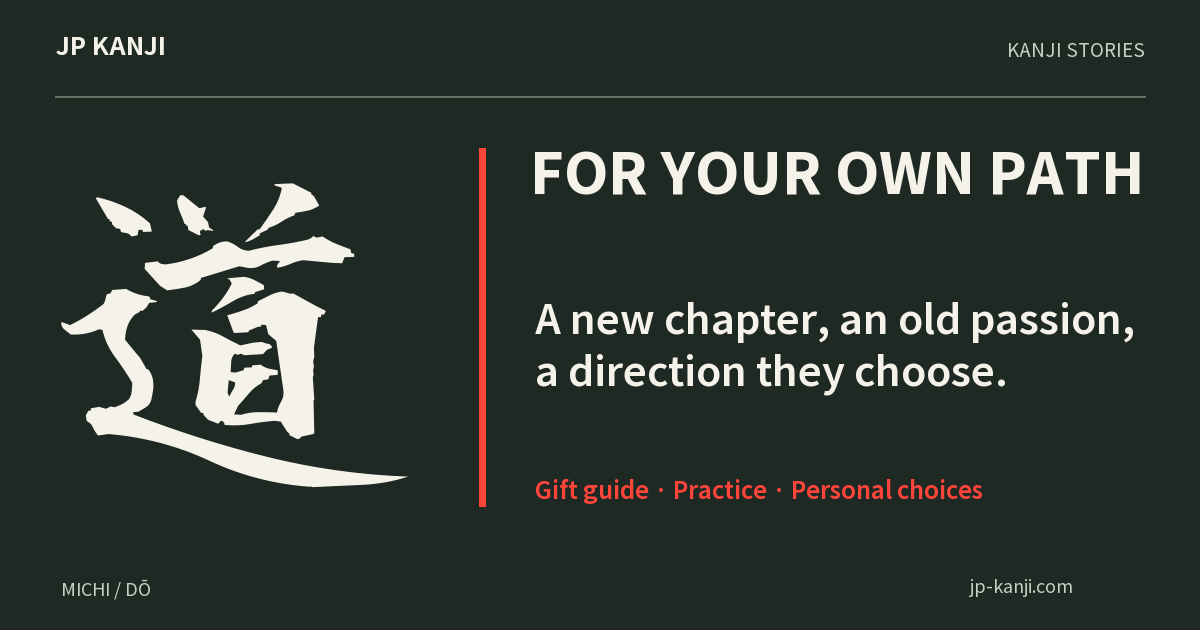
道
michiA road or path
書道
shodōCalligraphy
柔道
jūdōJudo
Examples of usage, not a diagram of the character’s historical development.

A meaning to make your own

A thought to give

“For the path you chose to try.” Mention the project itself, and leave room for the recipient to discover what comes next.

Make a gift card

One more question

Does changing projects mean the first choice was wrong?

Not necessarily. A trial can reveal something you could not know beforehand. Keep the observation, then decide whether the next step should continue or change direction.

A character to carry with you 道

道 can mean a road or path. It can mark the stretch you have chosen to explore, with no claim that every later turn is already decided.

Wear this character
Share this story

More about this character 道

All stories →

Meaning & background

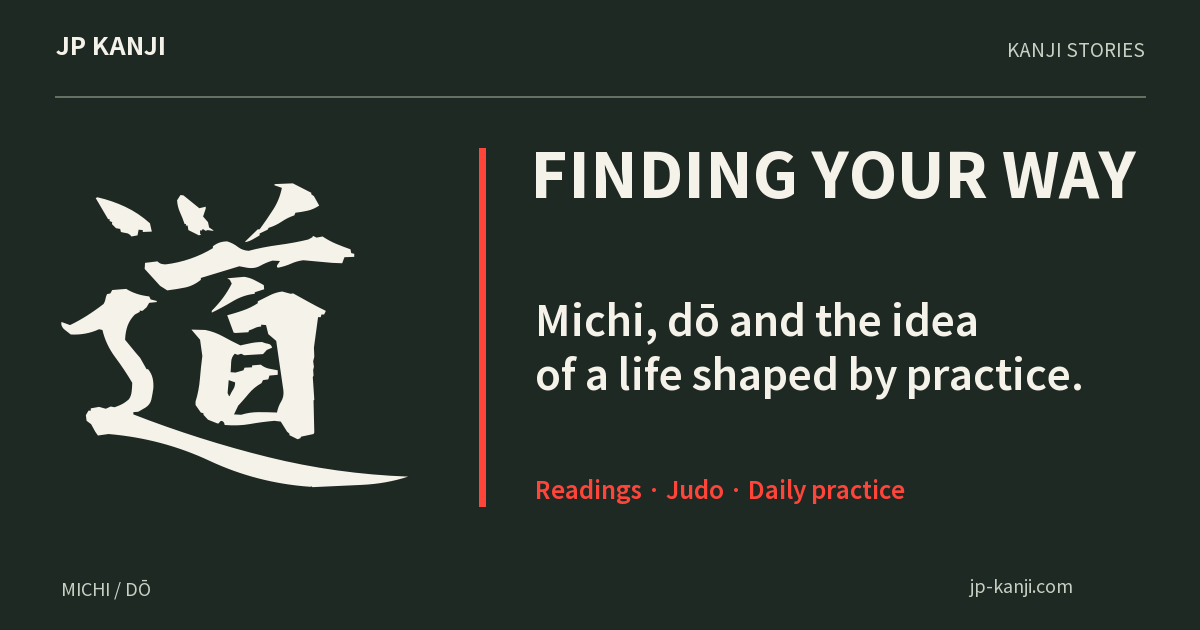
道: michi, dō and the idea of finding your way

道 can be a road or a way of doing something. Explore its readings, its place in words such as jūdō, and a personal connection with practice.

Read the story

Sayings & idioms

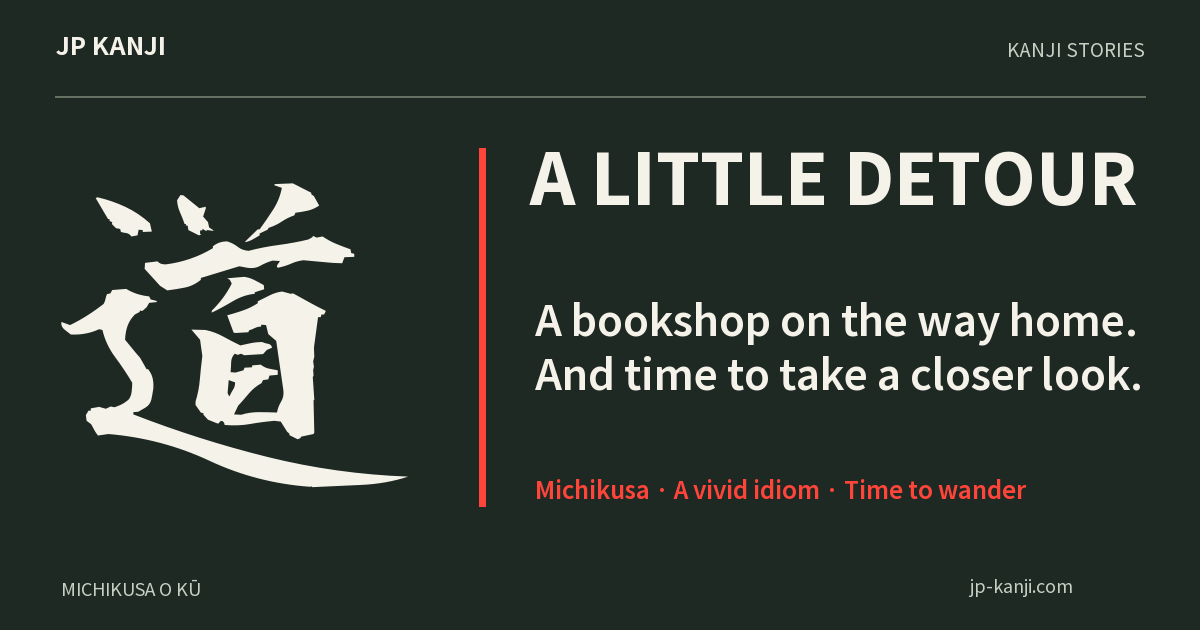
The bookshop detour: what a small pause adds to a journey

A book catches your eye on the way home. That small pause leads to 道草を食う, a vivid expression about the time we spend along the way.

Read the story

Everyday stories

Seeing your familiar walk as if someone asked you to describe it

Three stops and a few concrete observations can reveal details hidden by routine, without turning an ordinary walk into a performance.

Read the story

Culture & objects

Before the first kanji: noticing what a brush can do

A few marks can help you observe width, ink and direction before trying to imitate an entire character.

Read the story
4 more stories

Style & making

A map of the places that matter to two people

A bench, a corner and a meeting place can make a small map more personal than a perfectly measured route.

Read the story

Culture & objects

When a practice becomes a way: more than counting sessions

A recurring activity can influence how you approach people and tasks. Keep that personal observation distinct from a discipline’s formal teaching.

Read the story

Words & readings

Michi, dōro and shodō: reading 道 in ordinary words

A path, a road and calligraphy show the range of 道 without turning every example into a philosophy.

Read the story

Giving & choosing

A 道 gift for a new chapter: honour the path they choose

For a career change, a course or a long-running practice, celebrate direction without prescribing a destination.

Read the story

Another character, another perspective

All stories →

Style & making

A still life made from three things already on your table

A cup, a folded cloth and a piece of fruit can become an exercise in attention. Change the arrangement before searching for better objects.

Read the story

Everyday stories

The small souvenir that remembers a whole afternoon

A ticket, postcard or sketch can carry a precise moment. Keep the memory attached before the object becomes anonymous.

Read the story

Culture & objects

Why a Japanese dragon can bring rain, not fire

A dragon beside water opens a different story from the familiar fire-breathing monster. Start with the word ryūjin, then look again.

Read the story