Culture & objects michi / dō
When a practice becomes a way: more than counting sessions
A recurring activity can influence how you approach people and tasks. Keep that personal observation distinct from a discipline’s formal teaching.
Wear this characterStart with a scene
After several sessions of a craft, you begin preparing the table more carefully before other tasks too. The practice has given you a habit you notice outside it. That is worth describing precisely, without claiming that one pastime has explained your whole life.
A closer look
Notice what travels beyond the session
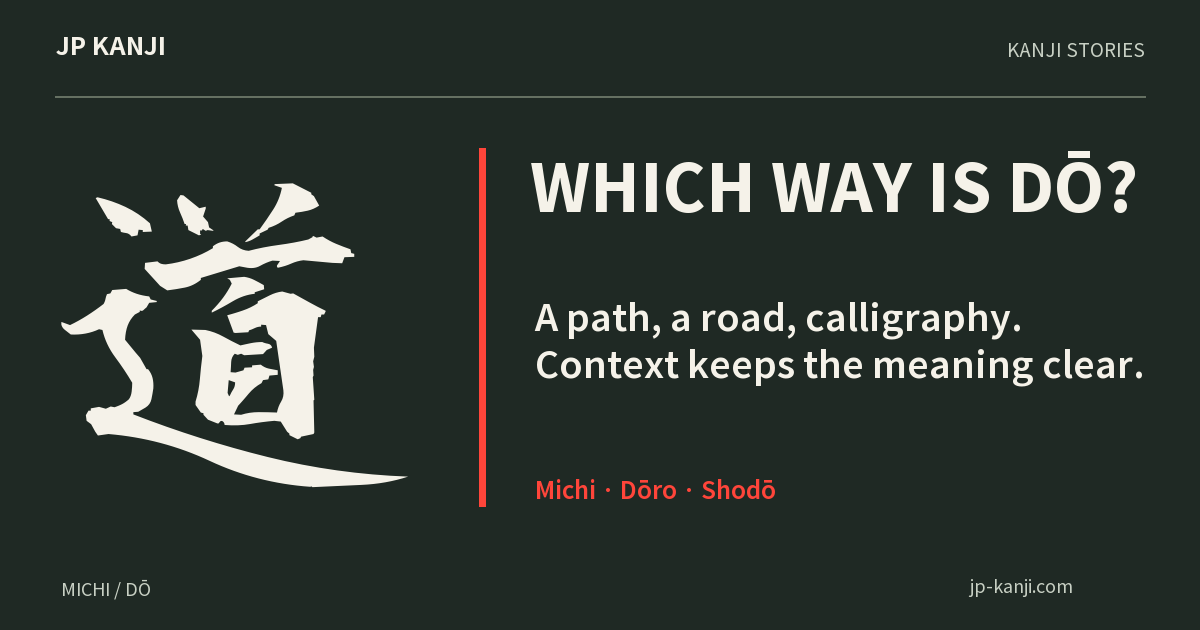
道 occurs in names of disciplines, including 柔道 and 書道. The Kodokan’s collection of Kano Jigoro’s teaching also presents educational and interpersonal questions alongside practice. A discipline can therefore have an articulated purpose beyond simply accumulating repetitions.
For your own activity, write down one habit that has travelled into daily life and one that remains specific to the session. Checking tools before beginning might transfer; a technical grip may not. This helps you describe the influence without making every action into an abstract philosophy.
See it in words
- 道
- michiA road or path
- 書道
- shodōCalligraphy
- 柔道
- jūdōJudo
A meaning to make your own
A thought to give
“For the care you bring to practice, and the care you carry beyond it.” Mention one change you have genuinely noticed.
Make a gift cardOne more question
Does the character make an activity a traditional discipline?
No. Wearing or adding 道 does not establish a lineage or formal teaching. You can make a personal connection while being clear about what you have actually studied.
A character to carry with you 道
The single 道 can mark an ongoing practice you value. It does not claim a grade, affiliation or qualification; those belong to the actual discipline and its requirements.
Wear this character