Culture & objects nin / shinobu
Beyond the costume: asking what historical ninja actually did
Begin with duties and sources rather than a single dramatic image. Information gathering offers one documented part of a much wider subject.
Wear this characterStart with a scene
A familiar costume can make you feel that you already know a historical figure. With ninja, try setting the silhouette aside and asking a more specific question: what work did this person do, in which period, according to which record?
A closer look
Ask about the job before the silhouette
The Iga-ryu Ninja Tourism Promotion Council discusses duties including information gathering and guarding, with roles changing over time.[1] That is a more useful starting point than imagining one unchanging occupation defined only by combat scenes.
When reading an account, keep three columns: the source’s claim, the period or setting, and your remaining question. A dramatic illustration can help you remember the topic, but it cannot replace the evidence for a particular duty. Look for the named records or researchers behind the explanation.
See it in words
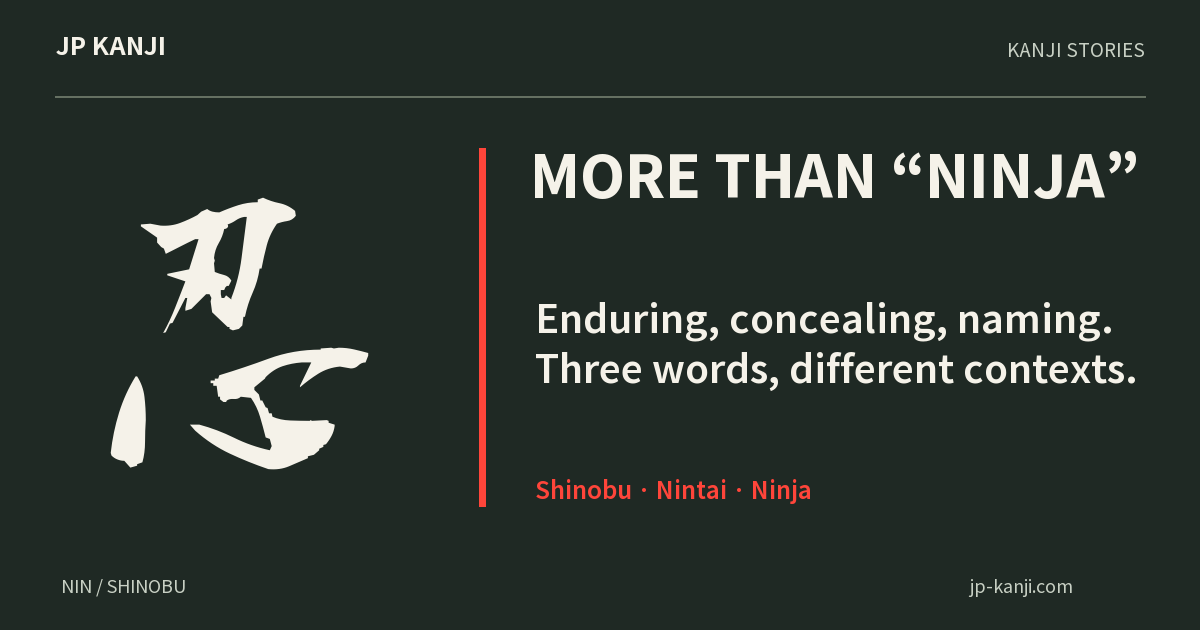
- 忍
- nin / shinobuThe character behind these words
- 忍耐
- nintaiEndurance or patience
- 忍者
- ninjaNinja
A meaning to make your own
A thought to give
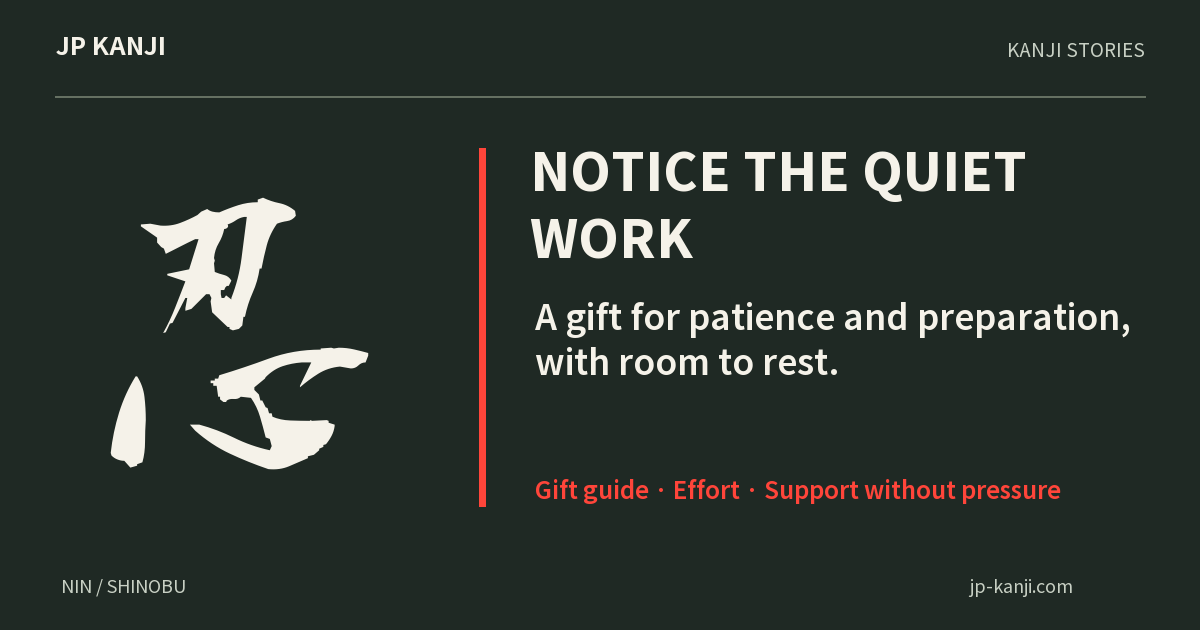
For a history-minded friend: “For the questions behind the familiar image.” Add a source or topic you would enjoy discussing together.
Make a gift cardOne more question
Does this mean fictional ninja stories are worthless?
No. Fiction can be enjoyable on its own terms. The useful distinction is between appreciating a story and using it as evidence for a historical claim.
A character to carry with you 忍
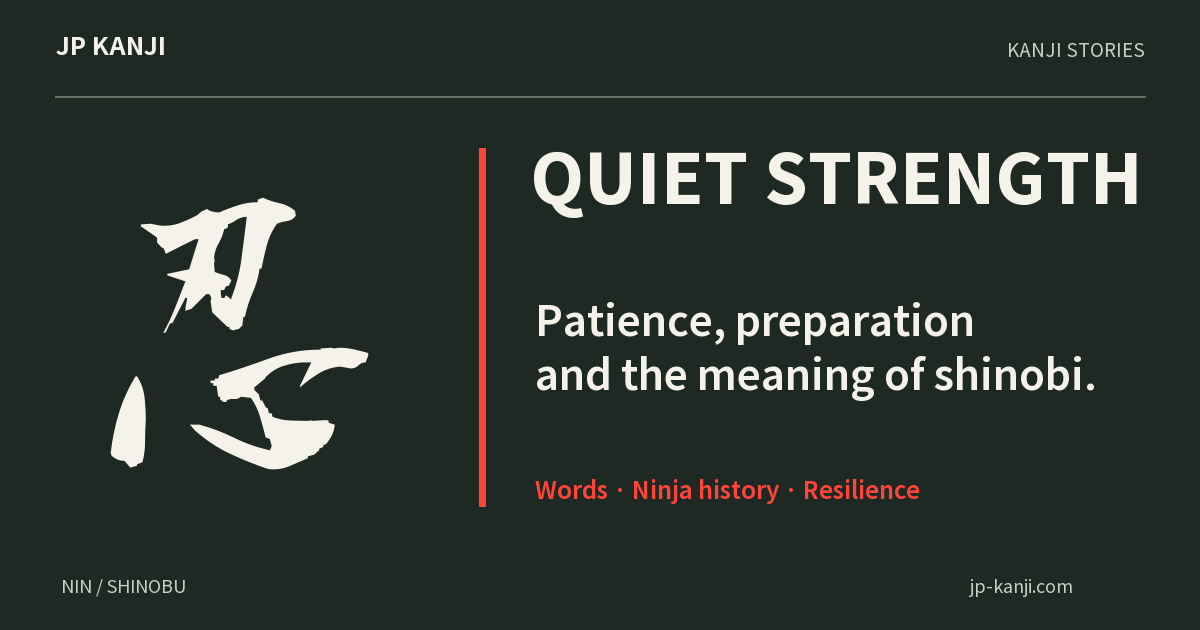
忍 appears in 忍者. Wearing the single character can express interest in the subject while leaving room for a fuller understanding than a costume alone provides.
Wear this character