Giving & choosing nin / shinobu
Choose a puzzle gift by matching the kind of challenge, not just its difficulty
Ask about format, space and preferred pace before buying the hardest option.
Wear this characterThe short answer
A puzzle gift can involve pictures, words, logic or physical pieces, and those experiences are not interchangeable. Ask what the recipient enjoys doing: noticing tiny visual differences, testing a deduction or returning to a project over several evenings.
A closer look
Find out what solving feels enjoyable to them
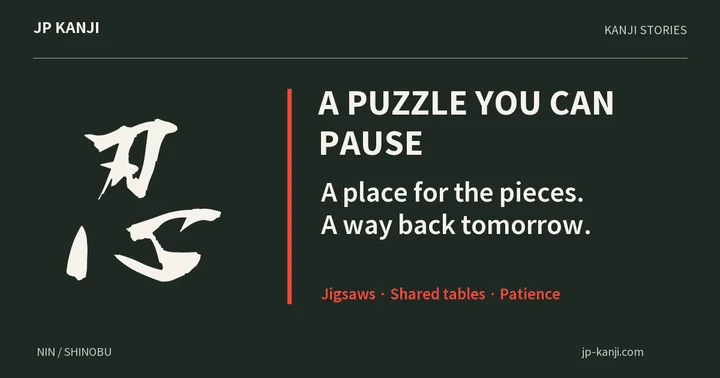
Check the format and practical requirements. A large jigsaw needs a surface and a way to pause, while a puzzle book may need legible print and an accessible answer section. A difficult puzzle is not automatically a more thoughtful gift.
Look at examples before buying, without spoiling the recipient’s eventual solution. Consider language, theme and any equipment or app requirement. If choosing a product with pieces, check the seller’s description and what support is available if something is missing.
See it in words
- 忍
- nin / shinobuThe character behind these words
- 忍耐
- nintaiEndurance or patience
- 忍者
- ninjaNinja
A meaning to make your own
A thought to give
If adding a garment, confirm the recipient likes the design and check the actual fit and colour options. The puzzle’s difficulty gives you no information about their clothing preferences.
Make a gift cardOne more question
What if I do not know their skill level?
Choose a format they have mentioned enjoying, offer a choice or keep exchange information. An adjustable or clearly described experience is safer than guessing that harder always means better.
A character to carry with you 忍
忍 may connect with patience during a satisfying challenge, but frustration is not proof that a puzzle is worthwhile. The character can be a related personal motif for someone who enjoys steady problem-solving, without defining their ability.
Wear this character