EN · Language
English日本語DeutschFrançaisItalianoEspañol

Style & making nin / shinobu

Waiting for paint or glue to dry: make the pause part of your craft project

A painted model or glued paper shape can need time between actions. Make the pause intentional rather than filling it with more adjustments.

Wear this character

Start with a scene

A freshly painted model is almost ready. You keep touching the surface to check, and each check risks changing the part you wanted to leave alone. The useful action may now be to place it somewhere suitable and stop interfering for a while.

A closer look

Know what the next touch is for

Follow the material’s own instructions for drying or setting; there is no single waiting time for every product. Then decide what you can do without disturbing that stage. Clean a separate tool, prepare a note or simply leave the project. Waiting does not need to be disguised as constant activity.

Write down what you intend to check when the material is ready. Is it coverage, alignment or whether the next piece fits? A clear question makes returning easier and can reduce the urge to make random changes. If the result needs another attempt, record the conditions rather than treating patience as a guarantee of perfection.

Leave a drying note instead of touching again

Park an ordinary craft project with enough information to resume it sensibly.

Identify

Record the material and the instruction you are following.

Place

Leave the work where it can remain undisturbed under those instructions.

Prepare

Write the next inspection or finishing step while you wait.

A project parking card

Project: painted paper label. Material: the paint actually used. Applied: your real start time. Next check: according to the maker’s drying instructions and conditions. After drying: inspect coverage before adding another coat. No universal drying time is implied by this card.

Drying, setting and being ready for handling can mean different things for different materials. Waiting longer does not repair every application problem.

Yūshū no bi: the Japanese expression for bringing things to a fine conclusion

See it in words

忍
nin / shinobuThe character behind these words
忍耐
nintaiEndurance or patience
忍者
ninjaNinja
Examples of usage, not a diagram of the character’s historical development.

A meaning to make your own

A thought to give

“For knowing when to let the work settle.” Link the note to a project you watched them make, not to an expectation that they should tolerate everything.

Make a gift card

One more question

Should I keep busy through every pause?

Only if another useful task fits. Resting or leaving the project alone can be appropriate; filling the time is not the measure of whether you waited well.

A character to carry with you 忍

忍 can recall the patience behind making things carefully. Compare the print as an everyday reminder, with the garment chosen for its actual fit and appearance.

Explore the 忍 print for everyday wear
忍

忍

Share this story

More about this character 忍

All stories →

Everyday stories

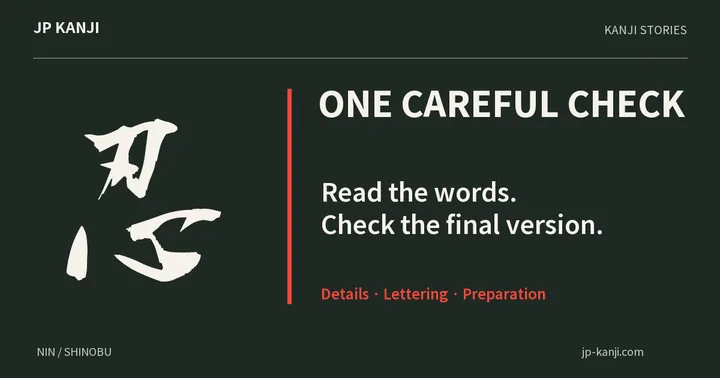
A final check before printing words that matter

Review wording, letterforms and placement separately before approving a small print project. Keep the approved version easy to identify.

Read the story

Everyday stories

Untangle a craft cord one crossing at a time

Spread an ordinary loose cord on a clear surface and identify the next movable crossing. Patience becomes a sequence of small, visible decisions.

Read the story

Everyday stories

Sort a mixed craft box without making it an all-day project

Choose one tray, use observable categories and keep an unknown section. A bounded sorting task can make the next making session easier.

Read the story

Style & making

Sort a pile of clothes to repair into a manageable mending queue

Separate simple tasks, jobs needing advice and items you no longer want before buying supplies.

Read the story
29 more stories

Style & making

Keep a missing-parts log for a kit without losing the evidence

Record the exact reference before substituting or contacting the supplier.

Read the story

Style & making

Assemble a paper model without losing track of its tabs

Sort the parts and test each join before making it permanent.

Read the story

Meaning & background

忍: endurance, ninja and the appeal of quiet strength

忍 appears in words about endurance and ninja. Learn what it says, what a familiar visual mnemonic leaves out, and how to choose it thoughtfully.

Read the story

Giving & choosing

Proofread a personalised gift order before approving the preview

Check names, layout and the exact version the maker will use.

Read the story

Everyday stories

Learn a board game from its rulebook before teaching it to friends

Build a small practice round and keep unanswered rules visible.

Read the story

Style & making

Make a sewing practice sample before working on the real garment

Test the same layers and keep notes that explain the result.

Read the story

Everyday stories

Set up a jigsaw session you can put away before the table is needed

Plan the working area, loose pieces and stopping point before opening the box.

Read the story

Everyday stories

Choose a quiet evening hobby for a shared apartment

Consider setup noise, light, storage and the other people using the space before choosing the activity.

Read the story

Giving & choosing

Gifts for a chess player: ask about how they actually play

Compare practical equipment, books and personal motifs without guessing their level or preferred format.

Read the story

Everyday stories

Buying a used board game: check the edition and components first

Use the correct contents list and photographs to understand what is included before agreeing to buy.

Read the story

Giving & choosing

Choose a model kit as a gift by checking tools, space and interest

Match the project to the person before being impressed by the finished model on the box.

Read the story

Style & making

Leave a crochet project with enough notes to restart it confidently

Record the exact stopping point, tools and next action before putting the work away.

Read the story

Everyday stories

Agree on phone use at a board-game table without policing everyone

Set a practical expectation that leaves room for rules, access needs and important messages.

Read the story

Style & making

Check secondhand clothing before buying it for the print

Inspect the garment’s condition and measurements as carefully as its graphic design.

Read the story

Giving & choosing

Choose a puzzle gift by matching the kind of challenge, not just its difficulty

Ask about format, space and preferred pace before buying the hardest option.

Read the story

Style & making

What to wear to an escape room: comfortable clothes, with room for the theme

Start with your venue’s guidance, then choose clothes you can move in comfortably. Use a quick outfit check and add a theme through one detail if you want to.

Read the story

Everyday stories

Recommend a story without giving away its best surprise

Describe the premise and your reading experience, then ask how much your friend wants to know. A good recommendation can leave room for discovery.

Read the story

Everyday stories

Before helping a maker, watch what they are trying to do

A useful offer begins with a question. Give someone room to try a small task, then agree whether they want a hint, a demonstration or another pair of hands.

Read the story

Everyday stories

Make room for everyone’s turn at the game table

Follow the play, prepare your own possibilities and ask before offering advice. The time between turns can belong to the game without belonging to your decisions.

Read the story

Style & making

Hide a small detail in a drawing for someone to discover later

Add a visual secret that rewards a second look without confusing the main picture. Choose its location, scale and intended audience.

Read the story

Everyday stories

Before you reply to a difficult message

Make room between reading a frustrating message and answering it. Identify the practical question, draft a response and choose when to send it.

Read the story

Everyday stories

Quiet strength can include saying no

A clear, ordinary boundary can protect the time and care you want to give. Patience does not require endless availability.

Read the story

Sayings & idioms

Kanninbukuro: the Japanese idiom for patience running out

A bag, a cord and a sudden break: 堪忍袋の緒が切れる gives the limits of patience a vivid form.

Read the story

Everyday stories

The work that makes a small performance look effortless

Labels, checked cues and a ready room rarely take the spotlight. Notice the preparation that lets other people begin.

Read the story

Culture & objects

Beyond the costume: asking what historical ninja actually did

Begin with duties and sources rather than a single dramatic image. Information gathering offers one documented part of a much wider subject.

Read the story

Everyday stories

A rehearsal for the moments between the main actions

The pause, entrance and handover can need attention too. Practise a small transition so everyone knows what happens next.

Read the story

Everyday stories

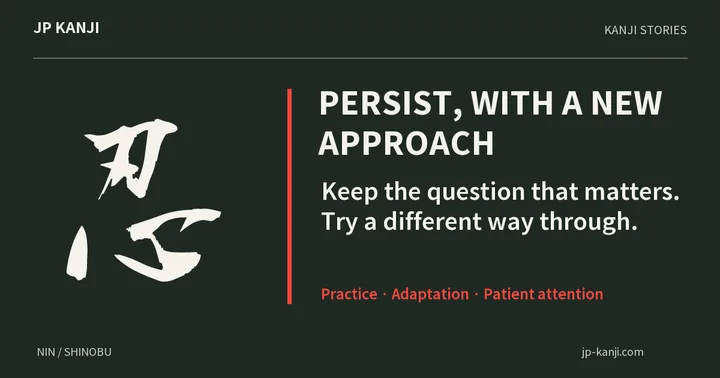
Staying with a project can include changing the method

Repeating the same attempt is not the only form of persistence. Keep the aim visible while testing a different approach.

Read the story

Words & readings

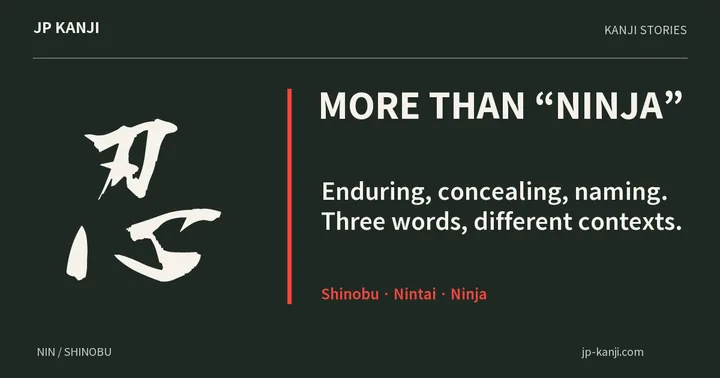
Shinobu, nintai and ninja: reading 忍 in Japanese words

Enduring, concealing and the word ninja share a character, but they do not say the same thing.

Read the story

Giving & choosing

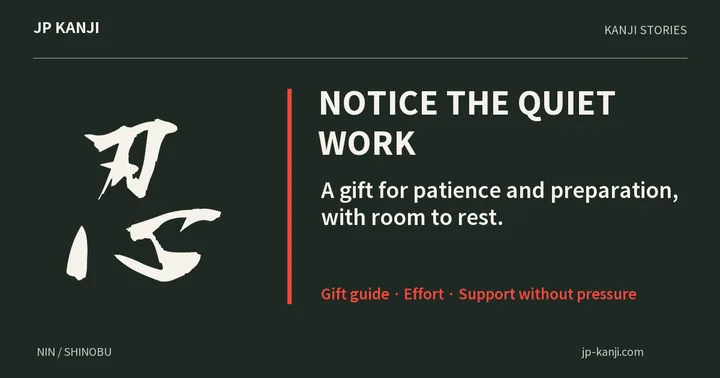
A gift to recognise quiet effort: choosing the patience kanji 忍

Recognise practice and preparation while leaving room for limits, rest and asking for help.

Read the story

Another character, another perspective

All stories →

Style & making

A visible clothing repair can become a detail you choose

Think about colour, placement and everyday use before making a repair stand out. A familiar garment can keep its usefulness and gain a personal detail.

Read the story

Style & making

The beautiful detail that makes something easier to use

A clear handle or a readable label can be pleasing because it helps. Look for a specific connection between appearance and use.

Read the story

Culture & objects

Before the first kanji: noticing what a brush can do

A few marks can help you observe width, ink and direction before trying to imitate an entire character.

Read the story