EN · Language
EnglishDeutschFrançaisItalianoEspañol

Everyday stories ryū / tatsu

What does your kanji shirt say? A simple answer that feels like you

Explain a Japanese character in three steps: its meaning, its reading and the reason you chose it. A conversation can stay short and accurate.

Wear this character

Start with a scene

Someone points at your shirt and asks what it says. You like the design, but a long account of Japanese symbolism would feel rehearsed. Start with the word: “It means dragon.” If they are interested, add a reading: “One Japanese reading is ryū.” Then give your own reason: “I liked how the brushwork fills the space.” Those three sentences answer different questions without making the conversation a lesson.

A closer look

Give the translation before the personal story

Keep the literal meaning separate from what the image brings to mind. A dragon might suggest confidence, movement or a favourite story to you. That does not make “confidence” a translation of 龍. Saying “It reminds me of…” gives your association a clear place. You can also simply say that you enjoy the shape. A clothing choice does not need a dramatic personal history to be worth explaining.

Before wearing an unfamiliar character, keep its reading and meaning somewhere easy to find. Look at the actual printed form, not a vaguely similar character from an image search. For this design the character is 龍; another Japanese form is 竜. If a question goes beyond what you know, an honest “I haven’t looked into that yet” is more useful than an invented story about warriors, luck or ancient rules.

See it in words

龍
ryū / tatsuThe fuller form used in our design
竜
ryū / tatsuAnother Japanese form for dragon
龍神
ryūjinA dragon deity
Examples of usage, not a diagram of the character’s historical development.

A meaning to make your own

A thought to give

When giving the design, include the translation and one personal sentence: “Dragon. I thought of the way you make an entrance with your work.” Let the recipient decide whether that is the story they want to tell.

Make a gift card

One more question

Do I need to speak Japanese to wear a kanji design?

Fluency is not a requirement for enjoying lettering. Knowing the actual character, checking its meaning and being straightforward about what you know are useful starting points. Nobody can promise that every person will respond to a design in the same way.

A character to carry with you 龍

龍 means dragon, with ryū and tatsu among its Japanese readings. Its presence on a garment can start a conversation, but the meaning you attach to wearing it remains yours. Knowing the word lets you enjoy the brushwork without asking it to stand for a whole culture.

Wear this character
龍

龍

Share this story

More about this character 龍

All stories →

Meaning & background

Dragon kanji: 龍, 竜 and the presence of a single character

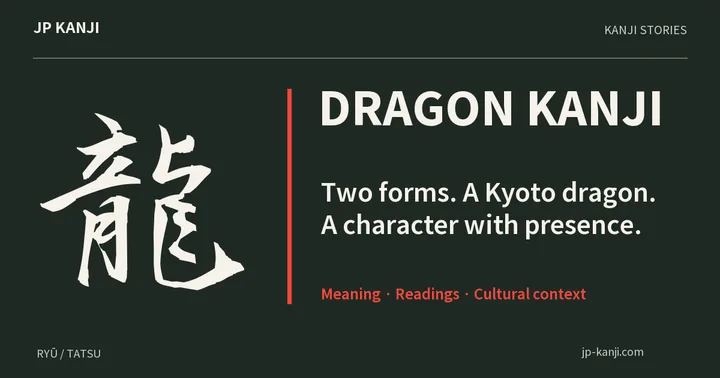
龍 means dragon. Discover its relationship with 竜, a dragon painted on a Kyoto temple ceiling, and a personal way to wear the character.

Read the story

Everyday stories

Quiet confidence: what to say when you enter a new room

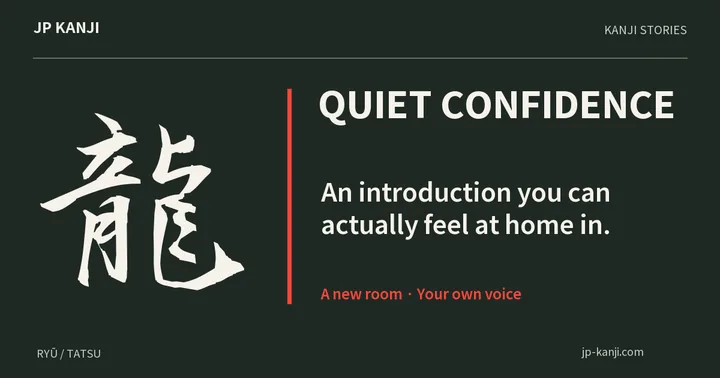
A practical way to introduce yourself without performing a louder version of your personality—and a dragon to carry the thought.

Read the story

Sayings & idioms

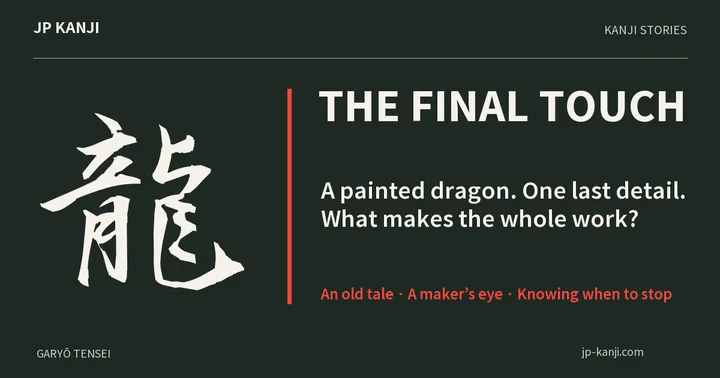
Garyō tensei: the dragon and the finishing touch

Why would a painted dragon need one final detail? Explore 画竜点睛 and the difference between finishing a piece and adding more to it.

Read the story

Culture & objects

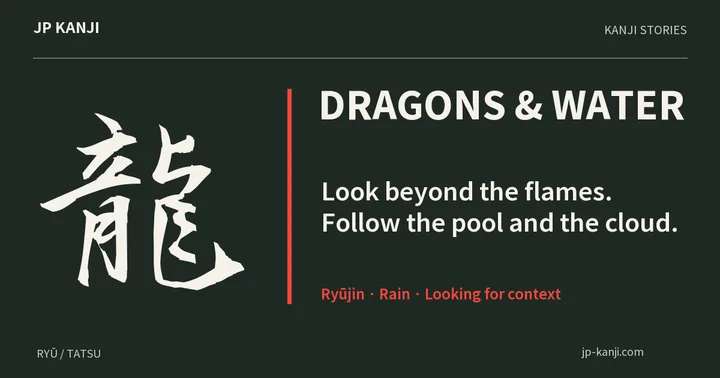
Why a Japanese dragon can bring rain, not fire

A dragon beside water opens a different story from the familiar fire-breathing monster. Start with the word ryūjin, then look again.

Read the story
6 more stories

Culture & objects

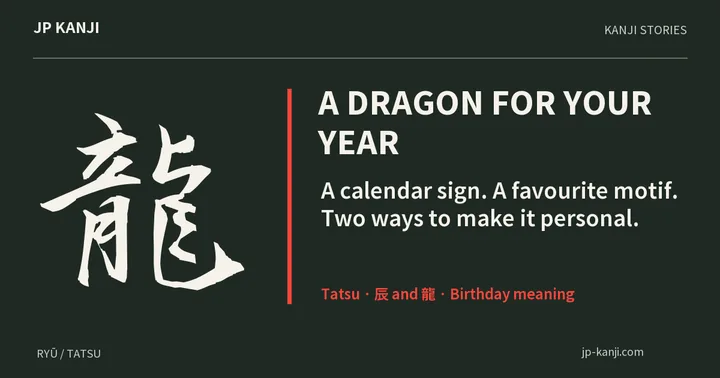
Tatsu, 辰 and 龍: choosing a dragon for a birth-year connection

A calendar and a dragon print may use different characters. Here is how to keep a personal birth-year gift clear.

Read the story

Style & making

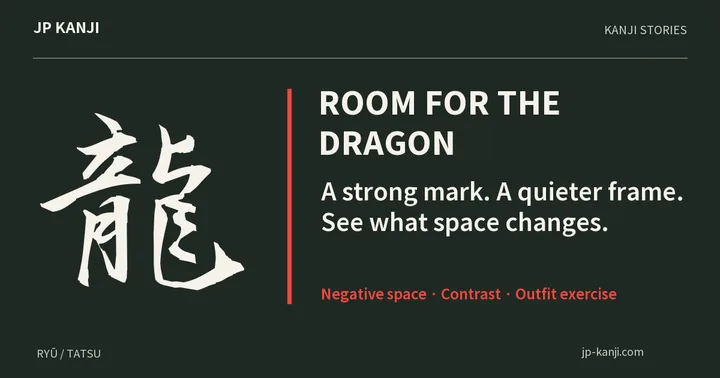
Why bold lettering needs room around it

Try a simple framing exercise with a dense character: the blank area can change how clearly you see the whole design.

Read the story

Everyday stories

Showing your work for the first time, without a grand announcement

One print on a table and one useful question can make a first showing feel concrete. The dragon comes at the end of the story.

Read the story

Style & making

How to build an outfit around one bold graphic

Start with clothes you already wear. Compare layers, texture and contrast before adding more statement pieces.

Read the story

Words & readings

Ryū or tatsu? How to read the Japanese dragon kanji

Learn the reading with the word: a dragon, a dinosaur and a tornado offer three useful starting points.

Read the story

Giving & choosing

A dragon kanji gift for someone who loves a bold design

Choose 龍 for the person’s taste, then turn a familiar fantasy motif into a personal message.

Read the story

Another character, another perspective

All stories →

Everyday stories

A creative hobby does not have to become a side hustle

Decide what you want from a creative pastime before turning it into orders, posts or a second job. Leave room for making things just because you enjoy it.

Read the story

Style & making

Packing for one night away: choose the extra layer you will use

Build a small overnight bag around the day you expect to have, then choose one extra layer by how you will wear and carry it.

Read the story

Everyday stories

Before you reply to a difficult message

Make room between reading a frustrating message and answering it. Identify the practical question, draft a response and choose when to send it.

Read the story