EN · Language
English日本語DeutschFrançaisItalianoEspañol

Culture & objects ryū / tatsu

Tatsu, 辰 and 龍: choosing a dragon for a birth-year connection

A calendar and a dragon print may use different characters. Here is how to keep a personal birth-year gift clear.

Wear this character

Start with a scene

You find a dragon design for someone who mentions being born in a dragon year. Then a calendar shows 辰 rather than 龍. The difference is worth explaining in the gift note: the calendar label and the creature’s name do different jobs.

A closer look

A calendar sign and a creature

辰, tatsu, is the fifth of the twelve zodiac branches; 龍 is a character for dragon. The Japan Foundation’s 2024 dragon exhibition also connects the motif with that zodiac year.[1] These are cultural references, not evidence about a person’s temperament.

Before giving a birthday present, ask whether the recipient likes the birth-year association at all. Some enjoy collecting the animal; others simply like its shape. Write their actual reason on the card rather than adding a list of supposedly inevitable traits. A year can be a shared reference without becoming a personality label.

See it in words

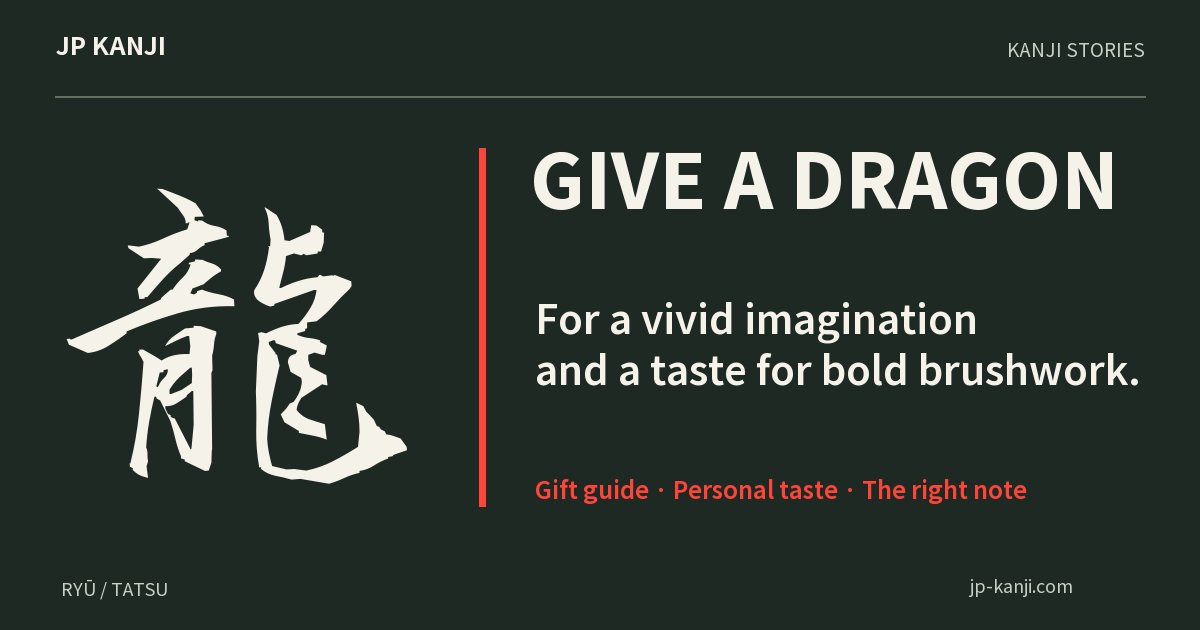
龍
ryū / tatsuThe fuller form used in our design
竜
ryū / tatsuAnother Japanese form for dragon
龍神
ryūjinA dragon deity
Examples of usage, not a diagram of the character’s historical development.

A meaning to make your own

A thought to give

“A dragon for your collection, and a reminder of this birthday together.” Add the year only after checking it with the recipient.

Make a gift card

One more question

Do I need to be born in a dragon year to wear 龍?

No. The character names a dragon. Enjoying its brushwork or stories is a complete reason to choose it, with no calendar qualification required.

A character to carry with you 龍

Our design prints 龍, not 辰 or a birth date. It suits an interest in the dragon itself; the calendar connection comes from the message you add.

Wear this character
Sources

  1. The Japan Foundation, Los Angeles · TATSU

Share this story

More about this character 龍

All stories →

Meaning & background

Dragon kanji: 龍, 竜 and the presence of a single character

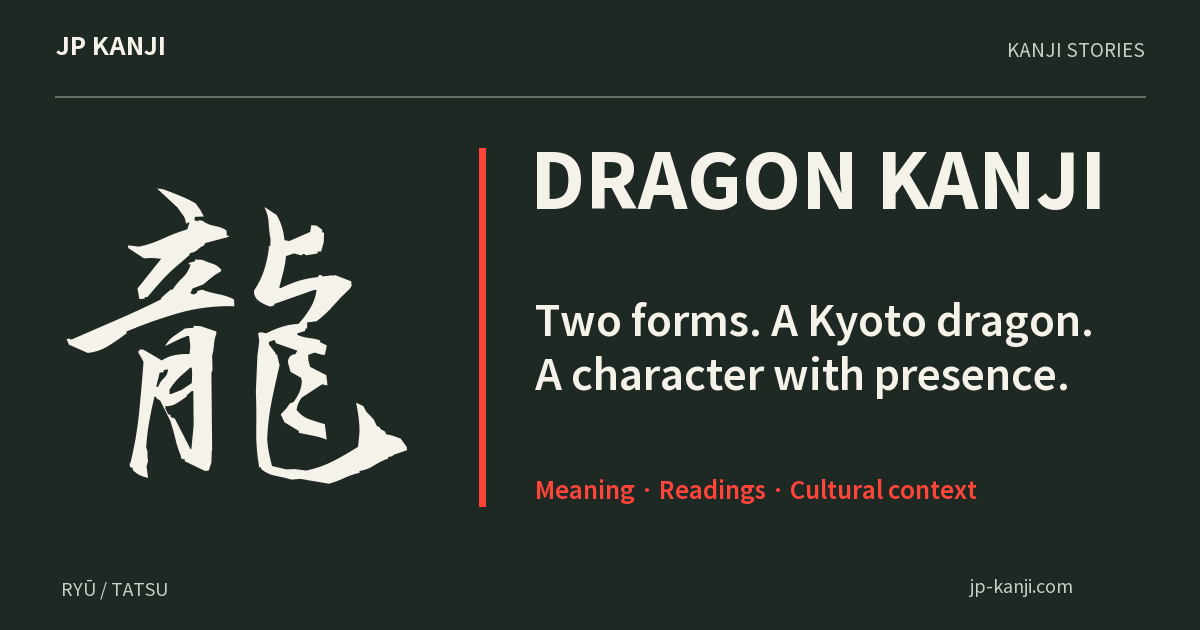
龍 means dragon. Discover its relationship with 竜, a dragon painted on a Kyoto temple ceiling, and a personal way to wear the character.

Read the story

Sayings & idioms

Garyō tensei: the dragon and the finishing touch

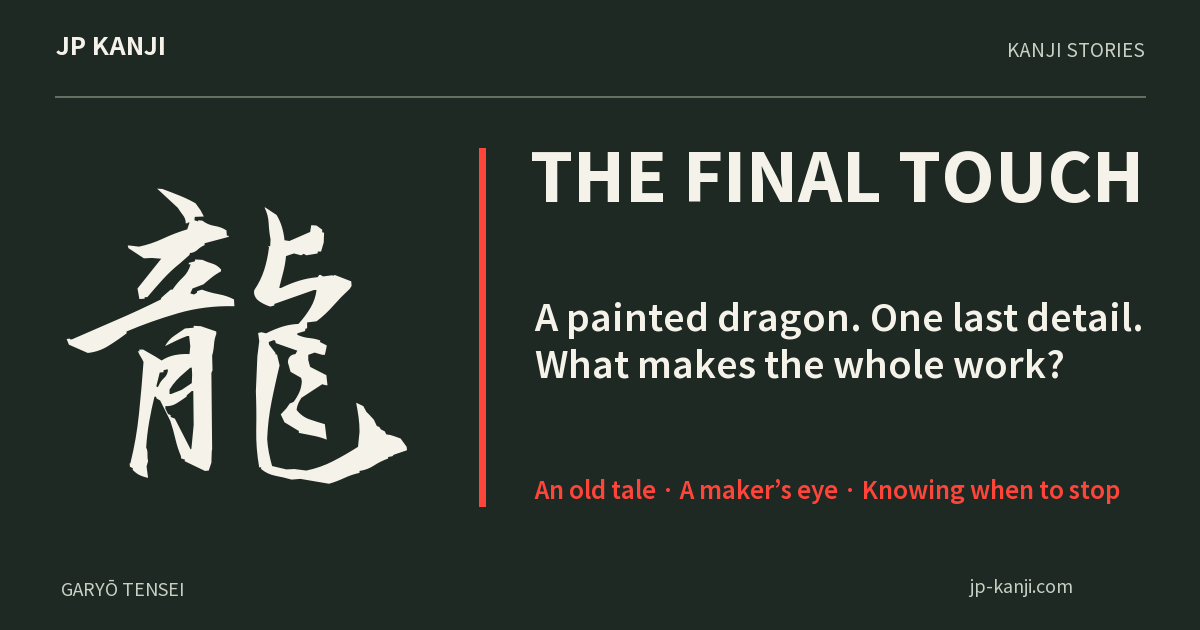
Why would a painted dragon need one final detail? Explore 画竜点睛 and the difference between finishing a piece and adding more to it.

Read the story

Culture & objects

Why a Japanese dragon can bring rain, not fire

A dragon beside water opens a different story from the familiar fire-breathing monster. Start with the word ryūjin, then look again.

Read the story

Style & making

Why bold lettering needs room around it

Try a simple framing exercise with a dense character: the blank area can change how clearly you see the whole design.

Read the story
4 more stories

Everyday stories

Showing your work for the first time, without a grand announcement

One print on a table and one useful question can make a first showing feel concrete. The dragon comes at the end of the story.

Read the story

Style & making

How to build an outfit around one bold graphic

Start with clothes you already wear. Compare layers, texture and contrast before adding more statement pieces.

Read the story

Words & readings

Ryū or tatsu? How to read the Japanese dragon kanji

Learn the reading with the word: a dragon, a dinosaur and a tornado offer three useful starting points.

Read the story

Giving & choosing

A dragon kanji gift for someone who loves a bold design

Choose 龍 for the person’s taste, then turn a familiar fantasy motif into a personal message.

Read the story

Another character, another perspective

All stories →

Everyday stories

A notebook for ideas that are not ready yet

Catch a colour, a phrase or an unfinished question without turning every page into a project plan.

Read the story

Everyday stories

How to write a thank-you that could only be for one person

Name an action, its effect and the memory you kept. A few specific lines can carry more than a grand declaration.

Read the story

Everyday stories

Seeing your familiar walk as if someone asked you to describe it

Three stops and a few concrete observations can reveal details hidden by routine, without turning an ordinary walk into a performance.

Read the story