EN · Language
English日本語DeutschFrançaisItalianoEspañol

Style & making ryū / tatsu

How to build an outfit around one bold graphic

Start with clothes you already wear. Compare layers, texture and contrast before adding more statement pieces.

Wear this character

Start with a scene

An outfit can begin with one thing you want to wear rather than an entire imagined identity. Put the graphic top beside trousers and a layer you already use. The first question is practical: would you feel comfortable wearing this combination for an ordinary day?

A closer look

Choose the anchor before the extras

Make two versions with the same base. For one, repeat a colour already present in the graphic or garment. For the other, introduce a contrasting layer. Look at both in similar light. Keeping the base steady helps you see what the extra colour actually changes.

Next compare texture. Smooth fabric, denim and a soft knit each frame a print differently. You do not need to buy examples to perform the exercise; use what is available. Check whether an open layer hides a part you wanted visible, and whether the neckline feels comfortable. A successful combination has to work in movement too.

See it in words

龍
ryū / tatsuThe fuller form used in our design
竜
ryū / tatsuAnother Japanese form for dragon
龍神
ryūjinA dragon deity
Examples of usage, not a diagram of the character’s historical development.

A meaning to make your own

A thought to give

If giving the design, consider the recipient’s usual garment shape first. A bold image is easier to enjoy when the fit and everyday use suit them.

Make a gift card

One more question

Is there one correct colour combination?

No universal palette follows from the character. Your existing clothes, the actual garment colours and the amount of contrast you enjoy are better starting points.

A character to carry with you 龍

The single 龍 names a dragon. It can be the outfit’s anchor while the other pieces do their familiar work. You need not turn every accessory into a dragon theme.

Wear this character
Share this story

More about this character 龍

All stories →

Meaning & background

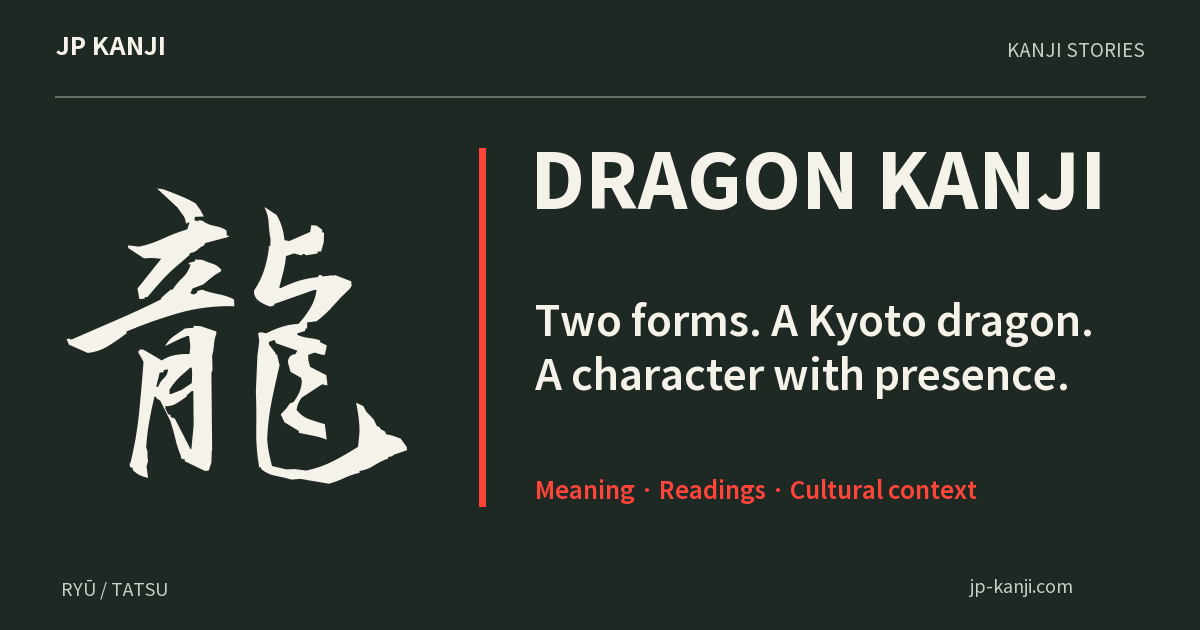
Dragon kanji: 龍, 竜 and the presence of a single character

龍 means dragon. Discover its relationship with 竜, a dragon painted on a Kyoto temple ceiling, and a personal way to wear the character.

Read the story

Sayings & idioms

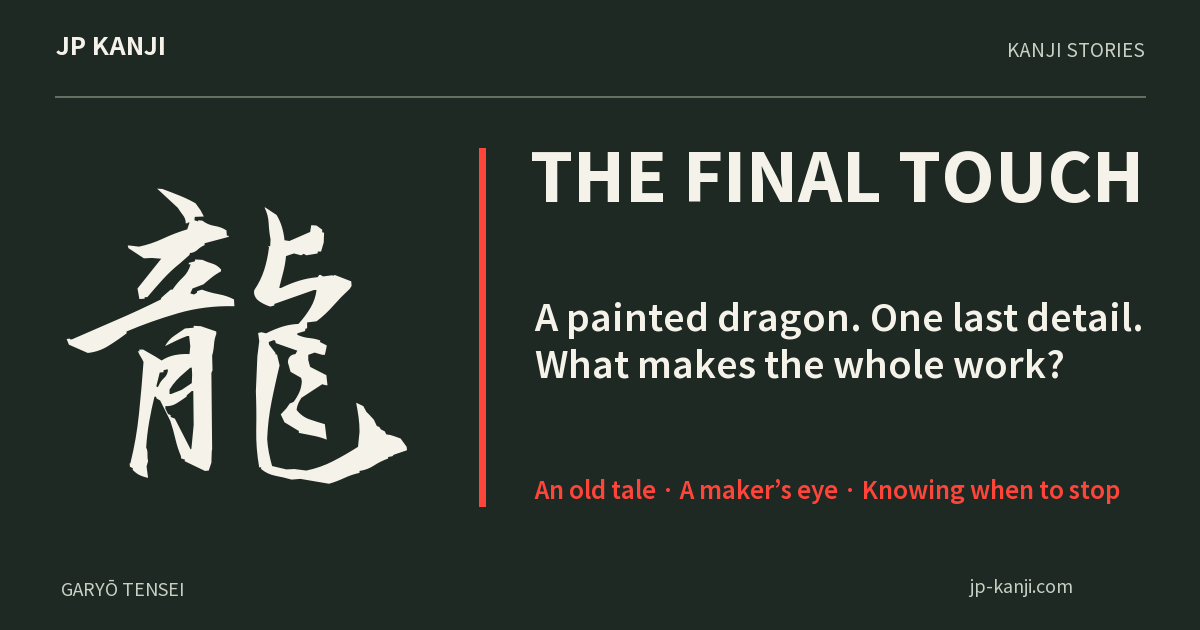
Garyō tensei: the dragon and the finishing touch

Why would a painted dragon need one final detail? Explore 画竜点睛 and the difference between finishing a piece and adding more to it.

Read the story

Culture & objects

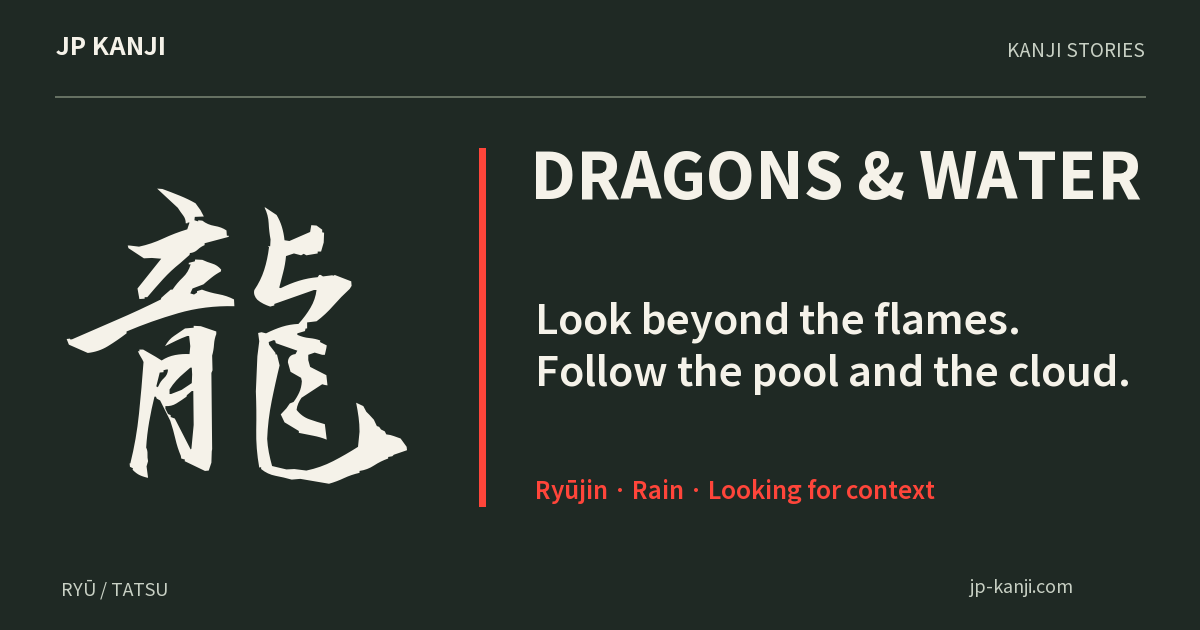
Why a Japanese dragon can bring rain, not fire

A dragon beside water opens a different story from the familiar fire-breathing monster. Start with the word ryūjin, then look again.

Read the story

Culture & objects

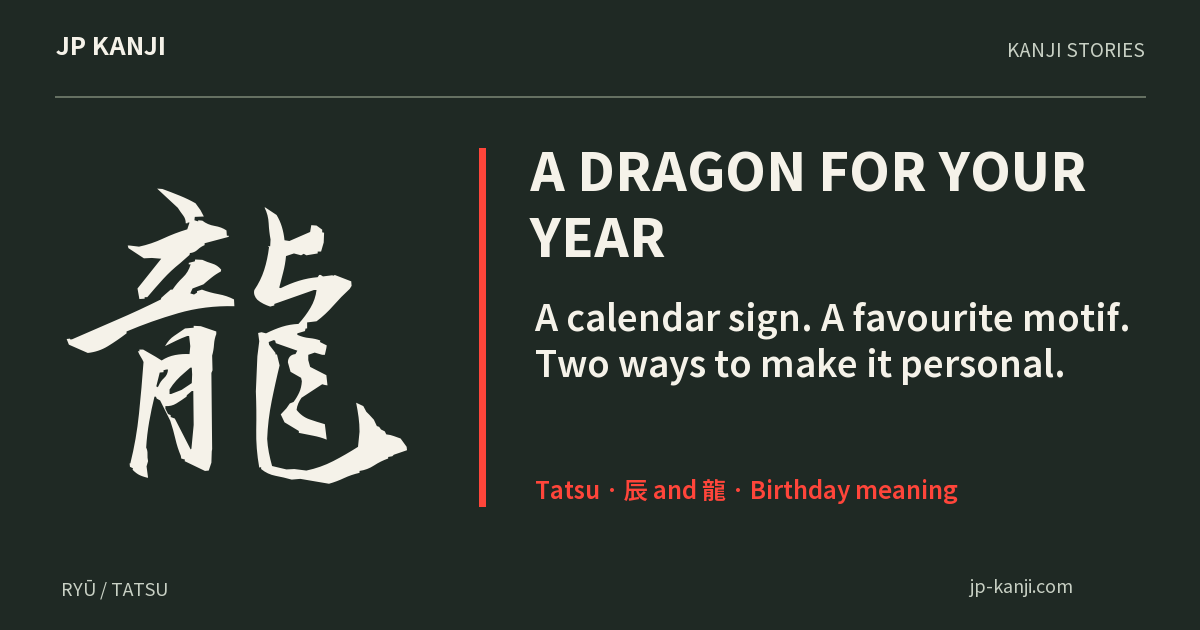
Tatsu, 辰 and 龍: choosing a dragon for a birth-year connection

A calendar and a dragon print may use different characters. Here is how to keep a personal birth-year gift clear.

Read the story
4 more stories

Style & making

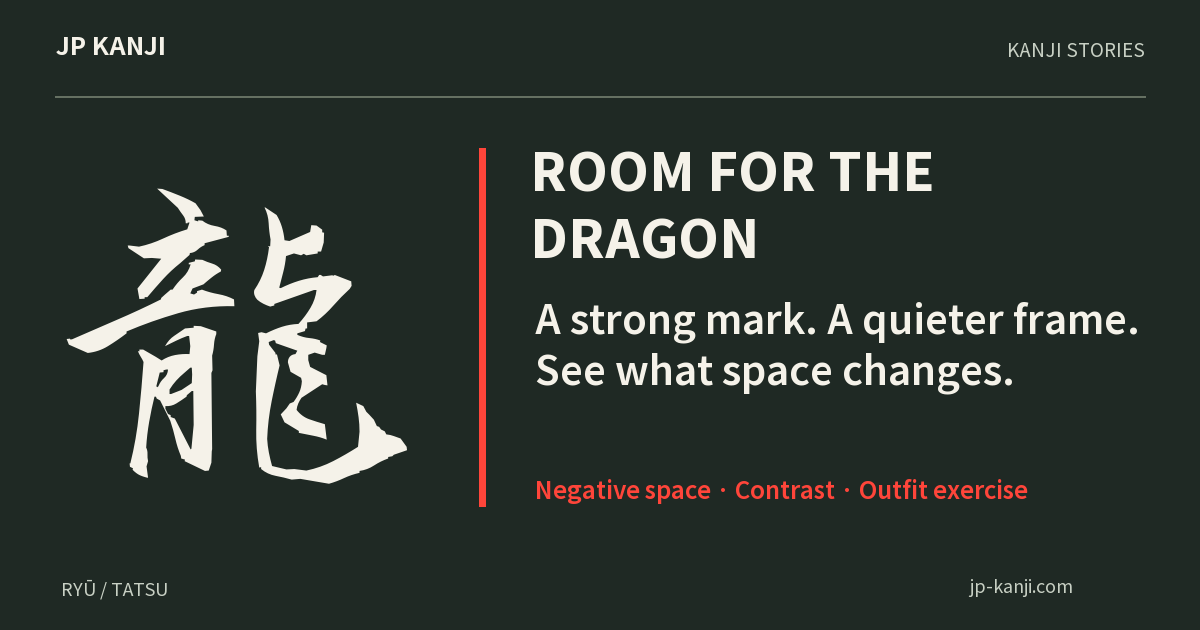
Why bold lettering needs room around it

Try a simple framing exercise with a dense character: the blank area can change how clearly you see the whole design.

Read the story

Everyday stories

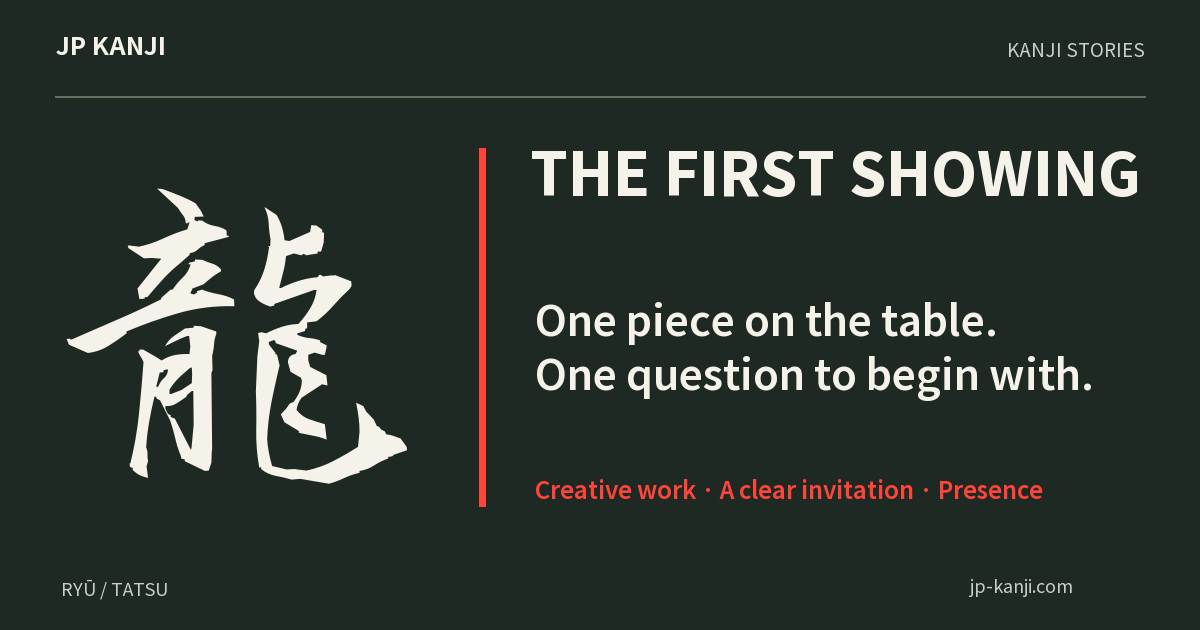
Showing your work for the first time, without a grand announcement

One print on a table and one useful question can make a first showing feel concrete. The dragon comes at the end of the story.

Read the story

Words & readings

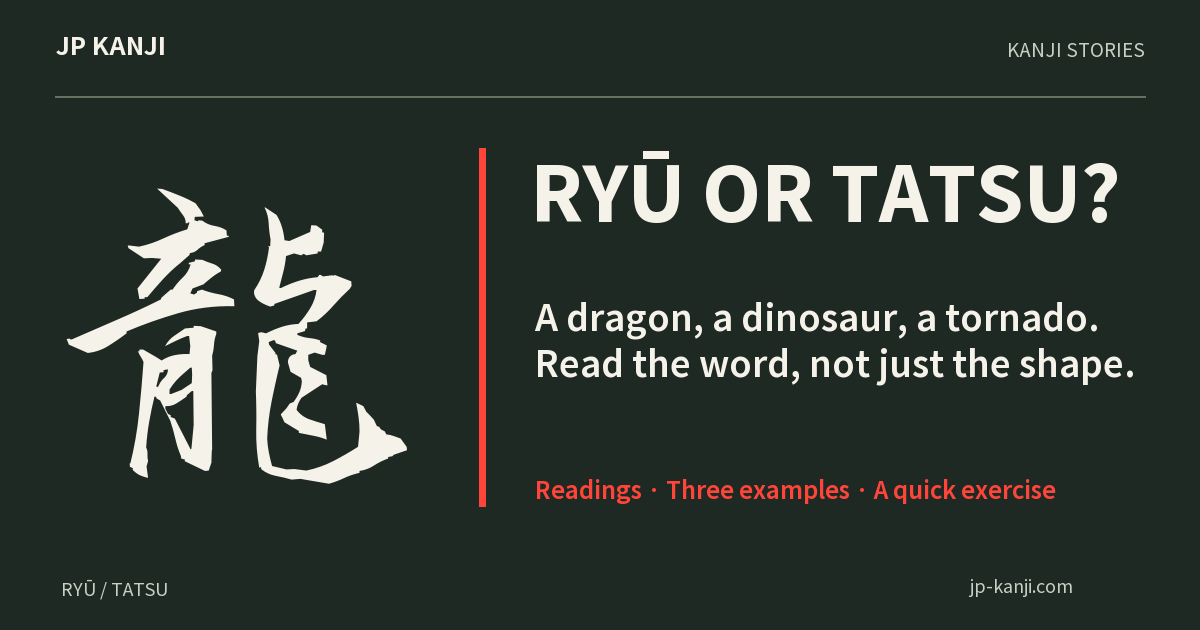
Ryū or tatsu? How to read the Japanese dragon kanji

Learn the reading with the word: a dragon, a dinosaur and a tornado offer three useful starting points.

Read the story

Giving & choosing

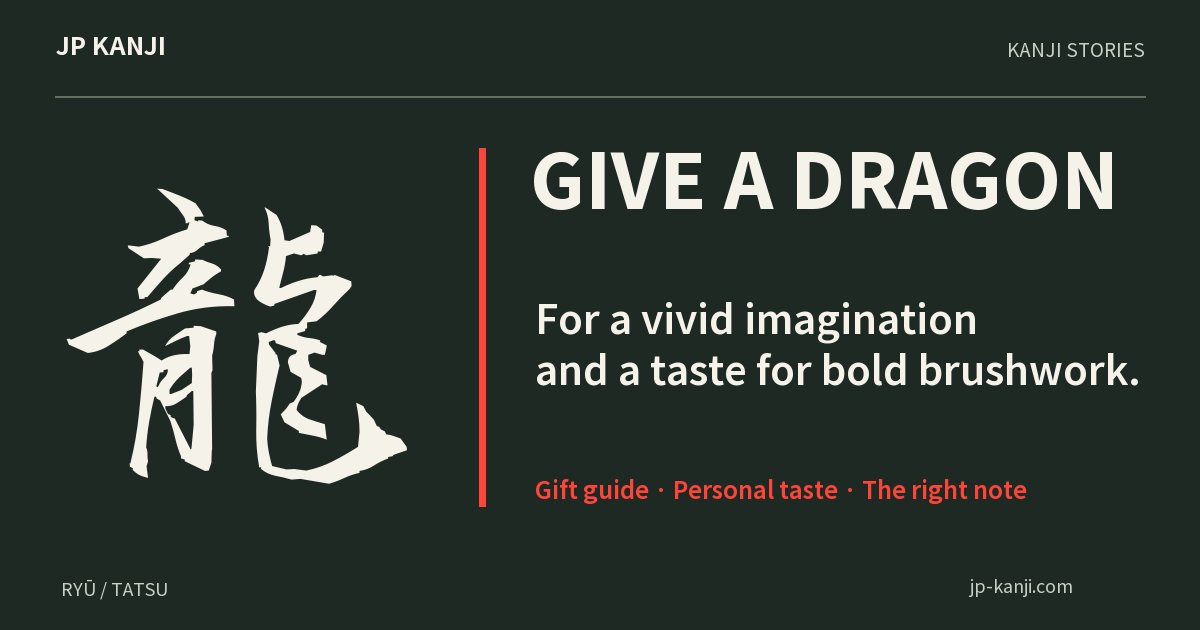
A dragon kanji gift for someone who loves a bold design

Choose 龍 for the person’s taste, then turn a familiar fantasy motif into a personal message.

Read the story

Another character, another perspective

All stories →

Everyday stories

Why an unfinished story can stay with you

An open ending leaves a question active. Explore the difference between a deliberate invitation and a missing piece of information.

Read the story

Everyday stories

The small rituals that make an ordinary day feel shared

A cup set out or a familiar goodbye can mean something because of the people involved. Find out which gestures are actually welcome.

Read the story

Culture & objects

When a practice becomes a way: more than counting sessions

A recurring activity can influence how you approach people and tasks. Keep that personal observation distinct from a discipline’s formal teaching.

Read the story