Culture & objects ryū / tatsu
Why a Japanese dragon can bring rain, not fire
A dragon beside water opens a different story from the familiar fire-breathing monster. Start with the word ryūjin, then look again.
Wear this characterStart with a scene
Picture a dragon above a pool. If you expect flames, the surrounding water might seem like scenery. Try treating it as the clue instead. Ask what the creature is connected with before deciding whether the scene should feel threatening, protective or simply mysterious.
A closer look
Follow the water in the picture
The dictionary describes ryūjin as a dragon-shaped deity associated with rain and water. That specific meaning gives you a useful question for an artwork: what role does water play here? It does not supply the identity of every dragon you encounter.
When looking at an unfamiliar image, separate three notes: what you can see, what the caption names, and what you imagine. “Water surrounds the body” belongs in the first. “It guards this place” needs a caption or another source. The distinction leaves room for curiosity without turning a guess into history.
See it in words
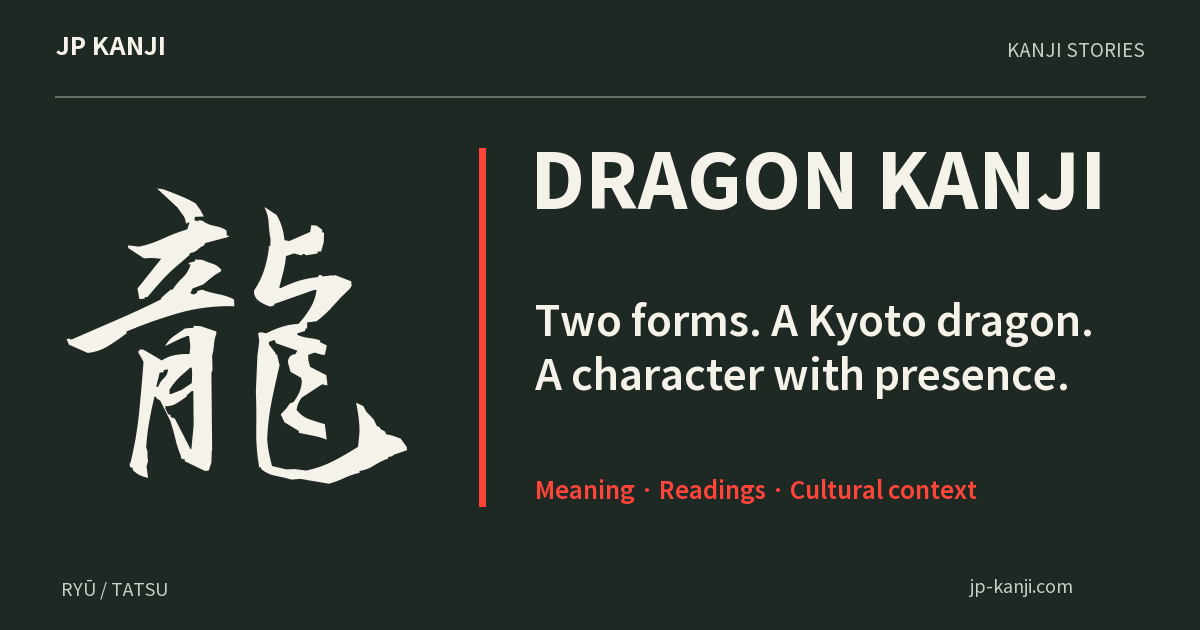
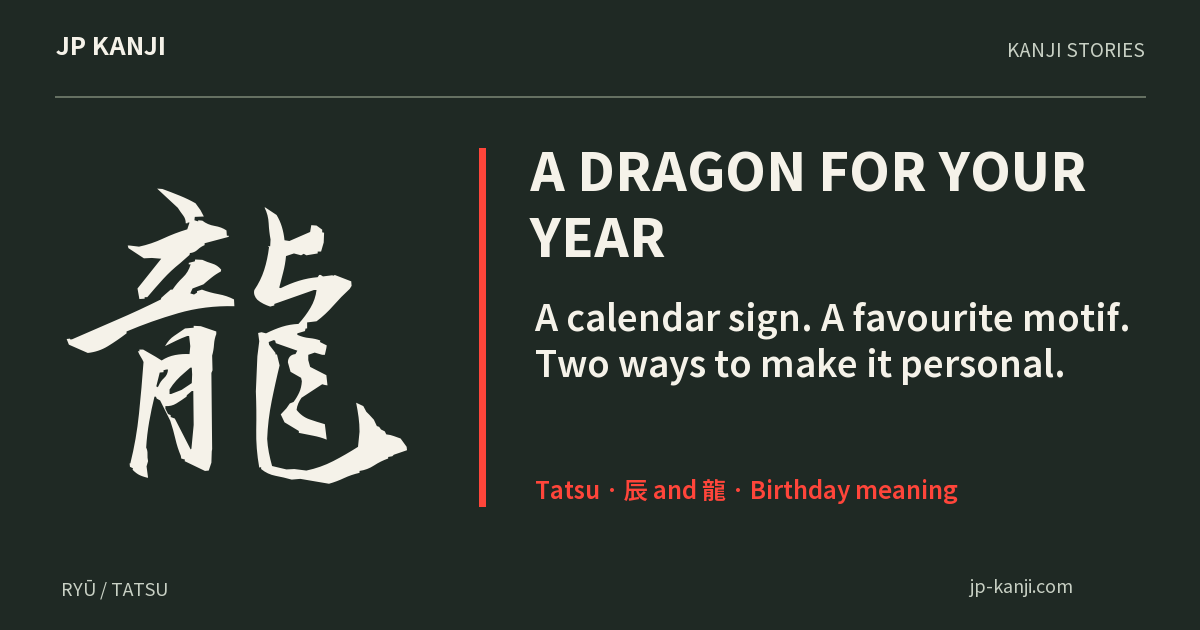
- 龍
- ryū / tatsuThe fuller form used in our design
- 竜
- ryū / tatsuAnother Japanese form for dragon
- 龍神
- ryūjinA dragon deity
A meaning to make your own
A thought to give
For someone drawn to rivers or the sea, explain the connection in a note. Let their own interests decide whether the association feels right.
Make a gift cardOne more question
Does every Japanese dragon represent water?
No single explanation covers every story or object. Ryūjin is a useful starting point; an individual work still needs its own title, setting and source.
A character to carry with you 龍
龍 means dragon. If water is the part of its imagery that appeals to you, the single character can carry that personal association without specifying one religious figure.
Wear this character