EN · Language
EnglishDeutschFrançaisItalianoEspañol

Everyday stories kaze / fū

Tell one gust of wind from three different viewpoints

Keep a fictional event unchanged while limiting what each observer can know. Discover how viewpoint chooses the details of a scene.

Wear this character

Start with a scene

Invent a simple scene in a public square. A gust lifts a loose sheet of paper from a table, carries it past a fountain and drops it beside a bench. A person at the table, someone inside a nearby shop and a seated observer all notice part of what happens. Write down the event once as your planning note. The three accounts will disagree in emphasis because the observers have different information, not because you secretly change the action.

A closer look

Give each observer a different piece of the event

For the first account, stay beside the table. This person knows what is on the paper but loses sight of it behind the fountain. For the second, look through the shop window: perhaps the motion is visible but the words being called outside are not audible. For the third, begin only when the page lands near the bench. Decide what that observer can read without borrowing knowledge from your planning note or the other characters.

Write roughly seventy words for each observer. Use the same tense and a similar tone so that viewpoint remains the main difference. Underline every statement about what somebody thinks, hears or knows. Ask how the chosen observer could have that information. If there is no answer, remove the statement or make the uncertainty visible. A guessed shopping list and a known drawing are different descriptions, even when they refer to the same piece of paper.

See it in words

風
kazeWind
風景
fūkeiScenery
和風
wafūJapanese style
Examples of usage, not a diagram of the character’s historical development.

A meaning to make your own

A thought to give

For someone who writes or enjoys stories, include your three miniature accounts with a 風 design. Let them choose which observer interests them, rather than supplying a single correct interpretation.

Make a gift card

One more question

Is this the same as writing in three different tones?

No. Here the main constraint is access to information: where somebody stands, what they can perceive and what they already know. Keep the tone similar at first. You can experiment with voice later, once the viewpoints are clear.

A character to carry with you 風

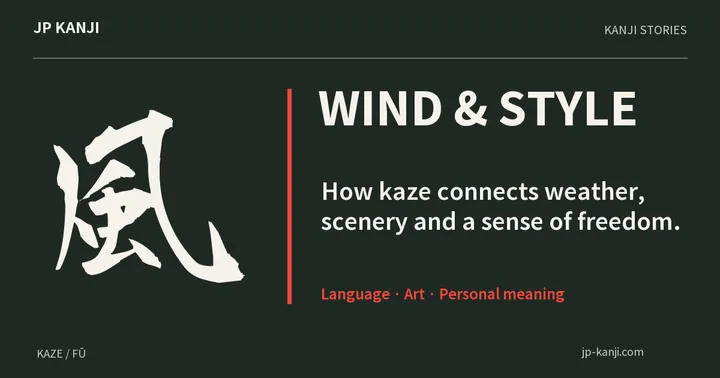
風 means wind. The gust connects these small accounts while remaining only one part of each person's afternoon. As a personal association for the design, it can recall curiosity about what lies outside your own view.

Wear this character
風

風

Share this story

More about this character 風

All stories →

Everyday stories

Three tones, the same conversation: a small dialogue exercise

Keep the speakers and facts fixed, then change rhythm, pauses and sentence length. Hear how a fictional exchange takes on a different manner.

Read the story

Meaning & background

風: the Japanese kanji for wind, scenery and style

Kaze means wind, but 風 also appears in words about scenery and style. Follow those connections and find a quieter way to express freedom.

Read the story

Everyday stories

Draw a score for the sounds of a breeze

Use lines, gaps and repeated marks to record what you hear as air moves nearby. No musical notation or audio equipment is needed.

Read the story

Style & making

Look at how a garment moves, not only how it hangs

Try an actual garment while sitting, reaching and walking. Separate what a still photograph shows from what you can learn by wearing it.

Read the story
13 more stories

Everyday stories

Make a paper landscape you do not have to glue down

Move a few paper shapes through several compositions. Record the versions you like before making a final decision—or leave the landscape changeable.

Read the story

Style & making

Try a new clothing colour with the wardrobe you already have

Test one unfamiliar colour against clothes you actually wear. Keep the experiment small and use product images to compare the exact option.

Read the story

Style & making

Make a paper mobile from offcuts and watch what the air changes

Turn spare paper into a lightweight hanging arrangement. Adjust the balance, leave space between shapes and notice how the view changes as it turns.

Read the story

Style & making

Packing for one night away: choose the extra layer you will use

Build a small overnight bag around the day you expect to have, then choose one extra layer by how you will wear and carry it.

Read the story

Everyday stories

What to do with an hour you did not plan

Keep a cancelled appointment from becoming another task list: choose a small, open-ended way to spend the time.

Read the story

Sayings & idioms

Fūrinkazan: why wind is only part of the picture

風林火山 puts movement beside stillness. Read its four images before turning it into a slogan about speed.

Read the story

Culture & objects

Fūrin: hearing the breeze before you notice it

A small bell makes a moving breath of air audible. Explore the object, its sound and the summer association without confusing them.

Read the story

Style & making

How to suggest wind in a still photograph

Show what the air touches: fabric, leaves or a reflection. Begin with visible evidence before inventing a story around it.

Read the story

Everyday stories

When the picnic becomes an indoor afternoon

A changed plan can preserve the part people were looking forward to. Identify that part before replacing the whole day.

Read the story

Style & making

Finding your visual style by noticing what you repeat

Collect examples you genuinely return to, then describe their common details. A personal style can emerge from choices rather than a label.

Read the story

Culture & objects

Giving the unseen a figure: thinking about wind gods in art

An invisible force can become a character in a picture. Start with a named artwork, then separate its record from your own response.

Read the story

Words & readings

Kaze and fū: why 風 can mean more than weather

Follow wind into scenery and artistic style, while keeping each complete word’s meaning clear.

Read the story

Giving & choosing

A 風 gift for someone who values their own direction

Choose a message of freedom that celebrates the person without telling them to leave, change or start over.

Read the story

Another character, another perspective

All stories →

Everyday stories

Why an unfinished story can stay with you

An open ending leaves a question active. Explore the difference between a deliberate invitation and a missing piece of information.

Read the story

Everyday stories

Turn a remembered dream into a four-panel comic

Keep one strange transition from a dream and build four simple panels around it. Clear shapes can carry a scene without polished drawing.

Read the story

Culture & objects

Hatsuyume: reading a New Year dream as an image, not a forecast

Fuji, a hawk and an aubergine make an unexpected trio. A museum print offers a way into Japan’s first-dream imagery.

Read the story