EN · Language
English日本語DeutschFrançaisItalianoEspañol

Everyday stories kaze / fū

What to do with an hour you did not plan

Keep a cancelled appointment from becoming another task list: choose a small, open-ended way to spend the time.

Wear this character

Start with a scene

An appointment is cancelled and an empty hour appears. Before you fill it with postponed chores, decide whether this time needs to be useful in the usual sense. You could browse a nearby bookshop, sit somewhere with a different view or take a short walk along a familiar street. None of these needs to produce a photograph, a discovery or a better version of yourself.

A closer look

Give the hour a boundary, not a target

Set the practical boundary first: when you must return, how far you can comfortably go and whether you want to spend anything. Then choose one starting point rather than a route with compulsory stops. Leaving the last fifteen minutes free makes it easier to head back without turning a small detour into a rush. Weather, accessibility and your actual energy can guide the choice.

If you prefer staying indoors, take an object you already own off its usual shelf and look at it properly. Open a book at a page you have not reached, sketch the view from a different chair or listen to one piece of music without building a playlist. The point is not to manufacture novelty. It is to let attention move without immediately giving it another assignment.

See it in words

風
kazeWind
風景
fūkeiScenery
和風
wafūJapanese style
Examples of usage, not a diagram of the character’s historical development.

A meaning to make your own

A thought to give

For somebody whose calendar is always full, try a light note: “For the occasional hour that belongs only to you.” Give the thought without prescribing how they should spend their time.

Make a gift card

One more question

What if I end up doing nothing memorable?

That is an acceptable result. An unplanned hour does not have to compete with a holiday or become a story worth telling. Returning on time after a quiet, ordinary pause can be enough; the lack of an achievement is not a defect to repair.

A character to carry with you 風

風 means wind. For this small pause, it can become a personal image of movement without a tightly drawn route. That association is a way to enjoy the character, not a promise that wearing it will change your mood or your day.

Wear this character
風

風

Share this story

More about this character 風

All stories →

Meaning & background

風: the Japanese kanji for wind, scenery and style

Kaze means wind, but 風 also appears in words about scenery and style. Follow those connections and find a quieter way to express freedom.

Read the story

Sayings & idioms

Fūrinkazan: why wind is only part of the picture

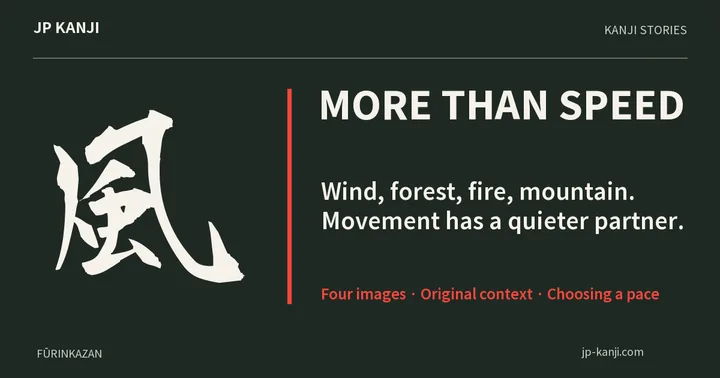
風林火山 puts movement beside stillness. Read its four images before turning it into a slogan about speed.

Read the story

Culture & objects

Fūrin: hearing the breeze before you notice it

A small bell makes a moving breath of air audible. Explore the object, its sound and the summer association without confusing them.

Read the story

Style & making

How to suggest wind in a still photograph

Show what the air touches: fabric, leaves or a reflection. Begin with visible evidence before inventing a story around it.

Read the story
5 more stories

Everyday stories

When the picnic becomes an indoor afternoon

A changed plan can preserve the part people were looking forward to. Identify that part before replacing the whole day.

Read the story

Style & making

Finding your visual style by noticing what you repeat

Collect examples you genuinely return to, then describe their common details. A personal style can emerge from choices rather than a label.

Read the story

Culture & objects

Giving the unseen a figure: thinking about wind gods in art

An invisible force can become a character in a picture. Start with a named artwork, then separate its record from your own response.

Read the story

Words & readings

Kaze and fū: why 風 can mean more than weather

Follow wind into scenery and artistic style, while keeping each complete word’s meaning clear.

Read the story

Giving & choosing

A 風 gift for someone who values their own direction

Choose a message of freedom that celebrates the person without telling them to leave, change or start over.

Read the story

Another character, another perspective

All stories →

Everyday stories

Choosing a first teacher: questions worth asking

Before committing to lessons, look at how a teacher explains a first step, responds to questions and fits your purpose.

Read the story

Everyday stories

Travelling with a friend when your ideal days are different

Agree on pace, spending and time apart before a trip, so shared memories do not require an identical itinerary.

Read the story

Everyday stories

How to ask for feedback before your idea is finished

Make an unfinished idea easier to discuss with one useful question, a small sample and a clear next decision.

Read the story