EN · Language
English日本語DeutschFrançaisItalianoEspañol

Culture & objects kaze / fū

Giving the unseen a figure: thinking about wind gods in art

An invisible force can become a character in a picture. Start with a named artwork, then separate its record from your own response.

Wear this character

Start with a scene

Before reading a picture’s title, write down what seems to be happening. Then read the title and compare. A figure that first looked like an unusual traveller may belong to a named story. The change shows how much interpretation depends on information outside the image.

A closer look

A name changes the first impression

Japan’s cultural heritage database records Tawaraya Sōtatsu’s Wind God and Thunder God screens, owned by Kennin-ji. Use that named work as a starting point rather than treating every lively figure as the same deity. The record anchors a conversation about a particular object.

For an exercise of your own, choose something invisible: wind, an echo or the passing of time. Sketch how you would make it noticeable through a figure or an effect. Add a sentence explaining which part is your invention. Comparing your choices with a historical work can sharpen attention without pretending to reproduce its beliefs or technique.

See it in words

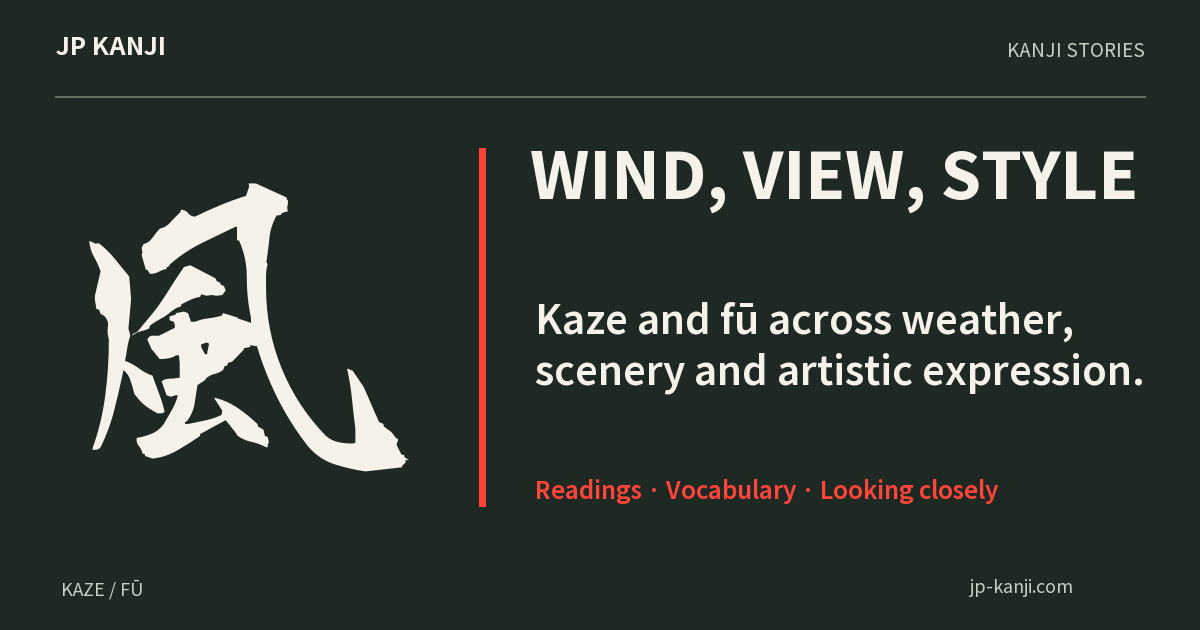
風
kazeWind
風景
fūkeiScenery
和風
wafūJapanese style
Examples of usage, not a diagram of the character’s historical development.

A meaning to make your own

A thought to give

For someone who enjoys art: “For the things you help me see differently.” Name the image or conversation that started the thought.

Make a gift card

One more question

Is the garment a copy of the screens?

No. The garment uses the single character 風. The historical artwork is context for the article, and its figures are not part of the printed design.

A character to carry with you 風

風 means wind. A character print offers another way to give the unseen a visible form: a word in brushwork, rather than a reproduction of a deity or screen.

Wear this character
Share this story

More about this character 風

All stories →

Meaning & background

風: the Japanese kanji for wind, scenery and style

Kaze means wind, but 風 also appears in words about scenery and style. Follow those connections and find a quieter way to express freedom.

Read the story

Sayings & idioms

Fūrinkazan: why wind is only part of the picture

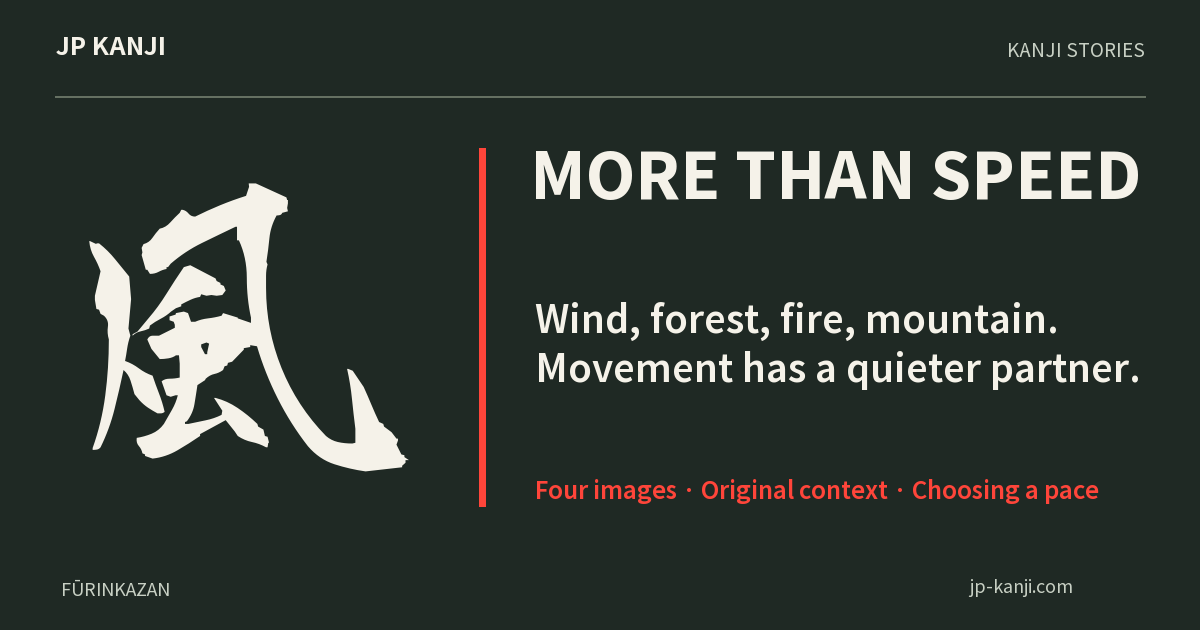
風林火山 puts movement beside stillness. Read its four images before turning it into a slogan about speed.

Read the story

Culture & objects

Fūrin: hearing the breeze before you notice it

A small bell makes a moving breath of air audible. Explore the object, its sound and the summer association without confusing them.

Read the story

Style & making

How to suggest wind in a still photograph

Show what the air touches: fabric, leaves or a reflection. Begin with visible evidence before inventing a story around it.

Read the story
4 more stories

Everyday stories

When the picnic becomes an indoor afternoon

A changed plan can preserve the part people were looking forward to. Identify that part before replacing the whole day.

Read the story

Style & making

Finding your visual style by noticing what you repeat

Collect examples you genuinely return to, then describe their common details. A personal style can emerge from choices rather than a label.

Read the story

Words & readings

Kaze and fū: why 風 can mean more than weather

Follow wind into scenery and artistic style, while keeping each complete word’s meaning clear.

Read the story

Giving & choosing

A 風 gift for someone who values their own direction

Choose a message of freedom that celebrates the person without telling them to leave, change or start over.

Read the story

Another character, another perspective

All stories →

Culture & objects

When a practice becomes a way: more than counting sessions

A recurring activity can influence how you approach people and tasks. Keep that personal observation distinct from a discipline’s formal teaching.

Read the story

Everyday stories

Staying with a project can include changing the method

Repeating the same attempt is not the only form of persistence. Keep the aim visible while testing a different approach.

Read the story

Everyday stories

Learning with a friend without turning it into a race

Two people can work on different questions and still help each other. Make the purpose of feedback clear before comparing results.

Read the story