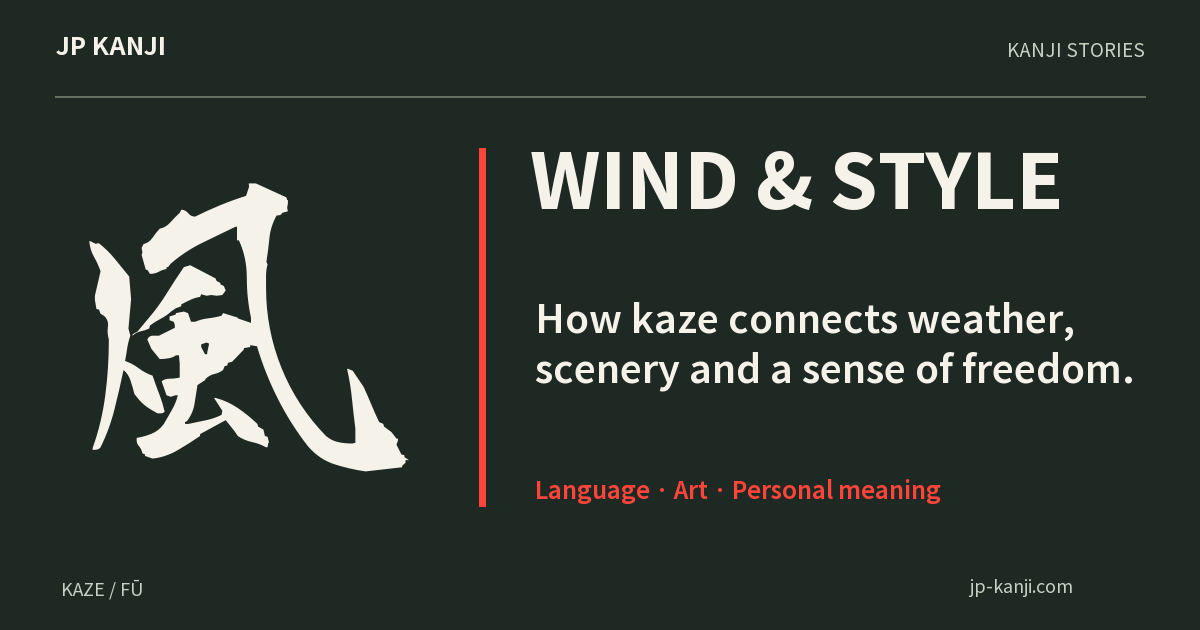
Words & readings kaze / fū
Kaze and fū: why 風 can mean more than weather
Follow wind into scenery and artistic style, while keeping each complete word’s meaning clear.
Wear this characterMeaning at a glance
風 is kaze when used for wind, while fū appears in many compounds. 風景, fūkei, refers to scenery, and 作風, sakufū, to the style of an artist or writer. These uses show why reading every occurrence as literal moving air would be misleading. [1]
See it in words
- 風
- kazeWind
- 風景
- fūkeiScenery
- 作風
- sakufūAn artist’s or writer’s style
A closer look
A useful clue, not a word-for-word formula
Imagine looking out of a train window, then looking at three works by one artist. The first scene gives you a setting for scenery; the second invites you to notice a recurring style. The same character participates in both words, but it does not erase the difference between a view and a way of making art.
For a small vocabulary exercise, describe what you see in a landscape, then describe what repeats across an artist’s work. Keep the observations separate. Repeated colours, shapes or rhythms can help you discuss style without inventing a spiritual meaning for the kanji.
A meaning to make your own
You can enjoy the movement of the brush strokes while explaining the print simply as the character for wind.
A thought to give
“For the way you see things in your own style.” Add a specific photograph, drawing or observation you remember.
Make a gift cardOne more question
Can I read every 風 as kaze?
No. The reading depends on the word. Learn fūkei and sakufū as complete vocabulary rather than swapping in kaze automatically.
Sources & editorial approach
Sources may be in Japanese or English.
Readings and cultural references are checked against the sources below. Styling and gift ideas are our suggestions. Written with AI assistance and source checks.