Style & making kaze / fū
Finding your visual style by noticing what you repeat
Collect examples you genuinely return to, then describe their common details. A personal style can emerge from choices rather than a label.
Wear this characterStart with a scene
Open a small selection of your own photographs or drawings. Perhaps you keep framing doorways, choosing muted colours or leaving a large area empty. Those recurring decisions offer a more concrete starting point than asking which impressive style name describes you.
A closer look
Look for recurring decisions
Choose five examples and write one visible feature beside each. Keep the notes specific: low viewpoint, hard edge, repeated curve. Then look for what appears more than once. A repeated interest may be worth exploring, but one collection does not fix what you must make next.
Try a new piece that keeps two familiar decisions and changes a third. You might keep the palette and viewpoint while changing the subject. Comparing the result can show what you value about the earlier work. Use your own images or clearly labelled references; inspiration becomes easier to discuss when its source remains visible.
See it in words
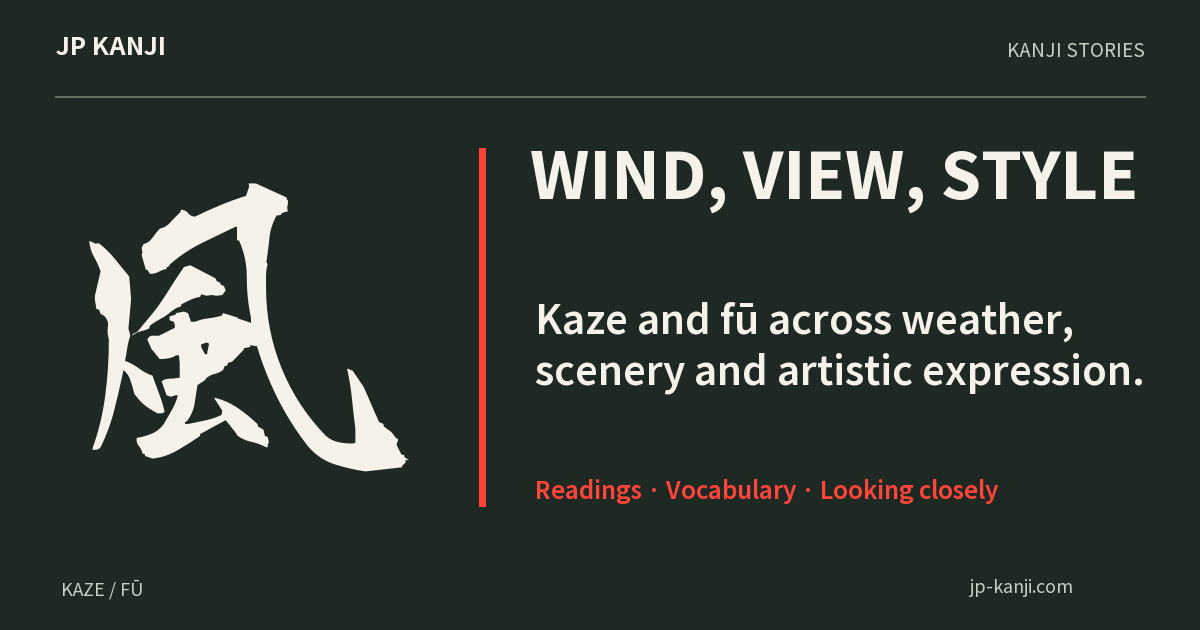
- 風
- kazeWind
- 風景
- fūkeiScenery
- 和風
- wafūJapanese style
A meaning to make your own
A thought to give
“I recognised your eye before I saw your name.” Follow it with the specific choice you noticed in their work.
Make a gift cardOne more question
Does a recognisable style require repeating the same subject?
Not necessarily. Framing, rhythm, texture or colour can recur across very different subjects. Compare actual examples before deciding which connection matters to you.
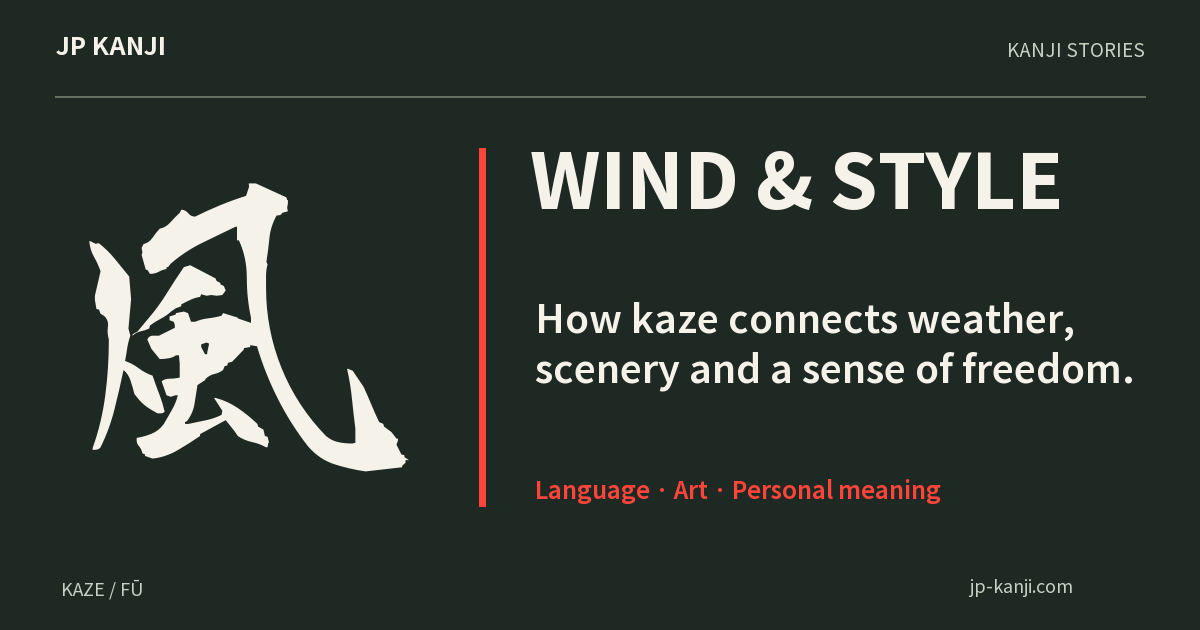
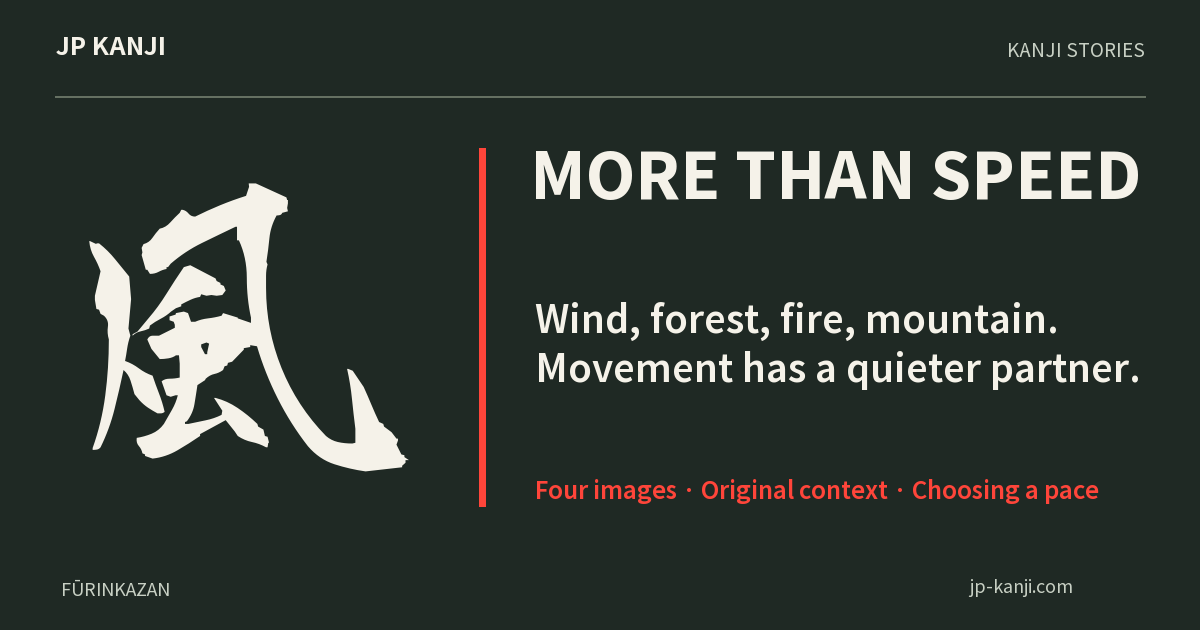
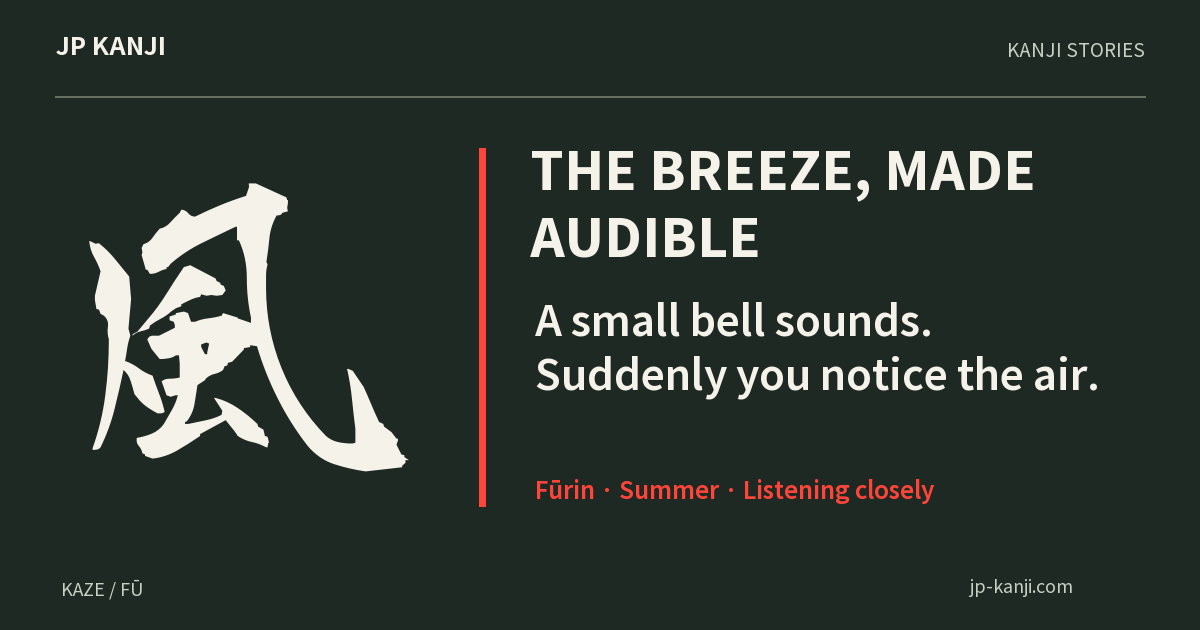
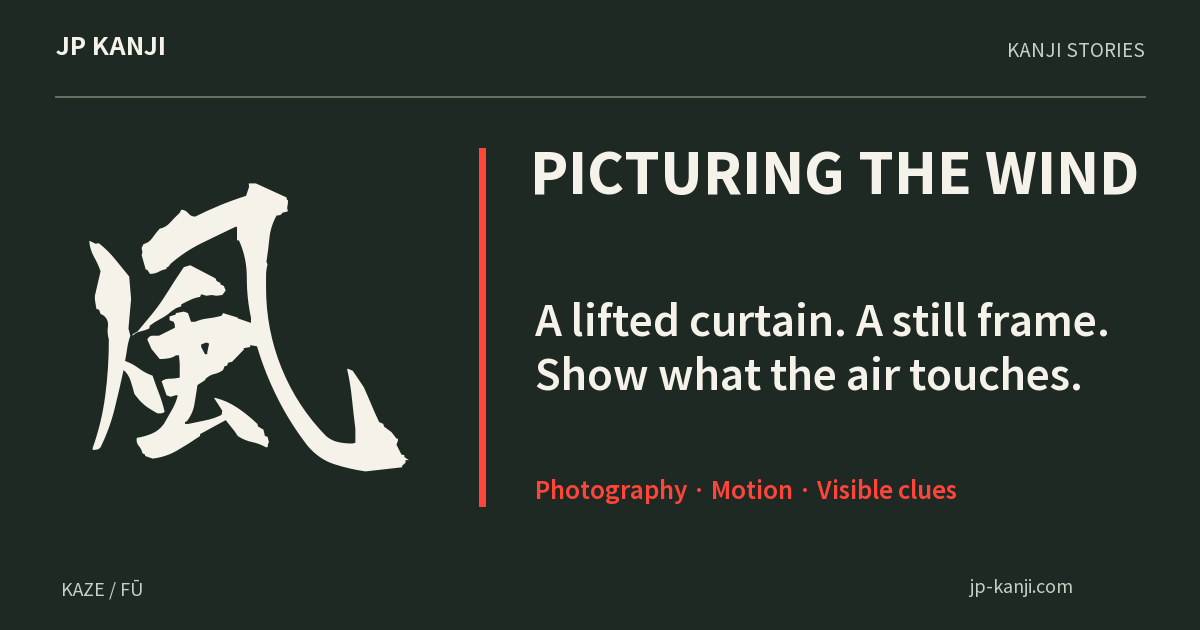
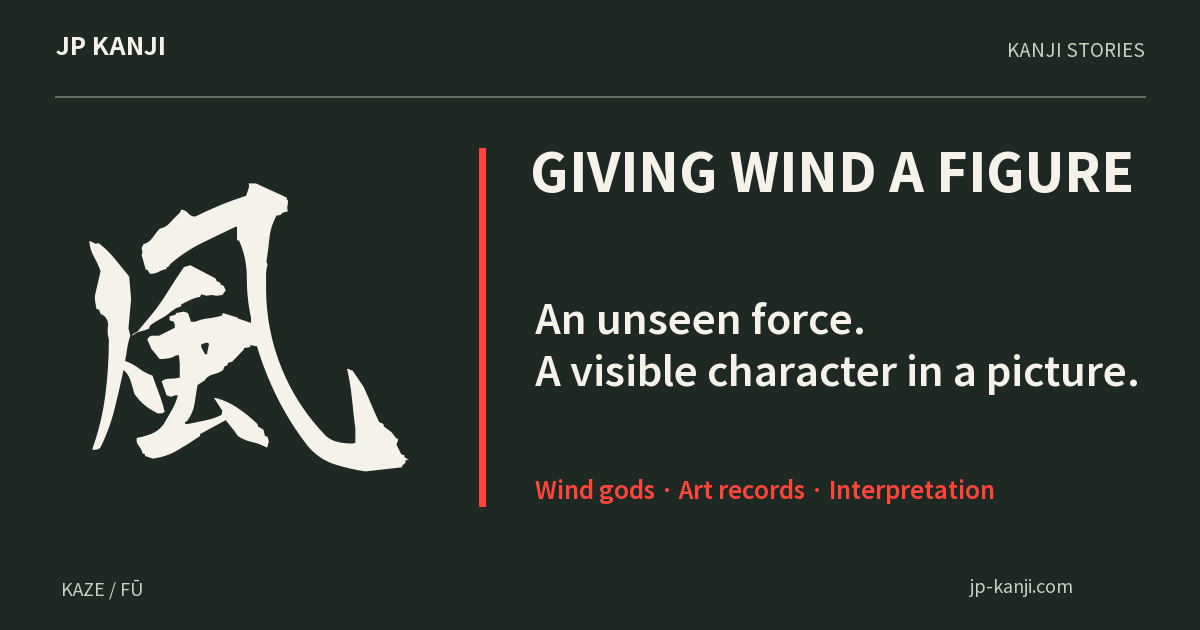
A character to carry with you 風
風 appears in words concerning style, such as 作風. The single character can mark curiosity about your own way of making, with room for that way to change.
Wear this character