Sayings & idioms fūrinkazan
Fūrinkazan: why wind is only part of the picture
風林火山 puts movement beside stillness. Read its four images before turning it into a slogan about speed.
Wear this characterMeaning at a glance
風林火山, fūrinkazan, draws four military images from Sun Tzu: swift wind, quiet forest, fierce fire and immovable mountain. [1][3] The contrast matters. A reading that remembers only speed misses most of the expression.
See it in words
- 風林火山
- fūrinkazanWind, forest, fire and mountain
- 風
- kaze / fūWind; the image of swift movement here
- 山
- yama / sanMountain; the image of steadiness here
A closer look
Read all four images, not just the first
For a present-day comparison of our own, imagine a photographer on a changing street. Sometimes they move to catch the light; sometimes they wait for a scene to settle. This is not the original military meaning. It is one way to explore why movement and stillness can both be deliberate choices.
Try making two columns for a creative task: “what needs action” and “what needs time”. Sending a question may belong in the first; waiting for a collaborator’s considered answer in the second. Do not force every task into four grand symbols. The useful question is whether the pace suits the situation, rather than whether you are always moving fastest.
A meaning to make your own
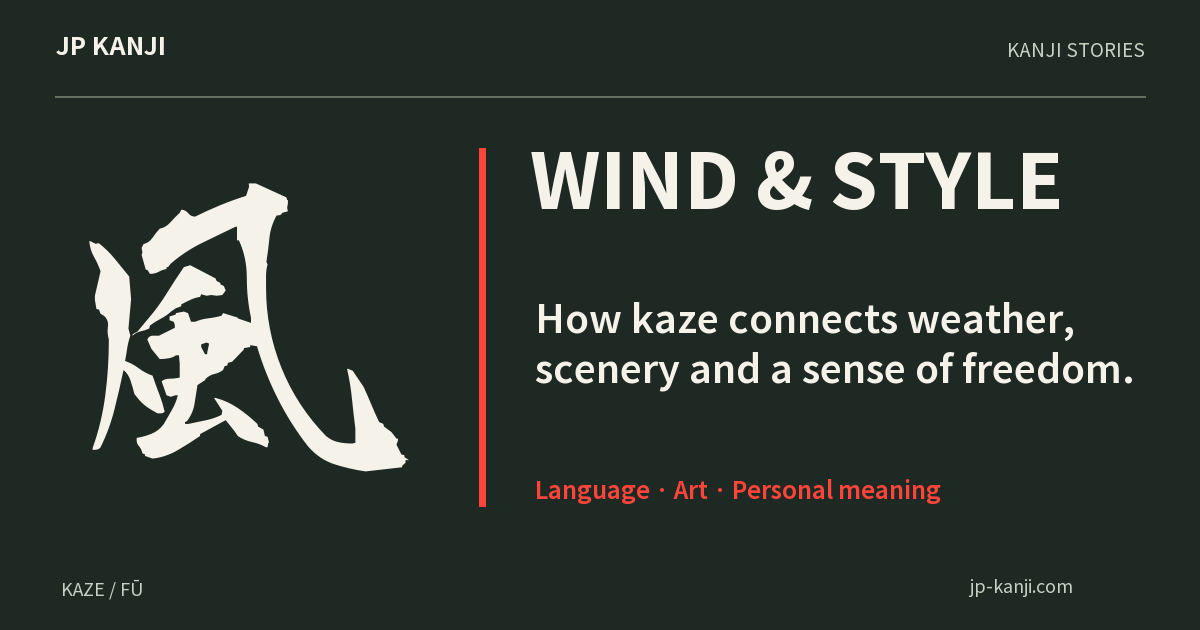
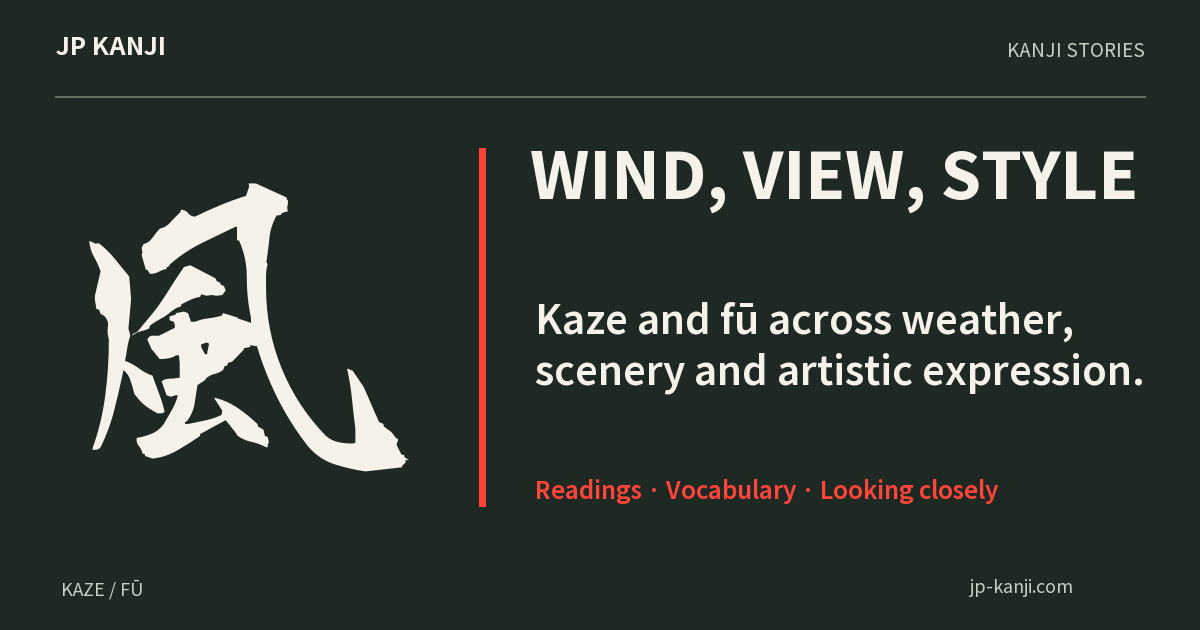
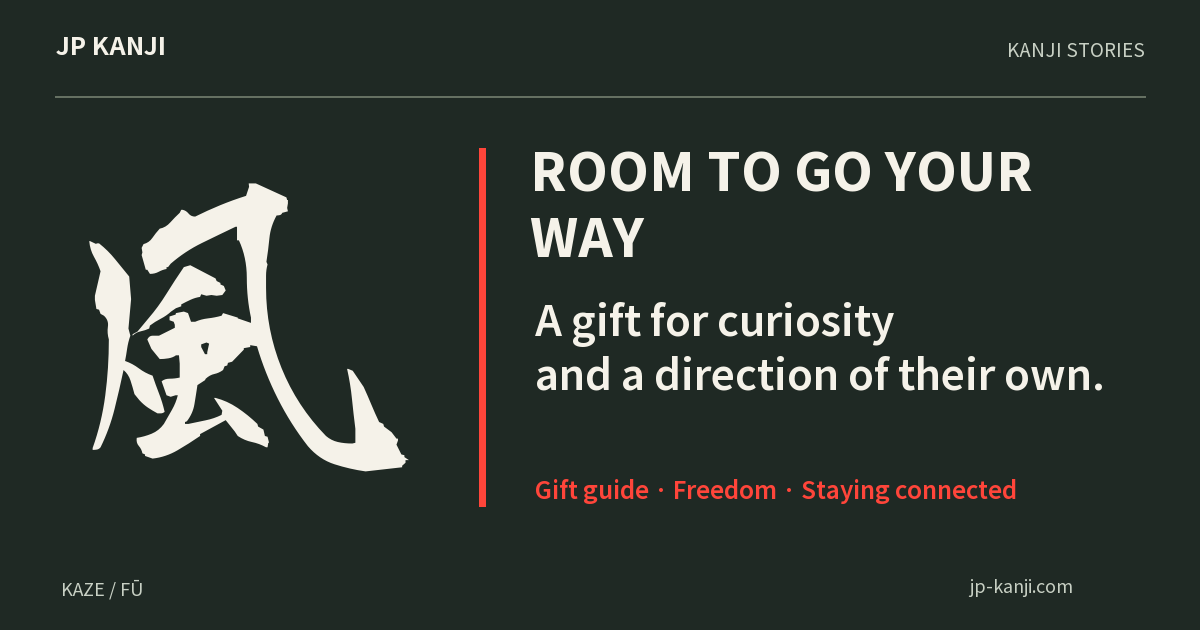
A single 風 means wind and also appears in words about style. [2] It does not automatically stand for all of 風林火山. Our print gives the wind character its own visual space, so explain the longer association if it matters to you.
A thought to give
“For knowing when to move and when to wait.” This can recognise a photographer, maker or patient teammate through a real moment you remember, without turning the gift into a lesson in productivity.
Make a gift cardOne more question
Are these four elements a personality test?
The cited expression concerns military conduct, not four personality types. [1] Any modern exercise using the images is an interpretation. We use them here to ask about timing, not to classify people.
Sources & editorial approach
Sources may be in Japanese or English.
Readings and cultural references are checked against the sources below. Styling and gift ideas are our suggestions. Written with AI assistance and source checks.