Culture & objects kaze / fū
Fūrin: hearing the breeze before you notice it
A small bell makes a moving breath of air audible. Explore the object, its sound and the summer association without confusing them.
Wear this characterStart with a scene
A curtain has barely moved when a bell sounds outside. You become aware of a breeze through something it touches. This is a useful way to think about a wind chime: an ordinary object makes an otherwise unseen movement easier to notice.
A closer look
A sound gives the air an outline
A Japanese government account describes summer fūrin made from materials including glass, metal and ceramics, with paper strips catching the breeze.[1] Material and shape offer things to compare. Listen to an actual example instead of assuming that all objects called fūrin sound alike.
Try a short listening note: what starts the sound, how long it lasts, and what you hear after it fades. If you have a chime, consider the people sharing the space before choosing where or when to use it. An object you enjoy should fit its surroundings as well as its photograph.
See it in words
- 風
- kazeWind
- 風景
- fūkeiScenery
- 和風
- wafūJapanese style
A meaning to make your own
A thought to give
“For that small summer sound we both noticed.” Add the place or afternoon, so the gift carries a memory instead of a general claim about Japan.
Make a gift cardOne more question
Does a wind chime actually cool the air?
A refreshing association or pleasant sound is different from a measured change in temperature. Here we are discussing an experience and a seasonal object, not a cooling device.
A character to carry with you 風
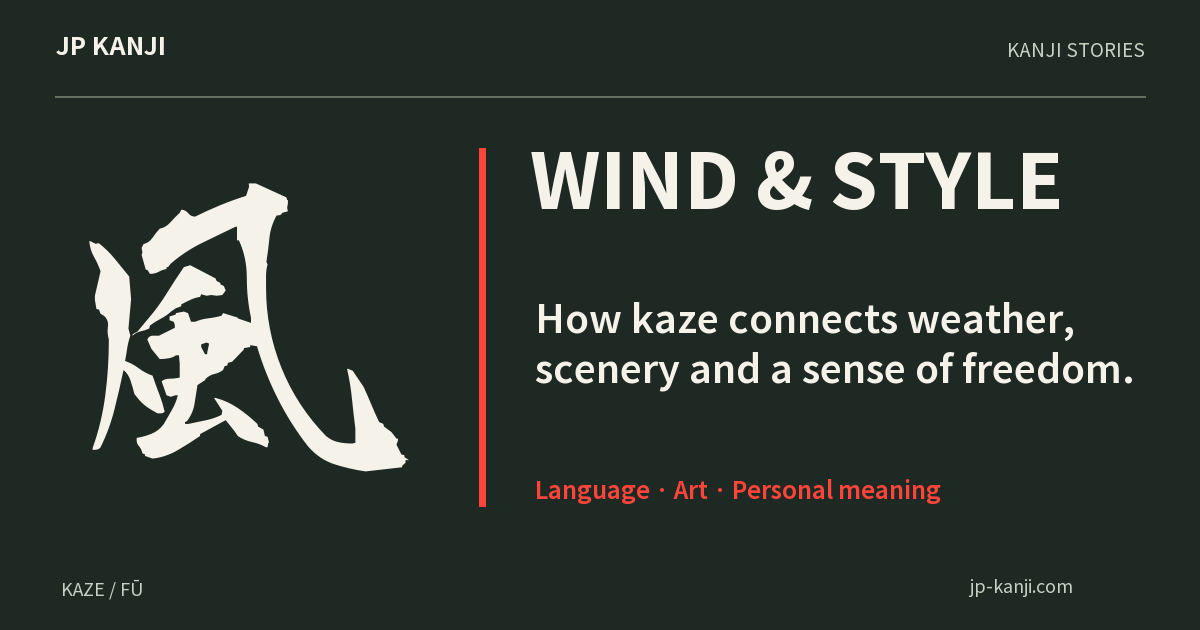
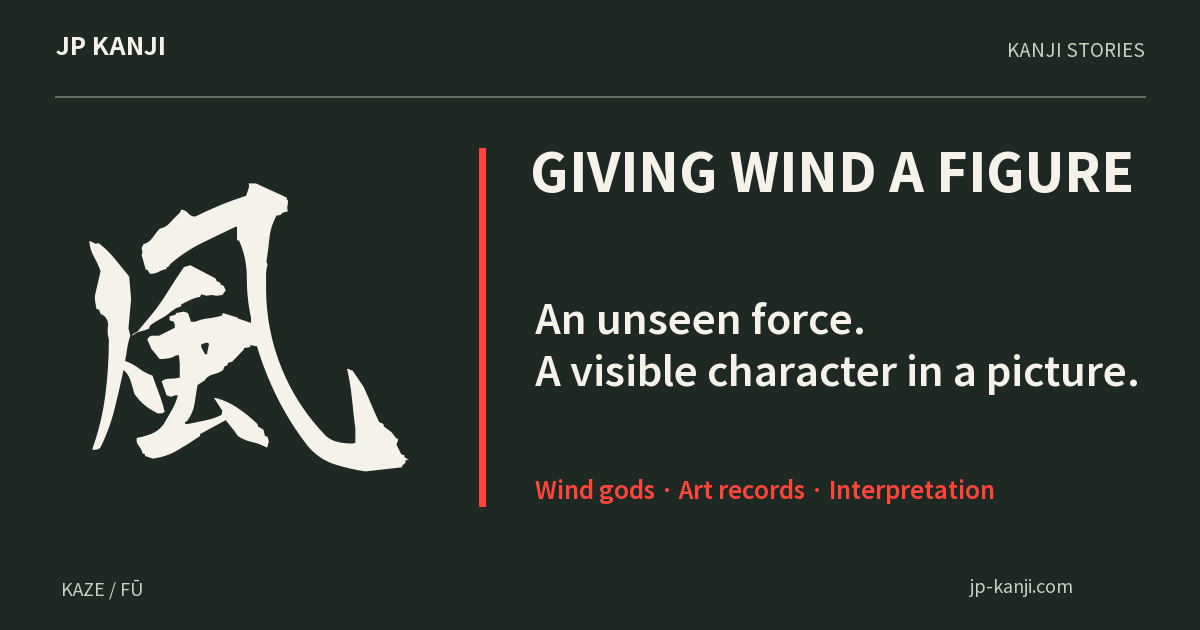
風 means wind. The character can recall the brief moment when the air announced itself, connecting a visual mark with a sound you remember.
Wear this character