EN · Language
EnglishDeutschFrançaisItalianoEspañol

Everyday stories wa / nagomu

Set up a shared creative toolkit people can actually return things to

Give each tool a clear home and make unfinished use visible. A small borrowing system can prevent the repeated mystery of the missing scissors.

Wear this character

Start with a scene

A pair of scissors is technically shared, but nobody knows which drawer it belongs in. Tape lives wherever the last project ended. Before buying more supplies, gather the tools everyone has agreed to share and choose a small, reachable home for them. Keep private or specialist equipment separate. A shared toolkit works better when “shared” names a specific set of objects rather than everything someone happens to own.

A closer look

Make returning as clear as borrowing

Give each tool an obvious place: a labelled compartment, a simple outline or a short list inside the box. Include a spot for something that needs attention, such as a blunt pencil sharpener or an empty tape dispenser. A note can say who is still using a tool and when they expect to return it. The note explains an absence without turning every borrower into a suspect.

Agree what happens to consumables and damaged items. Who replaces the last glue stick? Where should someone report a loose handle? Keep the arrangement proportionate to the number of people using it. Two housemates may need only a pencil and a card; a busy workshop may need a more explicit record. Revisit the system after several uses and remove steps that create work without making the tools easier to find.

See it in words

平和
heiwaPeace
調和
chōwaHarmony or balance
和食
washokuJapanese food culture
Examples of usage, not a diagram of the character’s historical development.

A meaning to make your own

A thought to give

For a regular workshop companion, a 和 gift can thank them for a concrete improvement: “For the box where everything finally has a home.” Avoid making the gift an indirect request that they keep managing everyone else’s equipment.

Make a gift card

One more question

Do we need a borrowing log for every small item?

Only if it solves a real problem. Begin with clear locations and an easy way to mark something still in use. Add a record for particular tools when the people sharing them agree it would help.

A character to carry with you 和

和 can express harmony. The connection here is practical: shared resources become easier to use when expectations are visible. The character can recall making together without suggesting that cooperation means offering every personal possession for general use.

Wear this character
和

和

Share this story

More about this character 和

All stories →

Everyday stories

Make one small invitation work in two languages

Give the practical information equal visibility and ask a reader to check each version. A welcoming invitation begins with details people can actually use.

Read the story

Everyday stories

When a shared plan changes: making the new version clear

A changed time or cancelled contribution can leave people imagining different plans. Write the next agreement in plain language.

Read the story

Meaning & background

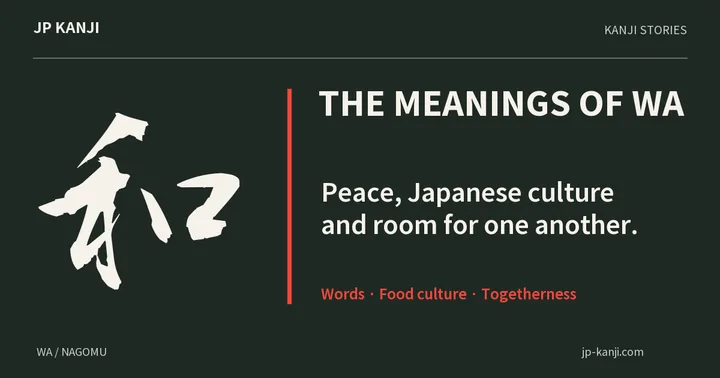
和: harmony, Japanese culture and room for one another

和 appears in words for peace, harmony and Japanese food. See how context changes its meaning and how it can become a thoughtful gift.

Read the story

Everyday stories

Start a board-game evening with a practice turn, not a test

Make the first round understandable and agree on the practical rules before competition begins. Different levels of experience can share the same table.

Read the story
13 more stories

Everyday stories

Make a two-person playlist that leaves room for both tastes

Alternate a few song choices for an ordinary listening session. The aim is to share attention, not to prove whose music belongs in the room.

Read the story

Everyday stories

Write a shared event caption without speaking for everyone

Separate the facts from personal reactions, then check names and images together. A group memory does not need a single compulsory voice.

Read the story

Everyday stories

Plan a small clothing swap where nobody feels obliged to take something

Make a clothing swap easier with clear expectations, honest condition notes and a plan for items that do not find a new owner.

Read the story

Everyday stories

Write credits for a shared creative project before you forget the details

Make the work around a finished project visible: agree on names, describe contributions and check the credit line together before publication.

Read the story

Style & making

Coordinated outfits without wearing the same clothes

Plan an outfit together around one shared detail while keeping your own colours, cuts and comfort. A practical idea for friends, partners or a group photo.

Read the story

Everyday stories

Sharing a space without needing the same habits

A small agreement about desks, noise and shared objects can make room for different ways of living.

Read the story

Sayings & idioms

Getting along without agreeing on everything

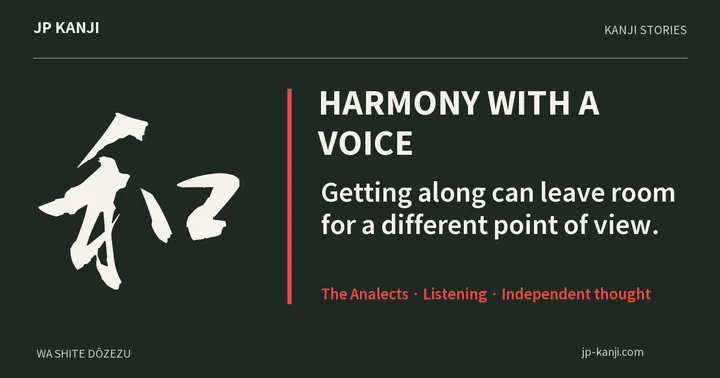
A shared aim can leave room for different tastes. An everyday discussion leads to 和して同ぜず and the idea of keeping your own voice.

Read the story

Culture & objects

What makes a shared meal feel shared?

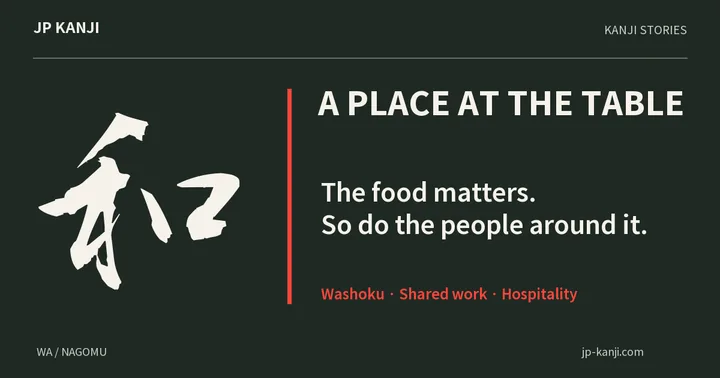
Preparing, passing and clearing can matter as much as the menu. Washoku offers a cultural starting point for noticing those connections.

Read the story

Style & making

A small colour palette that still feels like you

Try two colours and one accent using clothes or objects you already own. Harmony can include a deliberate difference.

Read the story

Everyday stories

Making room for the quieter person in a conversation

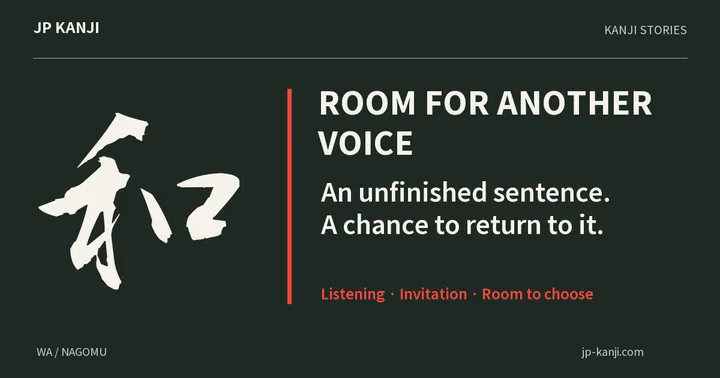
A welcoming gathering needs more than extra chairs. Small changes can make it easier for different people to join in.

Read the story

Everyday stories

Why the quieter part matters in an ensemble

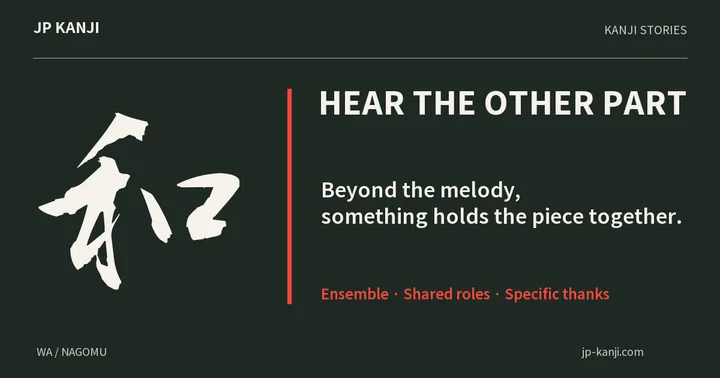
A melody may stand out while another part makes it possible. Use a simple listening exercise to notice the work around the centre.

Read the story

Words & readings

Wa in context: peace, harmony and Japanese clothing

Compare heiwa, chōwa and wafuku to see why 和 cannot always be translated as “peace”.

Read the story

Giving & choosing

A 和 thank-you gift for the person who brings people together

Recognise a host, teammate or friend through one specific moment of care, without asking them to keep everyone happy.

Read the story

Another character, another perspective

All stories →

Sayings & idioms

The same trip, different expectations: what are we imagining?

Two friends look forward to the same weekend, but picture different days. An everyday conversation leads to the expression 同床異夢.

Read the story

Everyday stories

Travelling with a friend when your ideal days are different

Agree on pace, spending and time apart before a trip, so shared memories do not require an identical itinerary.

Read the story

Everyday stories

When the picnic becomes an indoor afternoon

A changed plan can preserve the part people were looking forward to. Identify that part before replacing the whole day.

Read the story