Everyday stories wa / nagomu
Make one small invitation work in two languages
Give the practical information equal visibility and ask a reader to check each version. A welcoming invitation begins with details people can actually use.
Wear this characterStart with a scene
You are inviting friends to a small exhibition, and they do not all read the same language comfortably. Begin with a short factual version: what is happening, where it is, when it starts and whether a reply is needed. Keep the event name separate from these practical details. A clever heading can survive as a title without forcing a literal translation to carry the whole invitation.
A closer look
Give both readers the same way in
Make a second version that communicates the same arrangement in natural wording. Keep names, addresses and useful map links recognisable, and write dates so that the month and day cannot easily be confused. If the event is online across regions, state the relevant time zone. Ask someone who reads the language well to check the actual invitation, including its small labels, rather than approving an isolated paragraph without the layout.
Place the two versions with comparable size and contrast. On a small screen, a simple sequence may be clearer than narrow side-by-side columns. Make it easy to identify where each language begins without using a flag as the only clue. Check that the response method works for both groups, and say which language you can answer in if that affects the practical arrangements. A translated invitation should not hide a different set of instructions at the final step.
See it in words
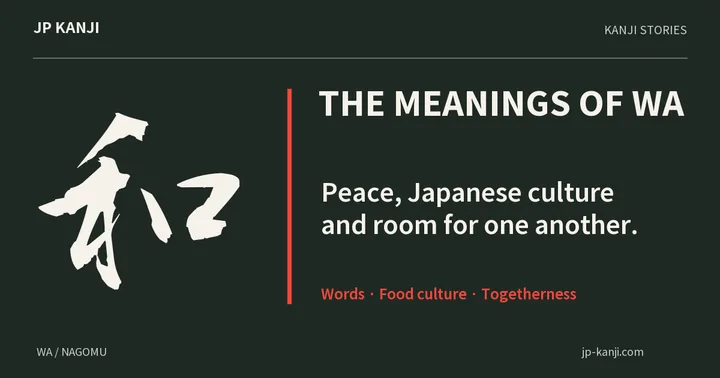
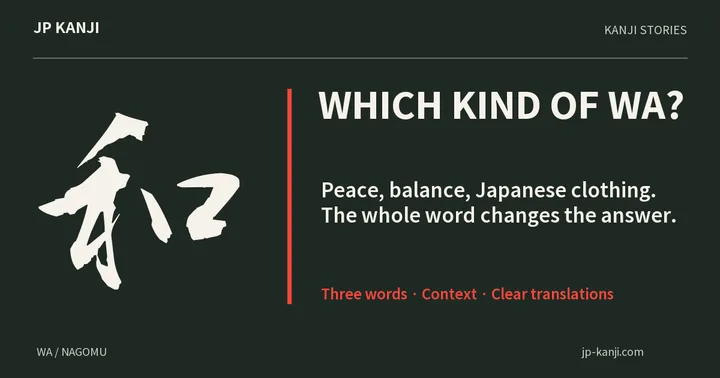
- 平和
- heiwaPeace
- 調和
- chōwaHarmony or balance
- 和食
- washokuJapanese food culture
A meaning to make your own
A thought to give
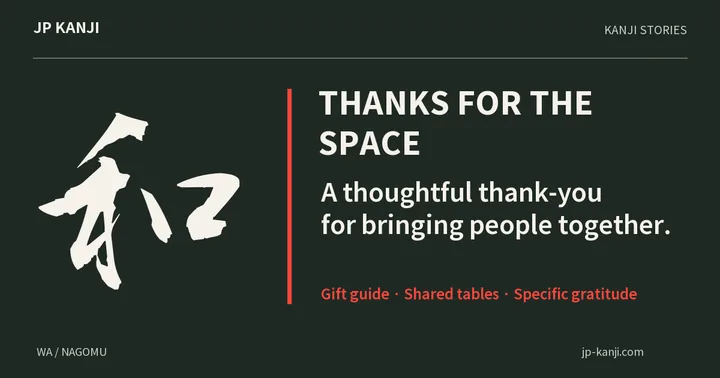
For the friend who helps people understand each other, a 和 gift can name a specific contribution: “For making the invitation clear for both sides of the table.” Thank them without assuming they will translate every future event.
Make a gift cardOne more question
Must the two versions have exactly the same word count?
No. They need equivalent practical information and a comparable tone. Different languages may need different lengths. Give each enough room, and check the finished invitation rather than shrinking one version simply to preserve symmetry.
A character to carry with you 和
和 can express harmony. Here the connection is a shared occasion with more than one clear route into it. A character on a garment can recall bringing people together while allowing their words and reading preferences to remain different.
Wear this character