EN · Language
English日本語DeutschFrançaisItalianoEspañol

Culture & objects wa / nagomu

What makes a shared meal feel shared?

Preparing, passing and clearing can matter as much as the menu. Washoku offers a cultural starting point for noticing those connections.

Wear this character

Start with a scene

Imagine a dinner where the food is ready but one person keeps leaving the table to fetch everything. The meal is served to everyone, yet the work is still carried by one person. A shared table becomes a useful place to ask what togetherness looks like in practice.

A closer look

Look beyond the plate

UNESCO describes washoku as food-related knowledge and practice, notably visible at New Year and transmitted through shared meals.[1] That account is broader than a list of famous dishes. It invites attention to the people and activities around the food.

For a meal of your own, ask what the host would find useful. Set out water, explain a dish to a newcomer, or offer to help clear. Ask about preferences before deciding what someone should eat. These small arrangements do not require a ceremonial meal or a claim that your table reproduces a particular Japanese tradition.

See it in words

平和
heiwaPeace
調和
chōwaHarmony or balance
和食
washokuJapanese food culture
Examples of usage, not a diagram of the character’s historical development.

A meaning to make your own

A thought to give

“For making room for all of us at your table.” Add one remembered meal or gesture, so the gift recognises a person rather than an ideal host.

Make a gift card

One more question

Does washoku simply mean every meal should look alike?

No. The source concerns a food culture and its transmission. For your own gathering, the useful question is how people participate, not whether every plate is identical.

A character to carry with you 和

和 includes harmony and a Japanese connection in different words. Here, the character can recall the people who make a table welcoming; its meaning should be explained in that particular context.

Wear this character
Sources

  1. UNESCO · Washoku

Share this story

More about this character 和

All stories →

Meaning & background

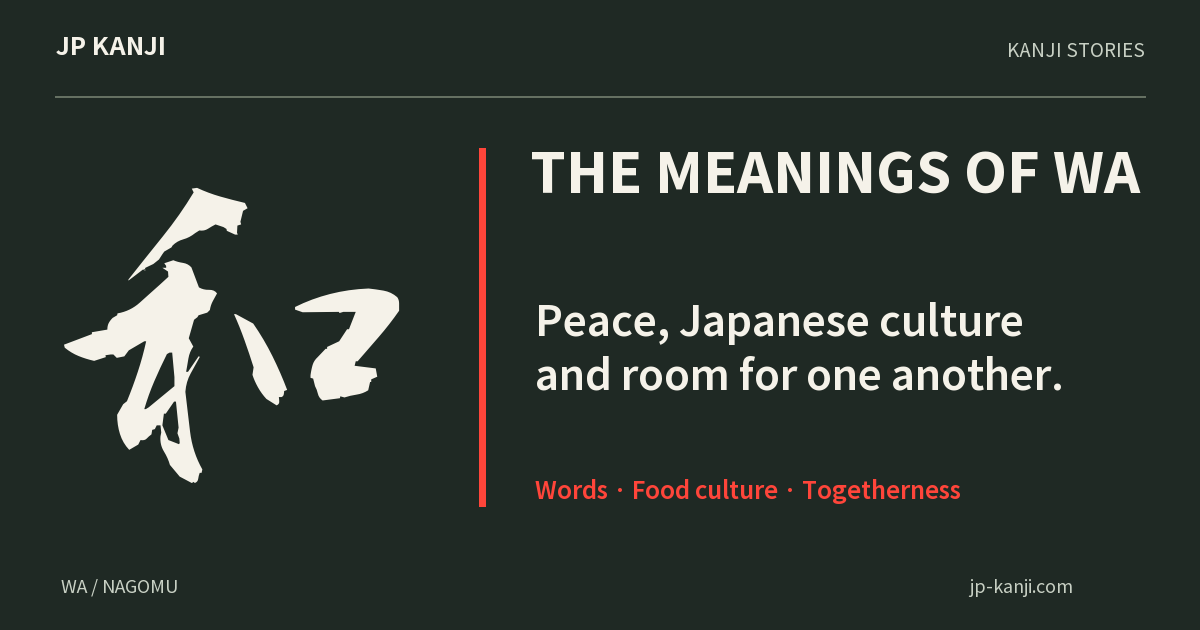
和: harmony, Japanese culture and room for one another

和 appears in words for peace, harmony and Japanese food. See how context changes its meaning and how it can become a thoughtful gift.

Read the story

Sayings & idioms

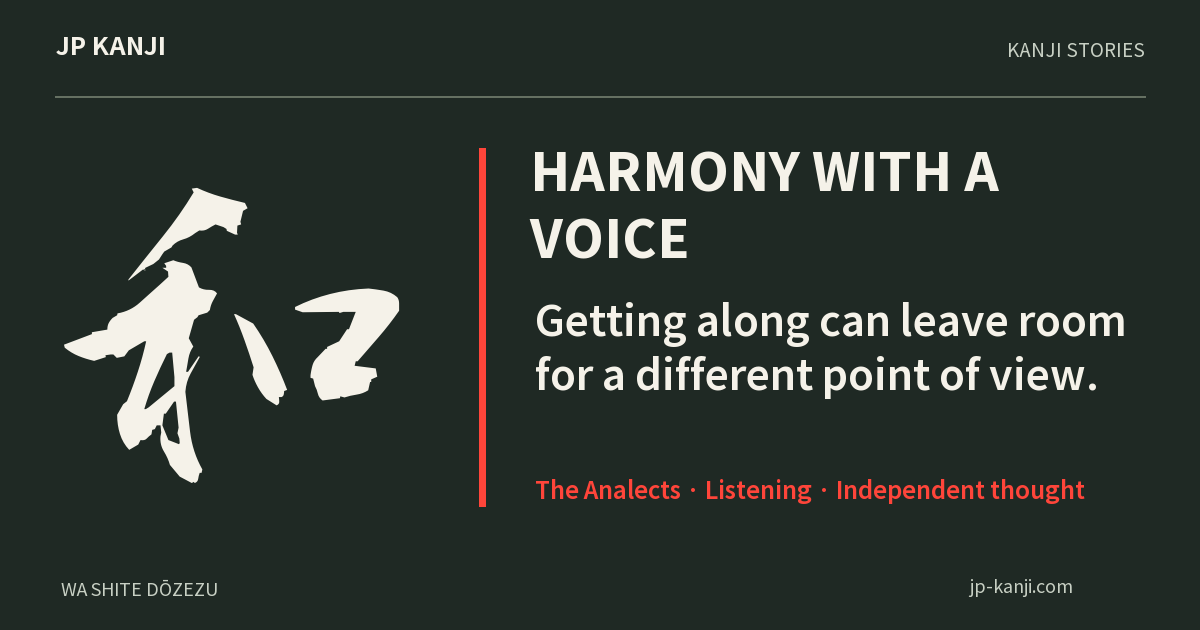
Getting along without agreeing on everything

A shared aim can leave room for different tastes. An everyday discussion leads to 和して同ぜず and the idea of keeping your own voice.

Read the story

Style & making

A small colour palette that still feels like you

Try two colours and one accent using clothes or objects you already own. Harmony can include a deliberate difference.

Read the story

Everyday stories

Making room for the quieter person in a conversation

A welcoming gathering needs more than extra chairs. Small changes can make it easier for different people to join in.

Read the story
4 more stories

Everyday stories

Why the quieter part matters in an ensemble

A melody may stand out while another part makes it possible. Use a simple listening exercise to notice the work around the centre.

Read the story

Everyday stories

When a shared plan changes: making the new version clear

A changed time or cancelled contribution can leave people imagining different plans. Write the next agreement in plain language.

Read the story

Words & readings

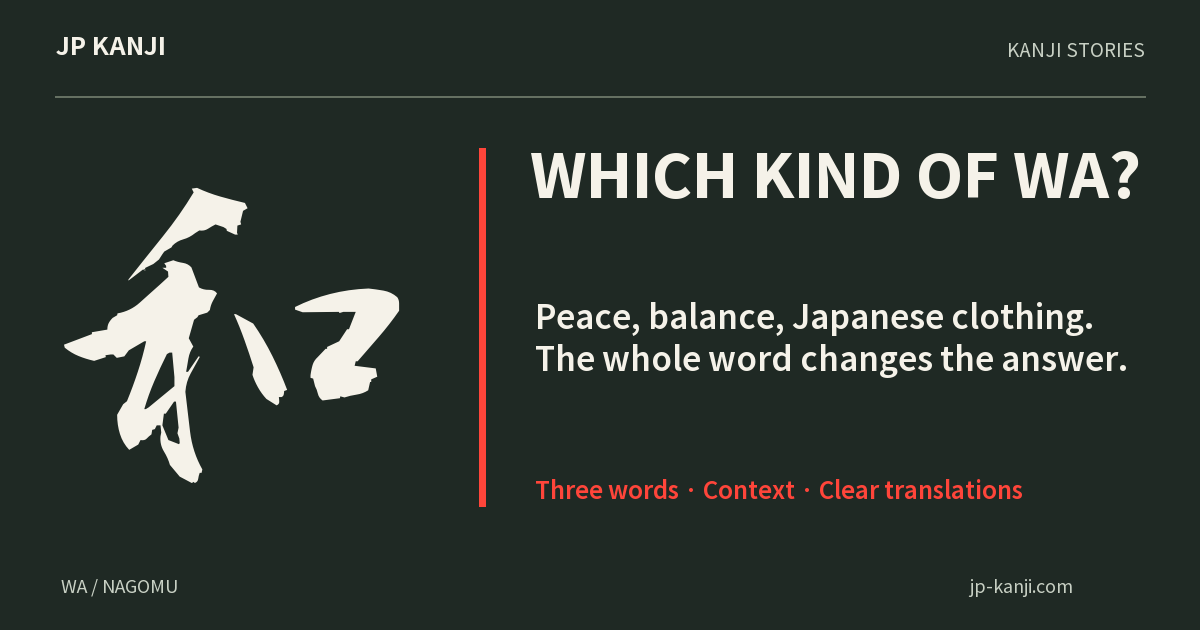
Wa in context: peace, harmony and Japanese clothing

Compare heiwa, chōwa and wafuku to see why 和 cannot always be translated as “peace”.

Read the story

Giving & choosing

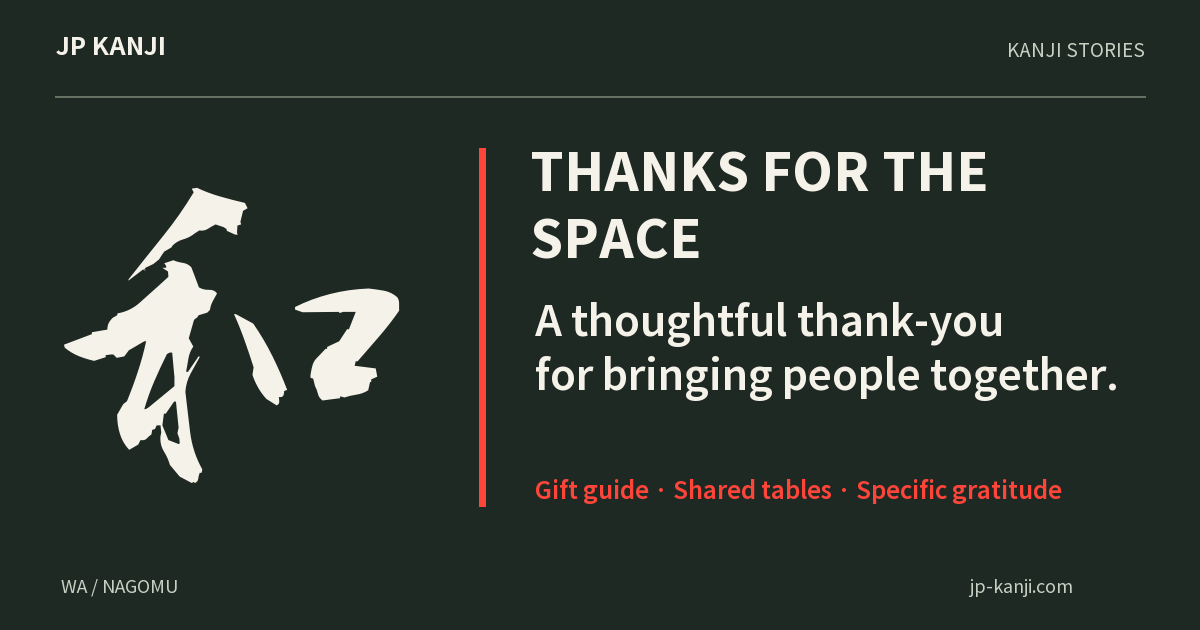
A 和 thank-you gift for the person who brings people together

Recognise a host, teammate or friend through one specific moment of care, without asking them to keep everyone happy.

Read the story

Another character, another perspective

All stories →

Everyday stories

The objects you keep reaching for

A familiar cup, notebook or garment can hold a history of use. Find the detail that makes one ordinary object matter.

Read the story

Everyday stories

Choosing between two creative projects without choosing your whole future

Two appealing ideas can become easier to compare when the decision is about the next experiment, not a permanent identity.

Read the story

Everyday stories

The work that makes a small performance look effortless

Labels, checked cues and a ready room rarely take the spotlight. Notice the preparation that lets other people begin.

Read the story