EN · Language
English日本語DeutschFrançaisItalianoEspañol

Everyday stories wa / nagomu

Making room for the quieter person in a conversation

A welcoming gathering needs more than extra chairs. Small changes can make it easier for different people to join in.

Wear this character

Start with a scene

At a small gathering, one person begins a story just as someone else changes the subject. You notice the unfinished sentence. Later, a simple “You were saying something about the exhibition?” gives that person a way back into the conversation without making them perform on command.

A closer look

An invitation can leave room to decline

Before trying to include someone, consider what you actually know. Silence may mean listening, tiredness or a wish to stay quiet. A gentle invitation is different from announcing that they never speak. Offer an opening and allow the person to decide whether to use it.

The room itself also offers choices. A smaller group nearby, a place away from a loud speaker, or a brief explanation of an inside reference can make participation easier. Ask rather than assume which change is welcome. You are arranging one particular conversation, not identifying a permanent personality type.

See it in words

平和
heiwaPeace
調和
chōwaHarmony or balance
和食
washokuJapanese food culture
Examples of usage, not a diagram of the character’s historical development.

A meaning to make your own

A thought to give

“Thank you for remembering what I was trying to say.” A note about that small moment can make a gift of 和 specific and warm.

Make a gift card

One more question

Should everyone speak for the same amount of time?

Equal time is not the only sign of a good exchange. Look for opportunities to participate and the freedom to pass, rather than measuring every contribution with a stopwatch.

A character to carry with you 和

和 can relate to getting along. In this story, it becomes a reminder to make space for another voice while respecting the person’s choice to use it.

Wear this character
Share this story

More about this character 和

All stories →

Meaning & background

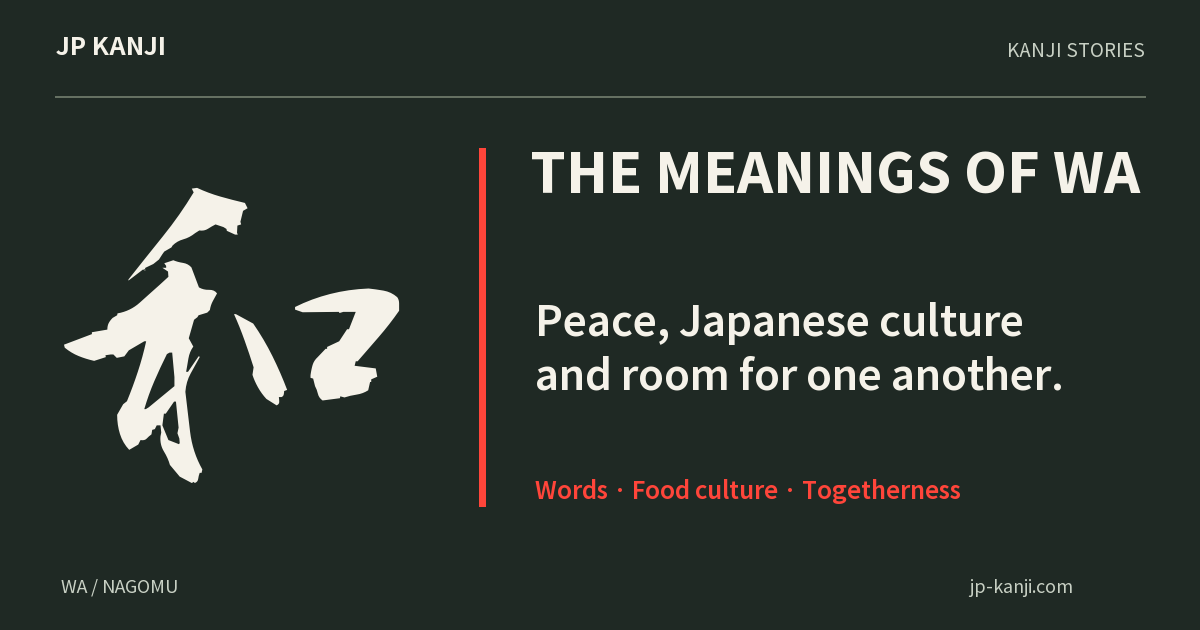
和: harmony, Japanese culture and room for one another

和 appears in words for peace, harmony and Japanese food. See how context changes its meaning and how it can become a thoughtful gift.

Read the story

Sayings & idioms

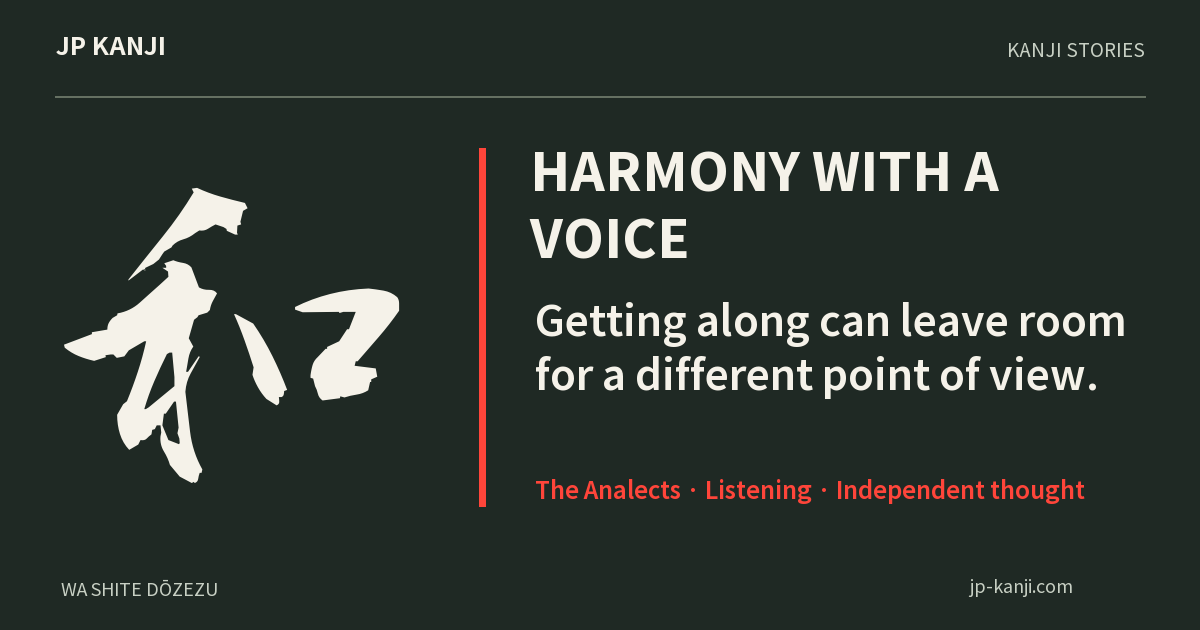
Getting along without agreeing on everything

A shared aim can leave room for different tastes. An everyday discussion leads to 和して同ぜず and the idea of keeping your own voice.

Read the story

Culture & objects

What makes a shared meal feel shared?

Preparing, passing and clearing can matter as much as the menu. Washoku offers a cultural starting point for noticing those connections.

Read the story

Style & making

A small colour palette that still feels like you

Try two colours and one accent using clothes or objects you already own. Harmony can include a deliberate difference.

Read the story
4 more stories

Everyday stories

Why the quieter part matters in an ensemble

A melody may stand out while another part makes it possible. Use a simple listening exercise to notice the work around the centre.

Read the story

Everyday stories

When a shared plan changes: making the new version clear

A changed time or cancelled contribution can leave people imagining different plans. Write the next agreement in plain language.

Read the story

Words & readings

Wa in context: peace, harmony and Japanese clothing

Compare heiwa, chōwa and wafuku to see why 和 cannot always be translated as “peace”.

Read the story

Giving & choosing

A 和 thank-you gift for the person who brings people together

Recognise a host, teammate or friend through one specific moment of care, without asking them to keep everyone happy.

Read the story

Another character, another perspective

All stories →

Everyday stories

Keeping a faraway friend in the ordinary parts of your life

A photograph of a familiar corner or a short postcard can offer something to share without demanding an immediate reply.

Read the story

Culture & objects

Before the first kanji: noticing what a brush can do

A few marks can help you observe width, ink and direction before trying to imitate an entire character.

Read the story

Culture & objects

Beyond the costume: asking what historical ninja actually did

Begin with duties and sources rather than a single dramatic image. Information gathering offers one documented part of a much wider subject.

Read the story