Sayings & idioms dōshō imu
The same trip, different expectations: what are we imagining?
Two friends look forward to the same weekend, but picture different days. An everyday conversation leads to the expression 同床異夢.
Wear this characterStart with a scene
Imagine two friends agreeing to a weekend away. One pictures long museum visits; the other imagines unplanned afternoons in cafés. Both say “a relaxed trip”, yet the same words hide different expectations. This invented example shows why agreement about a label does not always mean agreement about the experience.
A closer look
One itinerary, two imagined weekends
同床異夢, dōshō imu, describes people in a shared situation whose intentions differ. Its image is of sharing a bed while dreaming different dreams. [1] It is more pointed than a cheerful statement that everyone has an individual imagination.
Before booking, each friend could name one thing they hope to do and one thing they can happily skip. That turns a vague shared dream into a conversation with choices. The expression can help describe the mismatch, but calling the other person “the problem” will not reveal what they actually wanted. Ask first, label later.
See it in words
- 同床異夢
- dōshō imuTogether, but with different intentions
- 同床
- dōshōSharing a bed: the phrase’s image
- 異夢
- imuDifferent dreams: the contrasting image
A meaning to make your own
A thought to give
For a shared adventure, a personal note might say: “Different wish lists, one good conversation. Let’s leave room for both.” Use your own words rather than the idiom if you want an uncomplicated warm message.
Make a gift cardOne more question
Is 同床異夢 a good wedding greeting?
We would avoid it: its focus is divergent intentions, so it can suggest a lack of unity. A plain message about shared hopes is easier to understand. The single character 夢 carries no such fixed implication.
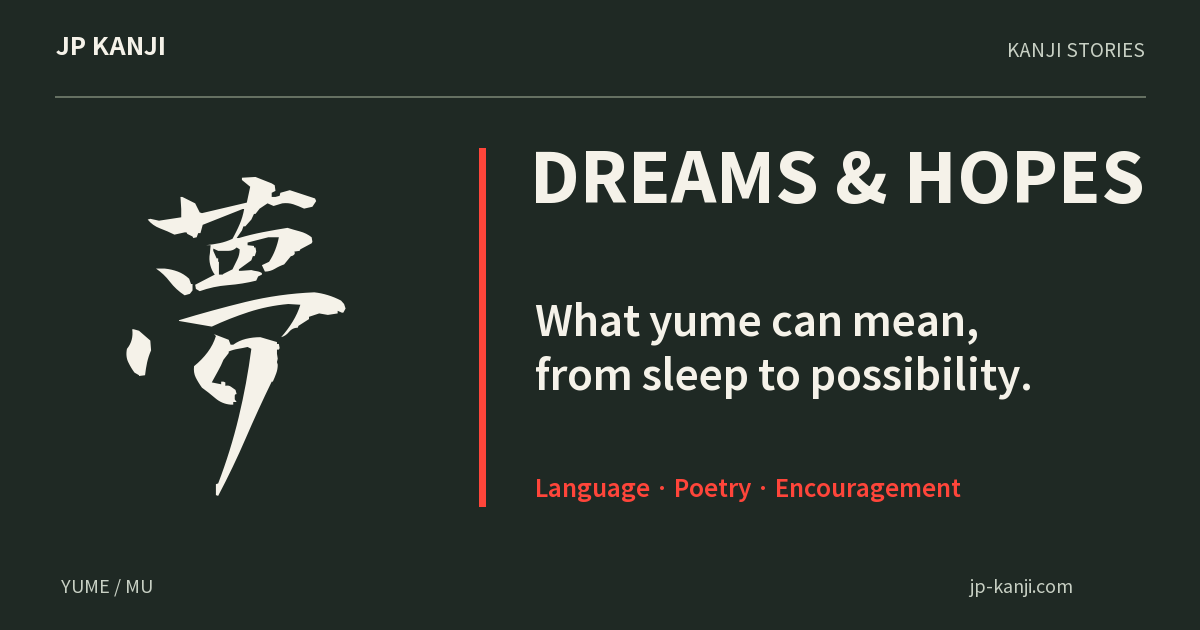
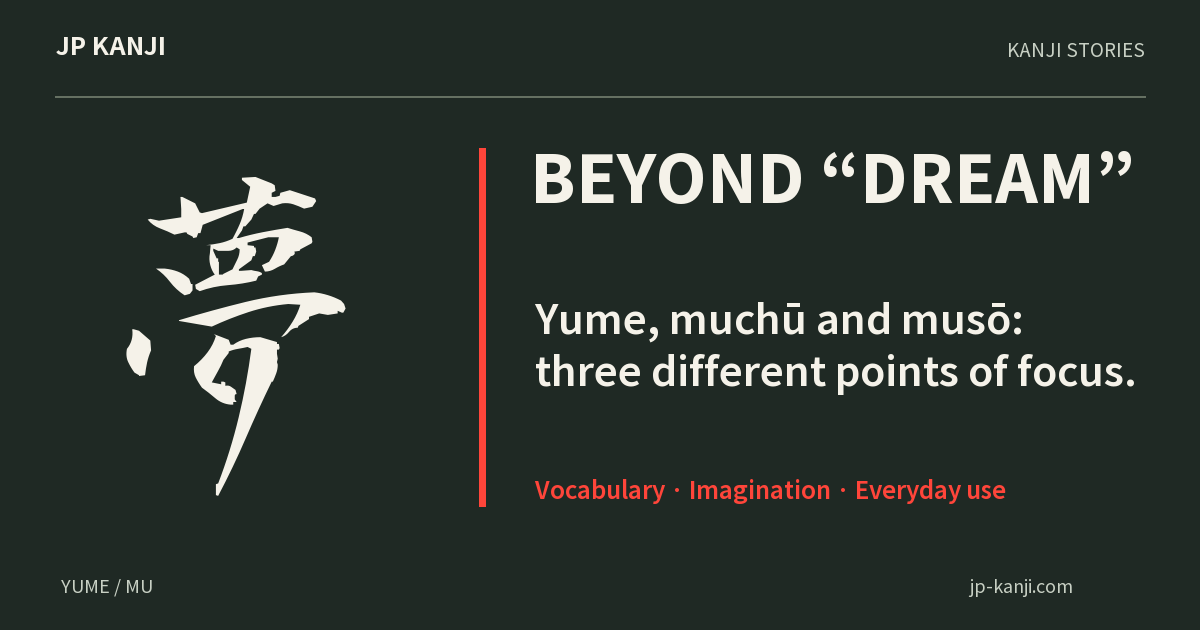
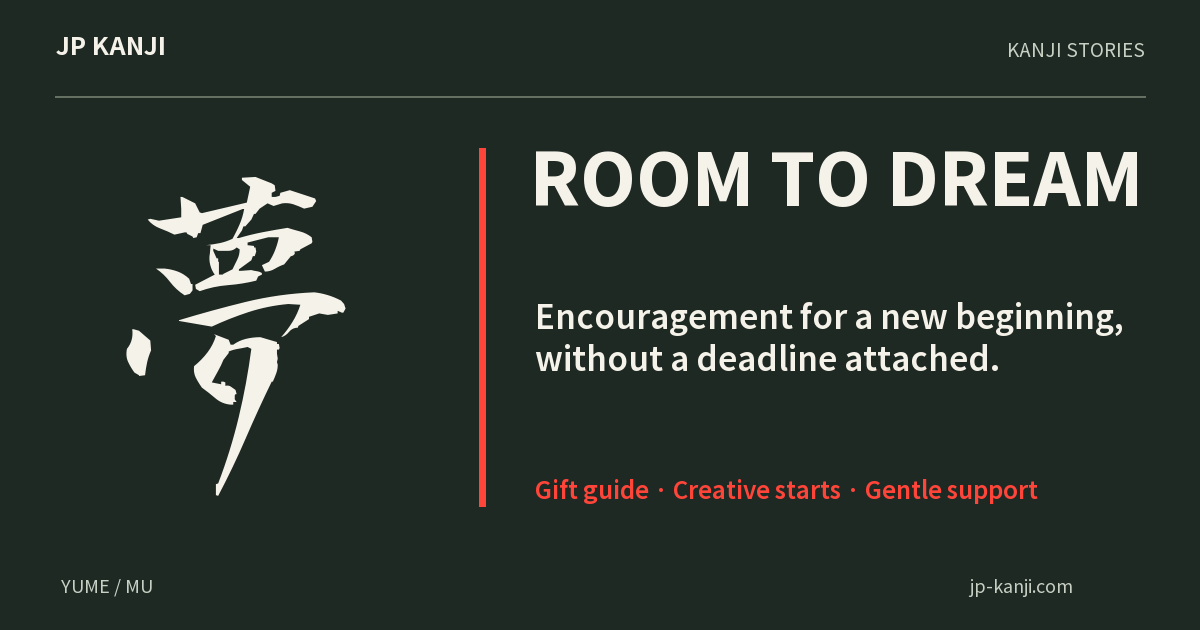
A character to carry with you 夢
The single 夢 on the garment can remind you of your own dreams. It does not display the critical sense of 同床異夢 or make a statement about your relationship with someone else.
Wear this characterSources & editorial approach
Sources may be in Japanese or English.
Readings and cultural references are checked against the sources below. Styling and gift ideas are our suggestions. Written with AI assistance and source checks.