EN · Language
English日本語DeutschFrançaisItalianoEspañol

Everyday stories wa / nagomu

Why the quieter part matters in an ensemble

A melody may stand out while another part makes it possible. Use a simple listening exercise to notice the work around the centre.

Wear this character

Start with a scene

A familiar song begins and you follow the melody automatically. On another listen, choose one accompaniment instead. Notice when it enters, stops or repeats. The song has not changed, but your attention has given another contributor a place in the foreground.

A closer look

Listen for the part you did not notice first

You can try the same exercise with a small group project. Name the visible result, then list the jobs that made it usable: arranging the room, checking the order, preparing a clear invitation. A contribution can be important without being the loudest or most memorable part.

If you are sharing work, make the roles clear before the event and thank people for specific actions afterwards. Do not assume that the person who quietly filled a gap wants to fill it forever. Ask which role they would choose next time. A balanced group can change its arrangement as its members change.

See it in words

平和
heiwaPeace
調和
chōwaHarmony or balance
和食
washokuJapanese food culture
Examples of usage, not a diagram of the character’s historical development.

A meaning to make your own

A thought to give

“For the part that held our piece together.” Name the rehearsal, performance or shared project to keep the appreciation grounded.

Make a gift card

One more question

Does supporting the group mean always staying in the background?

No. This is an exercise in noticing roles, not assigning permanent ones. A person may support one project and lead another, according to interest and agreement.

A character to carry with you 和

和 has meanings connected with fitting together. The character can recall an ensemble in which different contributions meet, rather than a requirement for everyone to sound alike.

Wear this character
Share this story

More about this character 和

All stories →

Meaning & background

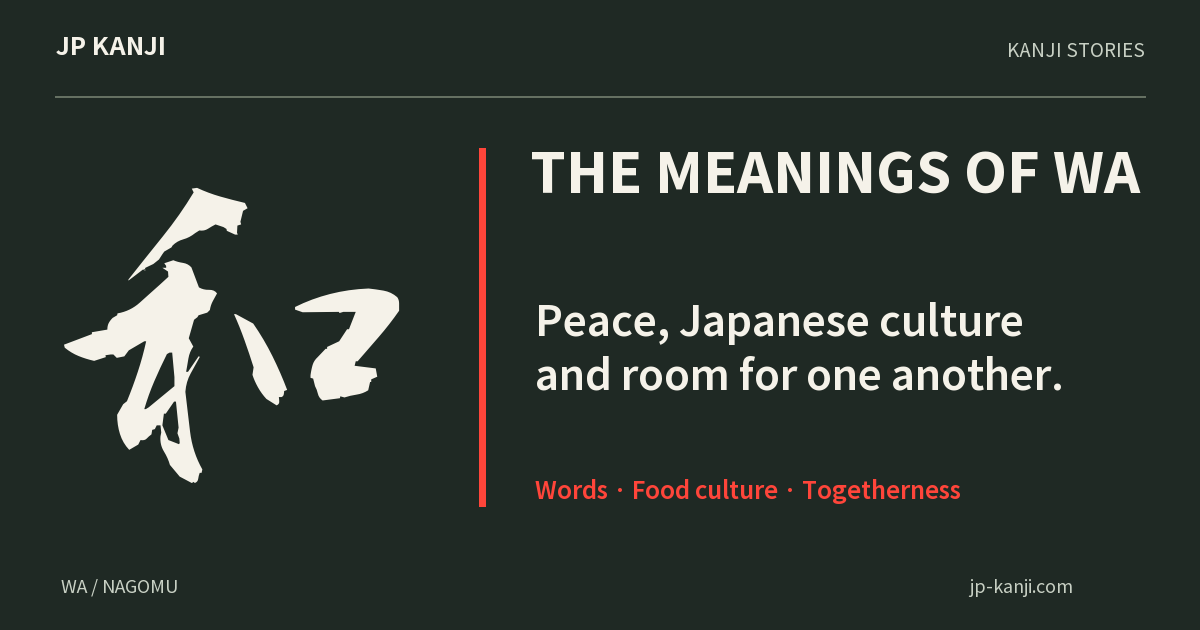
和: harmony, Japanese culture and room for one another

和 appears in words for peace, harmony and Japanese food. See how context changes its meaning and how it can become a thoughtful gift.

Read the story

Sayings & idioms

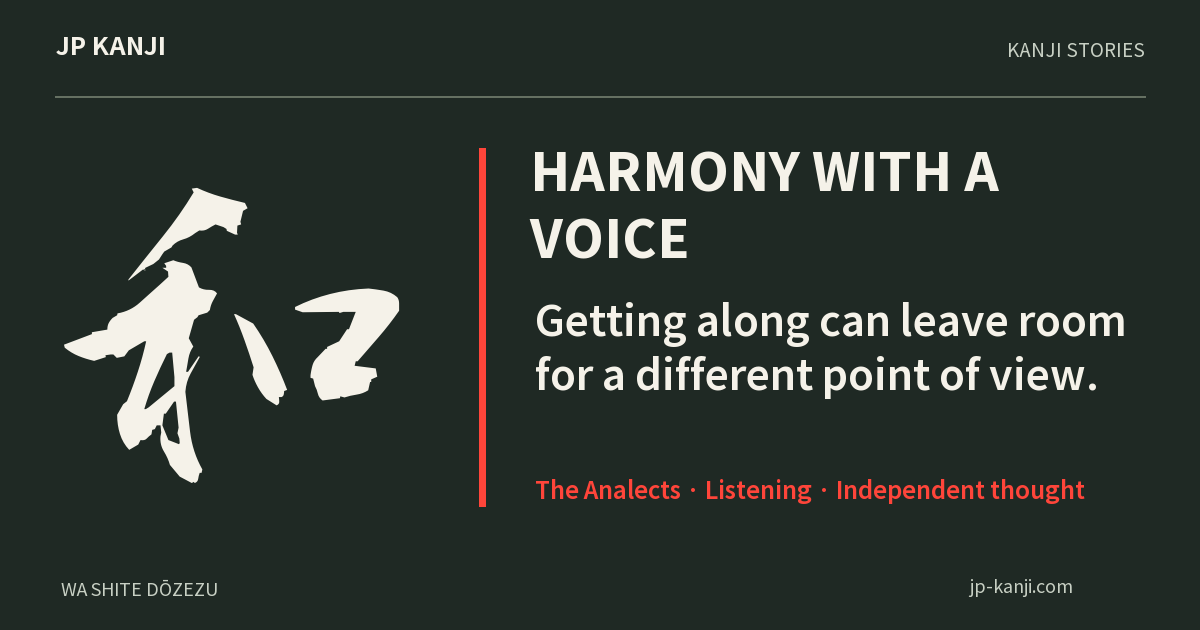
Getting along without agreeing on everything

A shared aim can leave room for different tastes. An everyday discussion leads to 和して同ぜず and the idea of keeping your own voice.

Read the story

Culture & objects

What makes a shared meal feel shared?

Preparing, passing and clearing can matter as much as the menu. Washoku offers a cultural starting point for noticing those connections.

Read the story

Style & making

A small colour palette that still feels like you

Try two colours and one accent using clothes or objects you already own. Harmony can include a deliberate difference.

Read the story
4 more stories

Everyday stories

Making room for the quieter person in a conversation

A welcoming gathering needs more than extra chairs. Small changes can make it easier for different people to join in.

Read the story

Everyday stories

When a shared plan changes: making the new version clear

A changed time or cancelled contribution can leave people imagining different plans. Write the next agreement in plain language.

Read the story

Words & readings

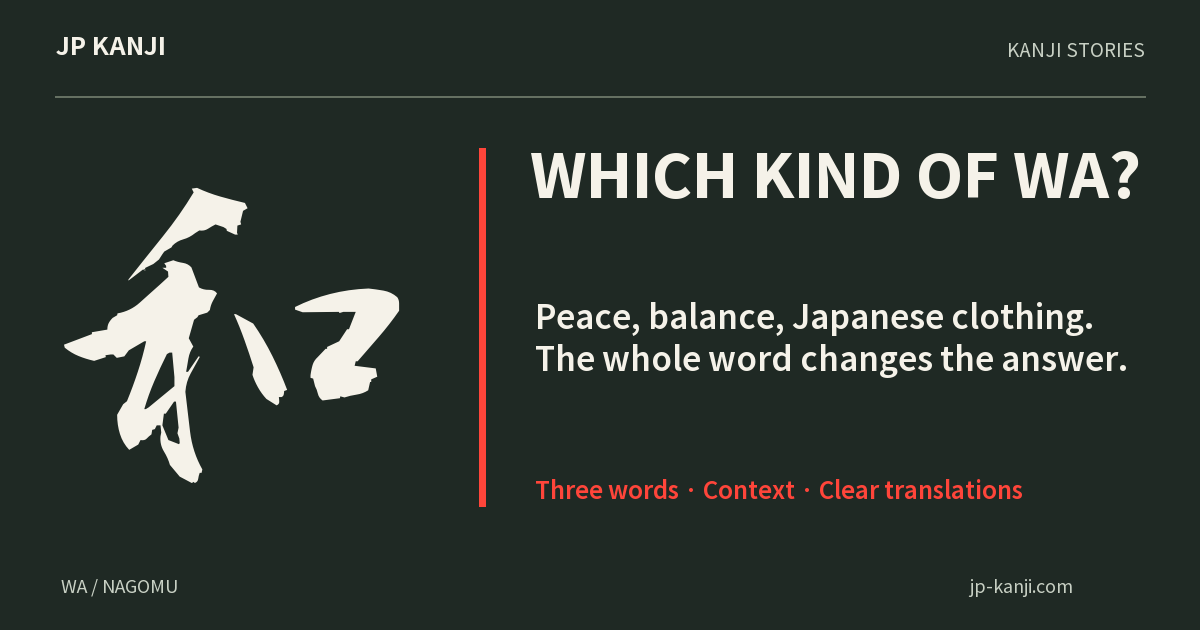
Wa in context: peace, harmony and Japanese clothing

Compare heiwa, chōwa and wafuku to see why 和 cannot always be translated as “peace”.

Read the story

Giving & choosing

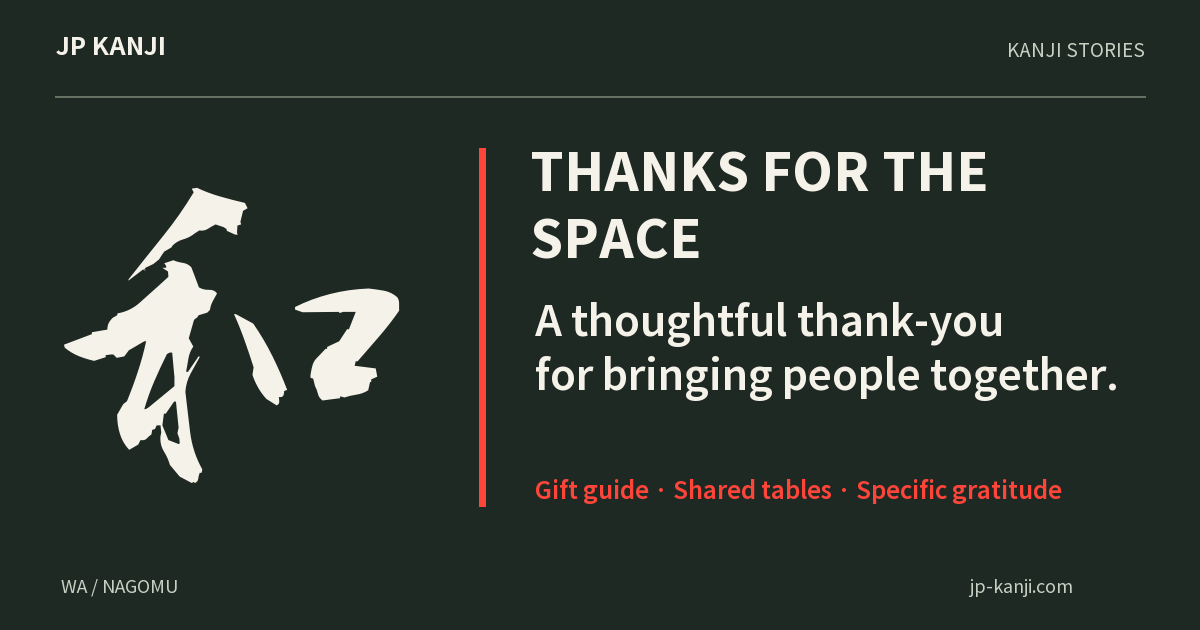
A 和 thank-you gift for the person who brings people together

Recognise a host, teammate or friend through one specific moment of care, without asking them to keep everyone happy.

Read the story

Another character, another perspective

All stories →

Everyday stories

The handwritten recipe that holds more than ingredients

A margin note or a familiar abbreviation can preserve a person’s way of explaining. Keep the practical details and the memory together.

Read the story

Style & making

A map of the places that matter to two people

A bench, a corner and a meeting place can make a small map more personal than a perfectly measured route.

Read the story

Everyday stories

A rehearsal for the moments between the main actions

The pause, entrance and handover can need attention too. Practise a small transition so everyone knows what happens next.

Read the story