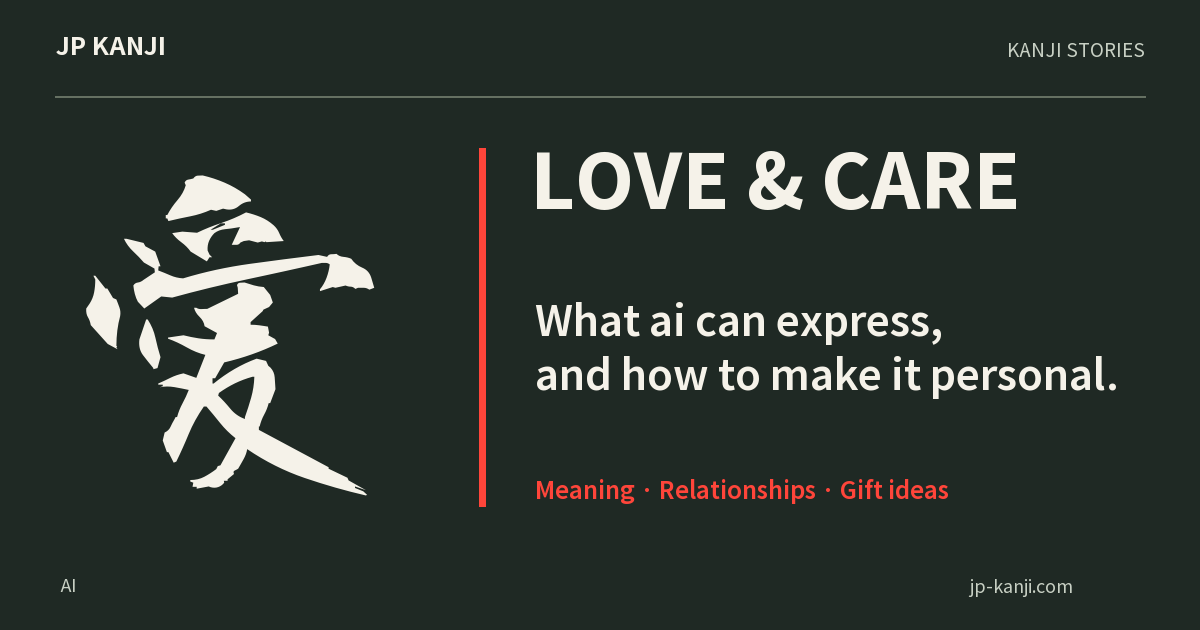
Giving & choosing ai
Giving 愛 to a friend, a parent or a partner
Keep the same character and change the note: three ways to make a gift’s intention clear.
Wear this characterMeaning at a glance
愛 has uses beyond romantic love. [1] That breadth makes it a possible gift for different relationships, but it also means the character cannot explain your intention on its own. A friend, a parent and a partner may read the same print through very different expectations.
See it in words
- 愛
- aiLove and care
- 恋
- koiRomantic longing
- 恋愛
- ren’aiRomantic love
A closer look
Name the relationship in your own words
For a friend, choose a shared habit: the walks, the reliable calls, the ridiculous jokes. For a parent, mention something they taught you or a way they supported you. For a partner, name an ordinary moment you want to keep sharing. Concrete details make the note personal without requiring a dramatic declaration.
Before choosing the garment, consider how comfortable the person is with visible sentiment. Someone may love a private note and dislike wearing an emotional message. That is a question of taste, not a measure of their affection. Give them room to enjoy the design in their own way rather than expecting a particular response.
A meaning to make your own
Match the garment to their existing wardrobe, including the size and fit information on the actual product page.
A thought to give
“I chose 愛 for the care in our friendship. Thank you for those Sunday calls.” Adapt the relationship and the shared detail.
Make a gift cardOne more question
Should the note simply say “I love you”?
It can, if that is what you mean. It need not. A clear thank-you or memory may express the relationship more accurately.
Sources & editorial approach
Sources may be in Japanese or English.
Readings and cultural references are checked against the sources below. Styling and gift ideas are our suggestions. Written with AI assistance and source checks.