EN · Language
English日本語DeutschFrançaisItalianoEspañol

Everyday stories ai

The objects you keep reaching for

A familiar cup, notebook or garment can hold a history of use. Find the detail that makes one ordinary object matter.

Wear this character

Start with a scene

You own several cups but keep choosing the same one. Perhaps the handle feels familiar or its size suits a particular drink. Before calling it your favourite, describe the moment when you reach for it. The reason may be smaller and more personal than its appearance suggests.

A closer look

Describe the use before the price

Write three observations: what the object does well, where you use it, and one memory attached to it. These give different kinds of value. A useful handle does not require a dramatic origin story, and a meaningful present does not have to be the most practical thing you own.

If you want to keep using it, look at its actual care instructions and condition. Appreciation can include ordinary attention, such as storing it where it will not be knocked over. It can also mean accepting that an item no longer suits you. Keeping something and caring about it are related choices, not identical obligations.

See it in words

愛
aiLove and care
恋
koiRomantic longing or love
恋愛
ren’aiRomantic love
Examples of usage, not a diagram of the character’s historical development.

A meaning to make your own

A thought to give

“For noticing the value in things we use every day.” Add the name of an object they have taught you to appreciate.

Make a gift card

One more question

Does a worn object always become more valuable?

Not automatically. Your connection is personal, and wear may also limit use. Describe what matters to you without making a claim about price or universal beauty.

A character to carry with you 愛

愛 can express affection and cherishing. The character can stand for the attention you give to familiar things and the people whose memories they carry.

Wear this character
Share this story

More about this character 愛

All stories →

Meaning & background

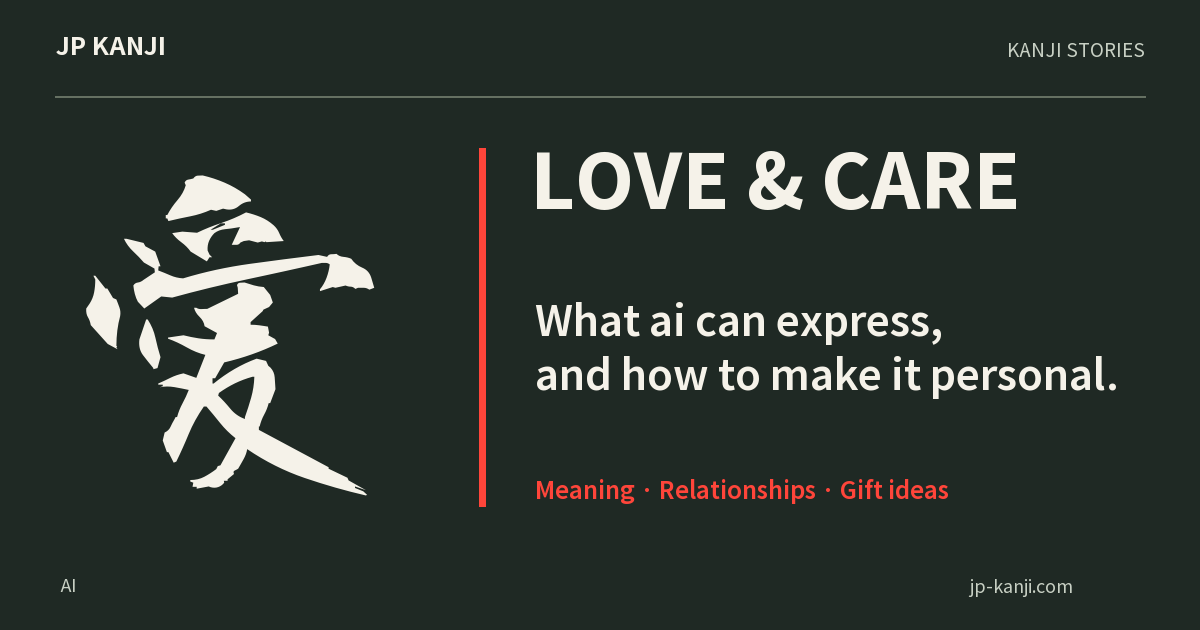
愛 and 恋: choosing the Japanese kanji for love

愛 is a character for love and care. Compare it with 恋, then find a way to give the design without relying on an unexplained symbol.

Read the story

Sayings & idioms

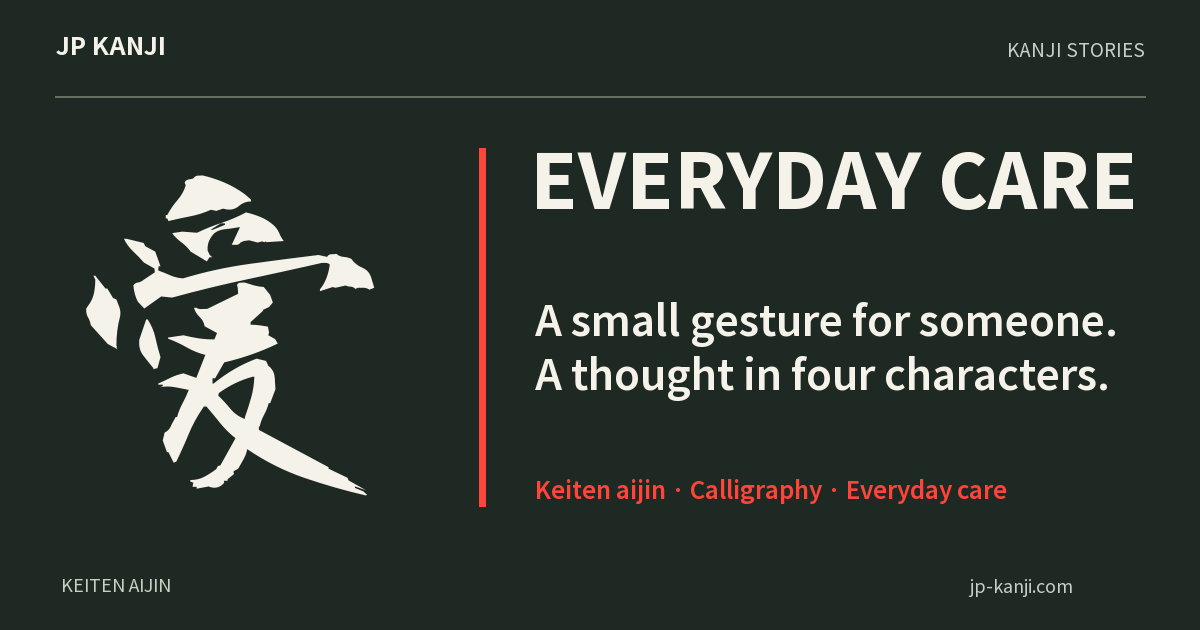
Small acts of care, and four characters preserved in brushwork

Making room for someone or letting them finish a thought: small gestures open a conversation about 敬天愛人 and a surviving work of calligraphy.

Read the story

Everyday stories

How to write a thank-you that could only be for one person

Name an action, its effect and the memory you kept. A few specific lines can carry more than a grand declaration.

Read the story

Everyday stories

Keeping a faraway friend in the ordinary parts of your life

A photograph of a familiar corner or a short postcard can offer something to share without demanding an immediate reply.

Read the story
4 more stories

Everyday stories

The handwritten recipe that holds more than ingredients

A margin note or a familiar abbreviation can preserve a person’s way of explaining. Keep the practical details and the memory together.

Read the story

Everyday stories

The small rituals that make an ordinary day feel shared

A cup set out or a familiar goodbye can mean something because of the people involved. Find out which gestures are actually welcome.

Read the story

Words & readings

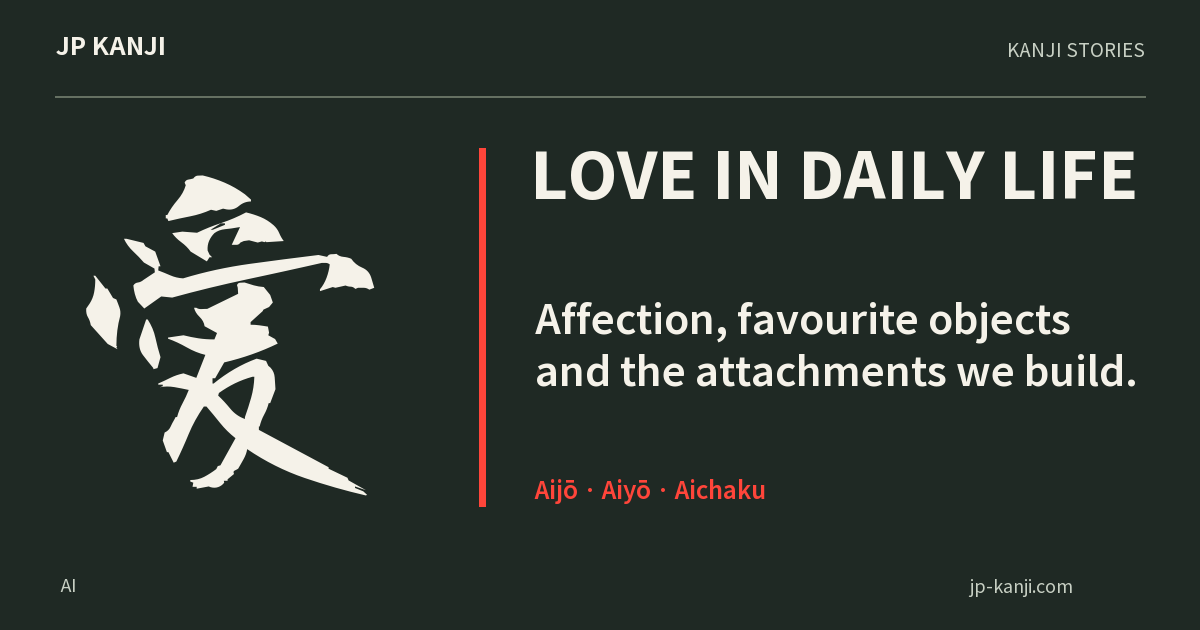
Love beyond romance: aijō, aiyō and aichaku

Three words with 愛 reveal affection, favourite everyday objects and attachment built over time.

Read the story

Giving & choosing

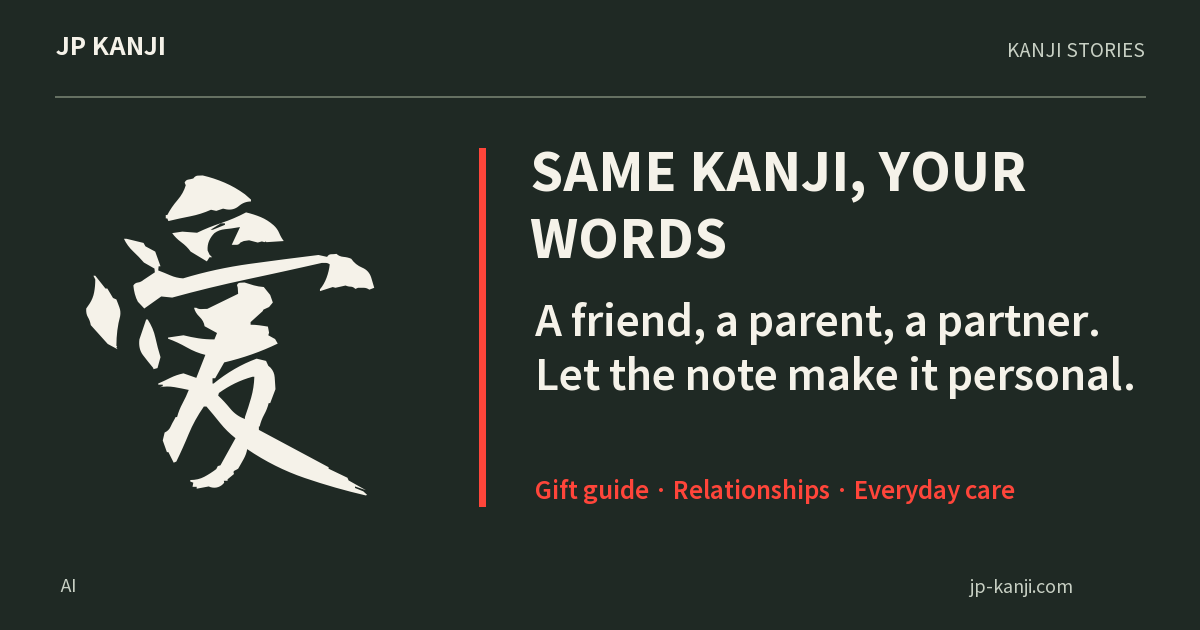
Giving 愛 to a friend, a parent or a partner

Keep the same character and change the note: three ways to make a gift’s intention clear.

Read the story

Another character, another perspective

All stories →

Culture & objects

Fūrin: hearing the breeze before you notice it

A small bell makes a moving breath of air audible. Explore the object, its sound and the summer association without confusing them.

Read the story

Style & making

A still life made from three things already on your table

A cup, a folded cloth and a piece of fruit can become an exercise in attention. Change the arrangement before searching for better objects.

Read the story

Everyday stories

The small souvenir that remembers a whole afternoon

A ticket, postcard or sketch can carry a precise moment. Keep the memory attached before the object becomes anonymous.

Read the story