EN · Language
English日本語DeutschFrançaisItalianoEspañol

Everyday stories tabi / ryo

Giving a travel memory to someone who was not there

A souvenir becomes easier to receive when its story connects with the recipient, not only with the traveller.

Wear this character

Start with a scene

You bring back an object you loved, but the person receiving it does not know the street, the shop or the afternoon behind it. Begin with why it made you think of them. That connection gives the story a doorway they can actually use.

A closer look

Find the part that reaches the other person

Keep the explanation short and concrete. A pattern might recall a colour they often wear; a small notebook might suit their habit of drawing. Avoid assuming that your favourite place must become their favourite too. The gift can share a moment without asking the recipient to adopt all your enthusiasm.

If they were part of the trip, choose a memory both of you can recognise. If they were not, distinguish your experience from claims about an entire country or culture. “I saw this on the afternoon I got lost” is your story; “everyone there believes this” needs evidence far beyond the purchase.

See it in words

旅
tabiA journey
旅行
ryokōTravel; a trip
旅人
tabibitoA traveller
Examples of usage, not a diagram of the character’s historical development.

A meaning to make your own

A thought to give

“I saw this and thought of the way you…” Finish with something you actually know about the person.

Make a gift card

One more question

Is a travel gift less personal if bought after returning?

The meaning comes from the connection you explain honestly. Say where the idea came from without implying that an item was bought on the trip if it was not.

A character to carry with you 旅

旅 means travel. A character garment can carry the idea of a journey while the accompanying note makes its connection with a particular recipient clear.

Wear this character

Share this story

More about this character 旅

All stories →

Meaning & background

旅: tabi, travel and the stories you bring home

旅 is the kanji for a journey. Explore how a place can become a memory, and how to turn a travel-inspired design into a personal gift.

Read the story

Sayings & idioms

Remembering the journey, and the people who made it easier

An improvised lunch can stay with you longer than a missed train. A story of companionship leads to 旅は道連れ世は情け.

Read the story

Everyday stories

The small souvenir that remembers a whole afternoon

A ticket, postcard or sketch can carry a precise moment. Keep the memory attached before the object becomes anonymous.

Read the story

Everyday stories

Spending time on one street instead of collecting more stops

Choose a small area and a few questions. A modest outing can give you something specific to remember without a crowded itinerary.

Read the story
4 more stories

Style & making

A travel journal you can write in five lines

Record one place, one detail, one exchange, one surprise and one question. Keep it small enough to finish while the day is still clear.

Read the story

Everyday stories

The return journey: noticing home after being away

A familiar room can look slightly different when you return. Record the difference before ordinary routines cover it again.

Read the story

Words & readings

Tabi, ryokō and tabibito: three Japanese travel words

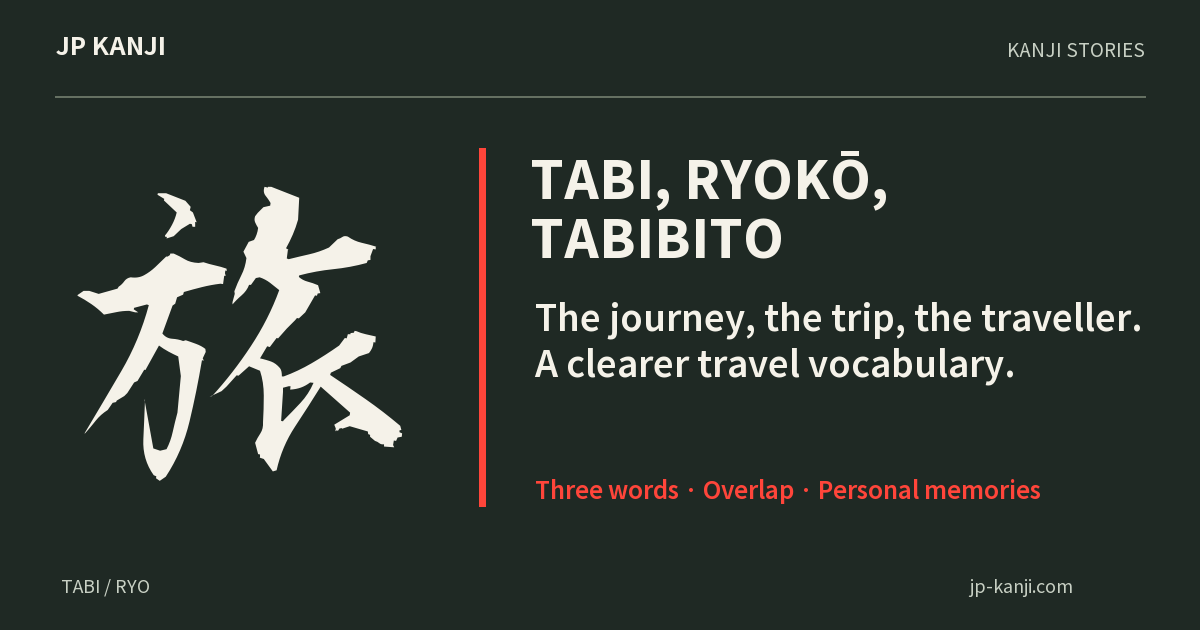
A journey, travelling and a traveller: learn the differences without turning them into a rigid “tourist versus explorer” rule.

Read the story

Giving & choosing

A 旅 gift for a travel companion: turn one memory into a note

Choose a detail from a shared journey instead of a generic list of destinations or a promise of the next trip.

Read the story

Another character, another perspective

All stories →

Everyday stories

Learning with a friend without turning it into a race

Two people can work on different questions and still help each other. Make the purpose of feedback clear before comparing results.

Read the story

Everyday stories

Why an unfinished story can stay with you

An open ending leaves a question active. Explore the difference between a deliberate invitation and a missing piece of information.

Read the story

Everyday stories

The small rituals that make an ordinary day feel shared

A cup set out or a familiar goodbye can mean something because of the people involved. Find out which gestures are actually welcome.

Read the story