EN · Language
English日本語DeutschFrançaisItalianoEspañol

Everyday stories ai

The small rituals that make an ordinary day feel shared

A cup set out or a familiar goodbye can mean something because of the people involved. Find out which gestures are actually welcome.

Wear this character

Start with a scene

One person leaves a second cup beside the kettle. Sometimes it starts a conversation; sometimes the other person is already out. The gesture can be affectionate without becoming a test that must be answered every morning in exactly the same way.

A closer look

Let repetition remain a choice

Think of a small habit you share and ask what each person likes about it. Is it the drink, the few minutes together, or the simple sign of being remembered? Knowing the part that matters makes it easier to change the form when schedules or preferences change.

Try a version that is easy to accept or decline. A short walk can have an invitation rather than an assumed obligation. A regular message can leave room for a late answer. If you enjoy making the gesture more than the other person enjoys receiving it, their answer is useful information, not a failure of appreciation.

See it in words

愛
aiLove and care
恋
koiRomantic longing or love
恋愛
ren’aiRomantic love
Examples of usage, not a diagram of the character’s historical development.

A meaning to make your own

A thought to give

“For our five minutes by the kettle.” Choose a shared ritual the recipient already enjoys, so the note recognises rather than invents the connection.

Make a gift card

One more question

Is a routine less meaningful when it changes?

Not necessarily. A different time or gesture may preserve what both people value. Ask about the purpose of the habit before trying to preserve its exact form.

A character to carry with you 愛

愛 can express affection and care. A single character can remind you of an ordinary welcome, without turning that welcome into a promise of constant availability.

Wear this character
Share this story

More about this character 愛

All stories →

Meaning & background

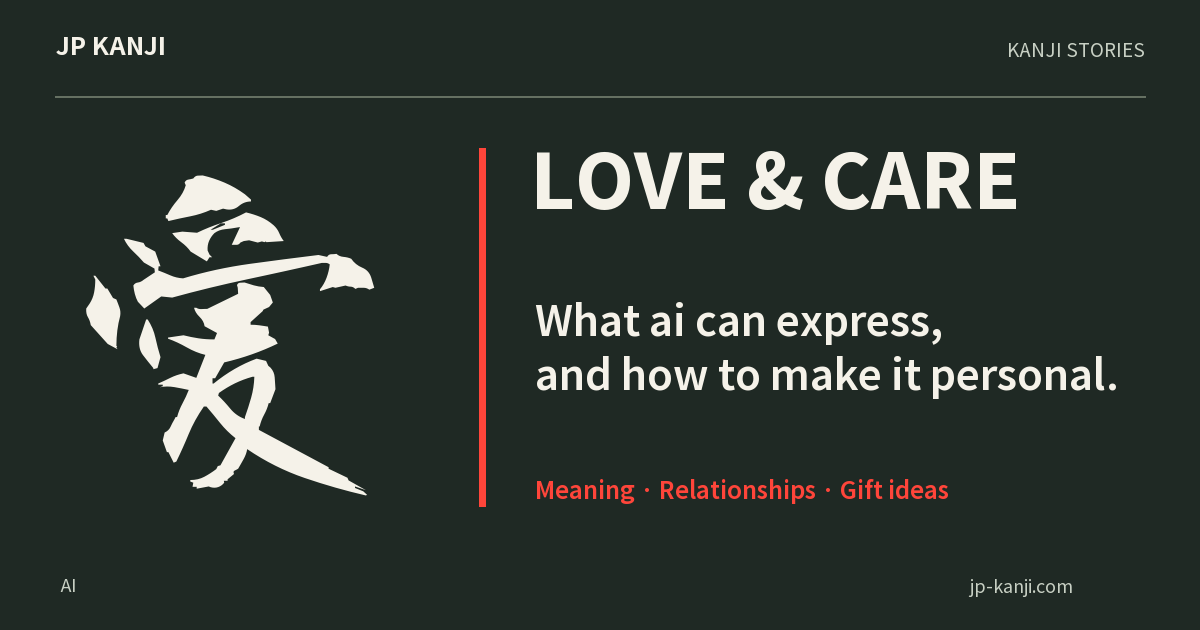
愛 and 恋: choosing the Japanese kanji for love

愛 is a character for love and care. Compare it with 恋, then find a way to give the design without relying on an unexplained symbol.

Read the story

Sayings & idioms

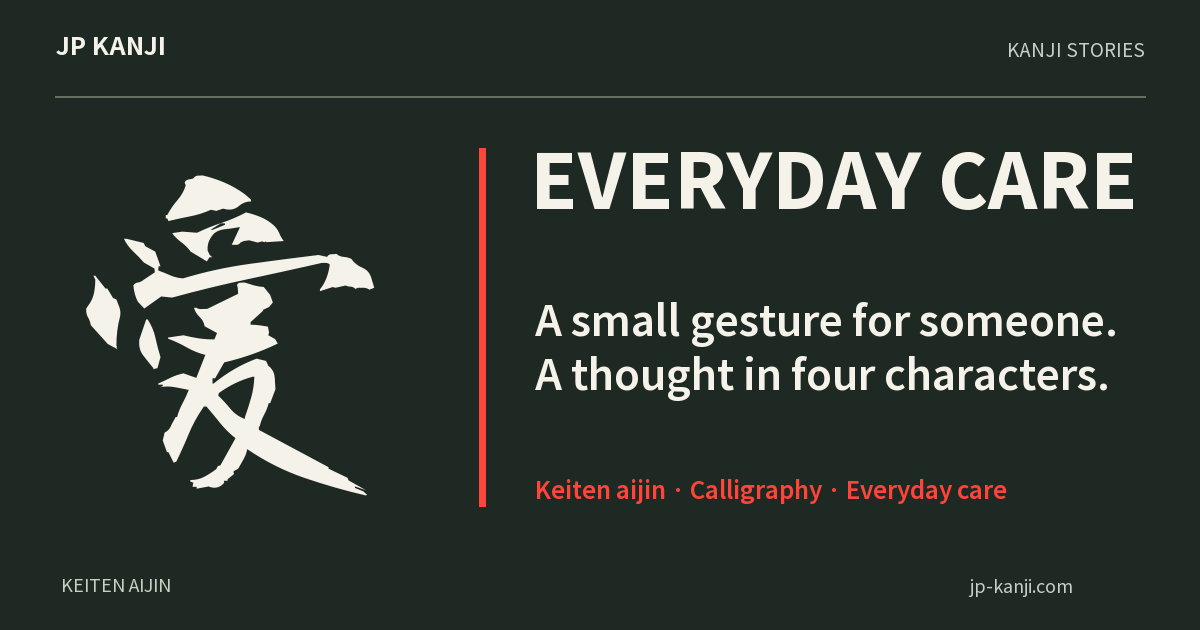
Small acts of care, and four characters preserved in brushwork

Making room for someone or letting them finish a thought: small gestures open a conversation about 敬天愛人 and a surviving work of calligraphy.

Read the story

Everyday stories

The objects you keep reaching for

A familiar cup, notebook or garment can hold a history of use. Find the detail that makes one ordinary object matter.

Read the story

Everyday stories

How to write a thank-you that could only be for one person

Name an action, its effect and the memory you kept. A few specific lines can carry more than a grand declaration.

Read the story
4 more stories

Everyday stories

Keeping a faraway friend in the ordinary parts of your life

A photograph of a familiar corner or a short postcard can offer something to share without demanding an immediate reply.

Read the story

Everyday stories

The handwritten recipe that holds more than ingredients

A margin note or a familiar abbreviation can preserve a person’s way of explaining. Keep the practical details and the memory together.

Read the story

Words & readings

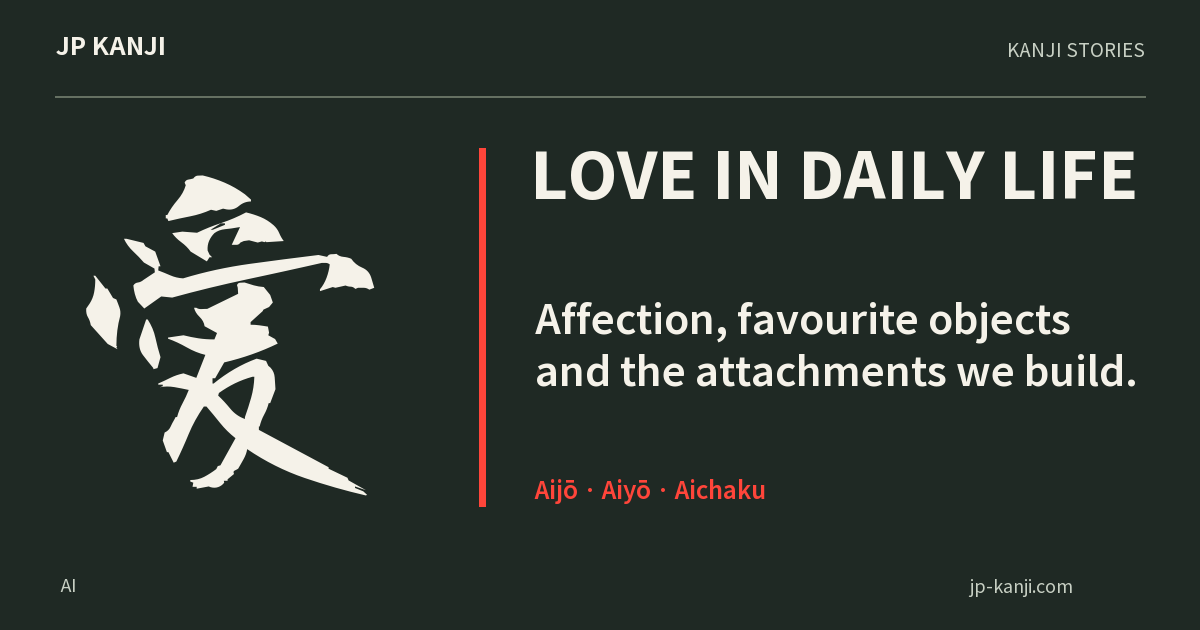
Love beyond romance: aijō, aiyō and aichaku

Three words with 愛 reveal affection, favourite everyday objects and attachment built over time.

Read the story

Giving & choosing

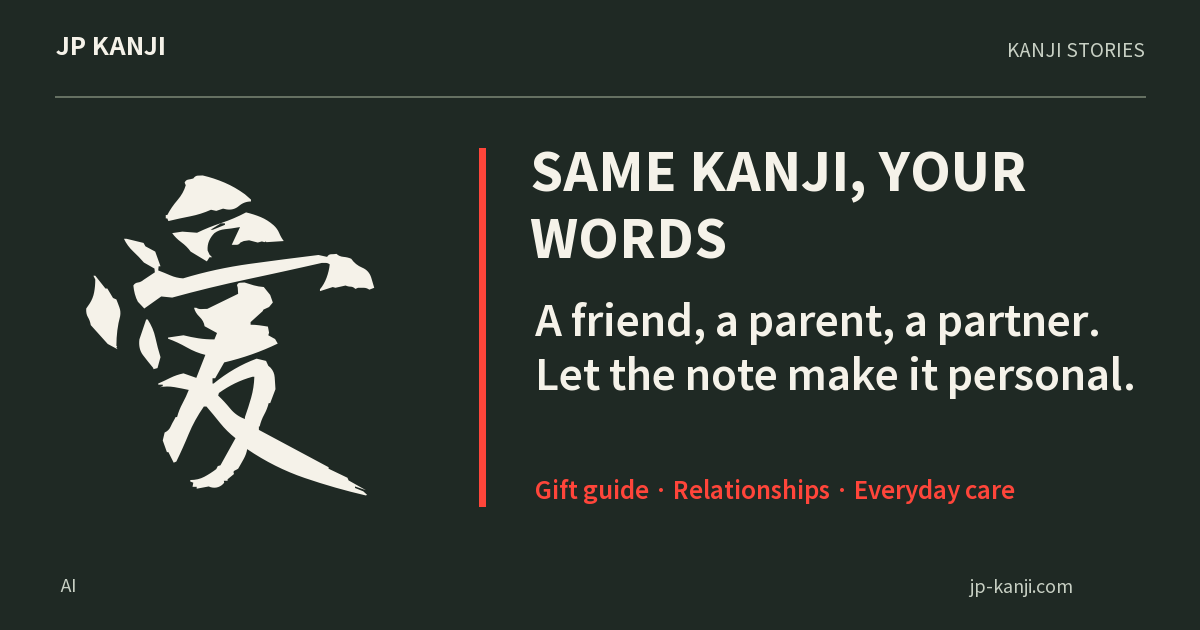
Giving 愛 to a friend, a parent or a partner

Keep the same character and change the note: three ways to make a gift’s intention clear.

Read the story

Another character, another perspective

All stories →

Culture & objects

Giving the unseen a figure: thinking about wind gods in art

An invisible force can become a character in a picture. Start with a named artwork, then separate its record from your own response.

Read the story

Culture & objects

A tea bowl can be beautiful in more than one way

Rustic surfaces are only one part of tea ceramics. A museum account helps make room for contrast, selection and individual objects.

Read the story

Everyday stories

Giving a travel memory to someone who was not there

A souvenir becomes easier to receive when its story connects with the recipient, not only with the traveller.

Read the story