EN · Language
English日本語DeutschFrançaisItalianoEspañol

Everyday stories ai

How to write a thank-you that could only be for one person

Name an action, its effect and the memory you kept. A few specific lines can carry more than a grand declaration.

Wear this character

Start with a scene

“You are amazing” is kind, but it could be sent to many people. “You waited at the station while I found the right platform” immediately belongs to a particular relationship. The smaller sentence gives the recipient something they can recognise.

A closer look

Begin with what they did

Build a note in three movements: the action you remember, what it made possible, and why you wanted to mention it now. Keep the effect proportionate. Someone who lent a lamp does not need to be credited with changing your entire life for the gesture to matter.

Read the note for hidden requests. “You always look after everyone” may sound appreciative while quietly assigning a permanent job. Replace it with the occasion you mean. You can thank someone for being there once without asking them to be endlessly available.

See it in words

愛
aiLove and care
恋
koiRomantic longing or love
恋愛
ren’aiRomantic love
Examples of usage, not a diagram of the character’s historical development.

A meaning to make your own

A thought to give

Try this beginning: “I still remember when you…” Finish with one scene before deciding whether a gift needs any further explanation.

Make a gift card

One more question

How long should the message be?

Long enough for the action and its meaning to be clear. A few accurate lines are enough; adding more praise does not necessarily make the thanks more personal.

A character to carry with you 愛

愛 has a broad connection with affection. A specific thank-you can give the single character a meaning rooted in your own shared experience rather than a generic romantic message.

Wear this character
Share this story

More about this character 愛

All stories →

Meaning & background

愛 and 恋: choosing the Japanese kanji for love

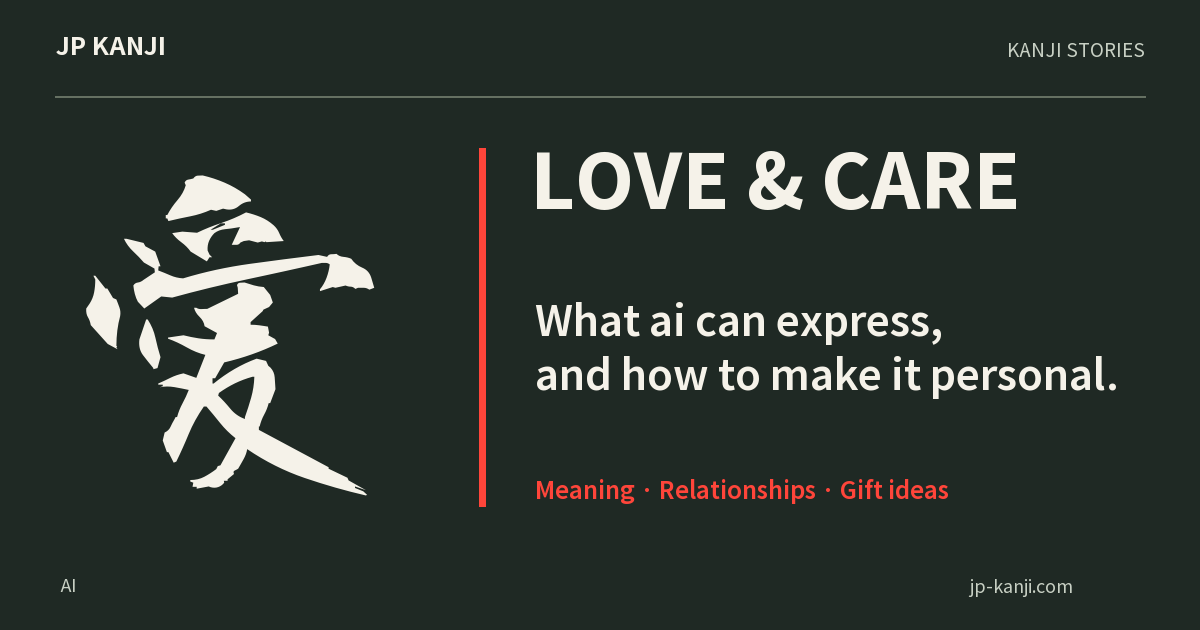
愛 is a character for love and care. Compare it with 恋, then find a way to give the design without relying on an unexplained symbol.

Read the story

Sayings & idioms

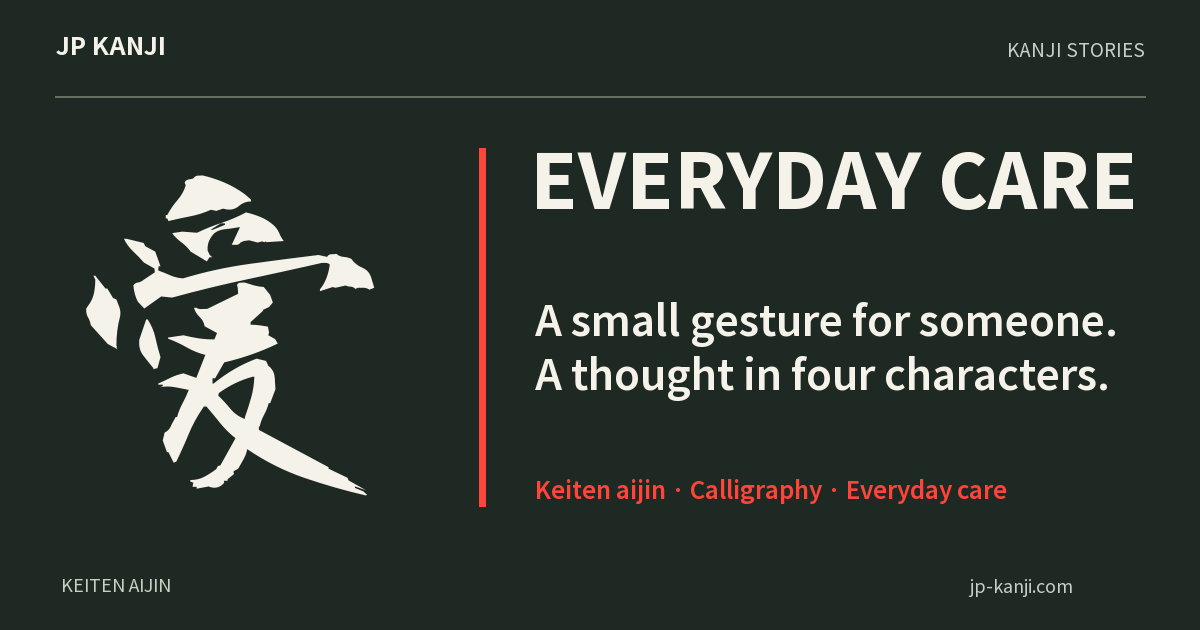
Small acts of care, and four characters preserved in brushwork

Making room for someone or letting them finish a thought: small gestures open a conversation about 敬天愛人 and a surviving work of calligraphy.

Read the story

Everyday stories

The objects you keep reaching for

A familiar cup, notebook or garment can hold a history of use. Find the detail that makes one ordinary object matter.

Read the story

Everyday stories

Keeping a faraway friend in the ordinary parts of your life

A photograph of a familiar corner or a short postcard can offer something to share without demanding an immediate reply.

Read the story
4 more stories

Everyday stories

The handwritten recipe that holds more than ingredients

A margin note or a familiar abbreviation can preserve a person’s way of explaining. Keep the practical details and the memory together.

Read the story

Everyday stories

The small rituals that make an ordinary day feel shared

A cup set out or a familiar goodbye can mean something because of the people involved. Find out which gestures are actually welcome.

Read the story

Words & readings

Love beyond romance: aijō, aiyō and aichaku

Three words with 愛 reveal affection, favourite everyday objects and attachment built over time.

Read the story

Giving & choosing

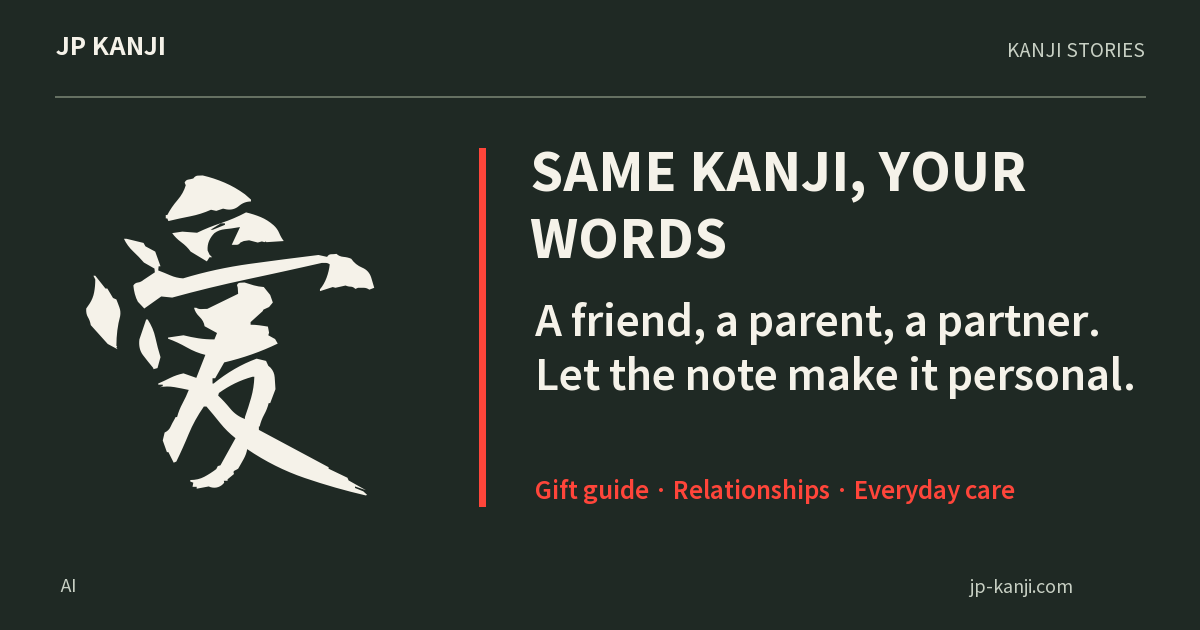
Giving 愛 to a friend, a parent or a partner

Keep the same character and change the note: three ways to make a gift’s intention clear.

Read the story

Another character, another perspective

All stories →

Style & making

How to suggest wind in a still photograph

Show what the air touches: fabric, leaves or a reflection. Begin with visible evidence before inventing a story around it.

Read the story

Everyday stories

When a familiar object shows its history

A softened edge or a worn handle can make use visible. Describe the trace before deciding what story it tells.

Read the story

Everyday stories

Spending time on one street instead of collecting more stops

Choose a small area and a few questions. A modest outing can give you something specific to remember without a crowded itinerary.

Read the story