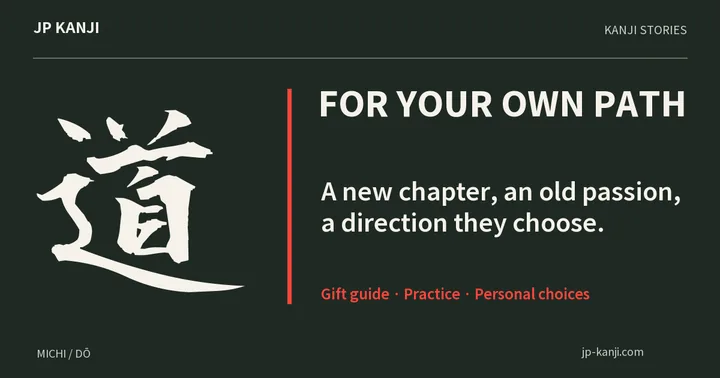
Style & making michi / dō
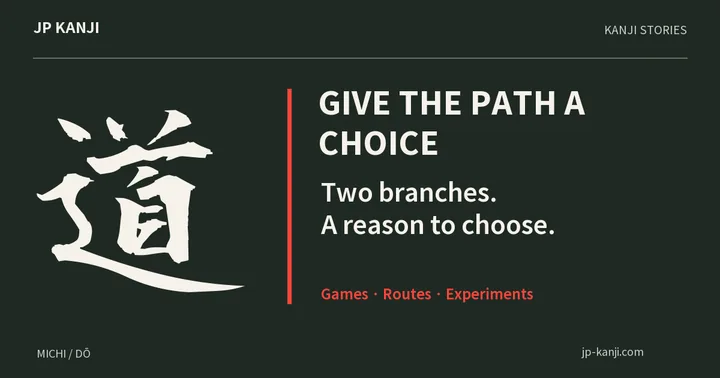
Map a branching story before writing every possible ending
Make each choice change something the reader can recognise.
Wear this characterStart with a scene
A branching story becomes easier to plan when you map its decisions before writing full scenes. Start with one situation and two choices: enter the quiet room or follow the sound outside. Give each branch a consequence that changes what the reader knows or can do.
A closer look
Draw the decisions first
Draw boxes for scenes and arrows for choices. Label the arrows with the decision, not merely ‘A’ and ‘B’. If two branches rejoin, note what remains different afterwards. Otherwise the reader may feel that the choice was decorative rather than part of the story.
Limit the first draft to a handful of scenes and two endings. Walk through every route using only the information available at that point. Check for an instruction that sends readers to a missing scene, or a choice that depends on something they could not yet know.
See it in words
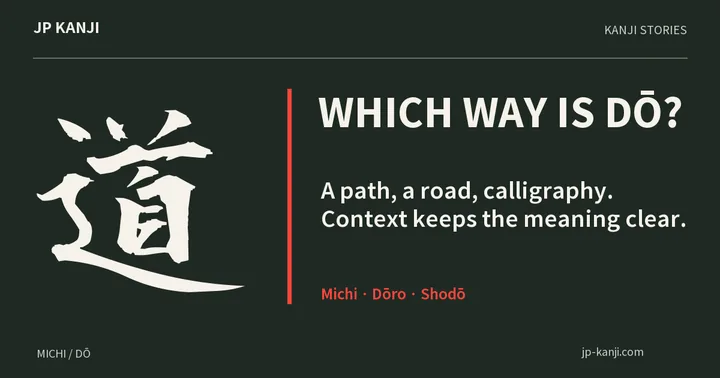
- 道
- michiA road or path
- 書道
- shodōCalligraphy
- 柔道
- jūdōJudo
A meaning to make your own
A thought to give
A printed story can accompany a road-themed gift for an interactive-fiction fan. Keep the clothing choice separate from the game's outcomes; no ending needs to advertise a purchase.
Make a gift cardOne more question
Must every branch have a unique ending?
No. Branches can meet again if the journey still has meaningful differences. Make the consequences visible instead of multiplying endings only to increase the diagram's size.
A character to carry with you 道
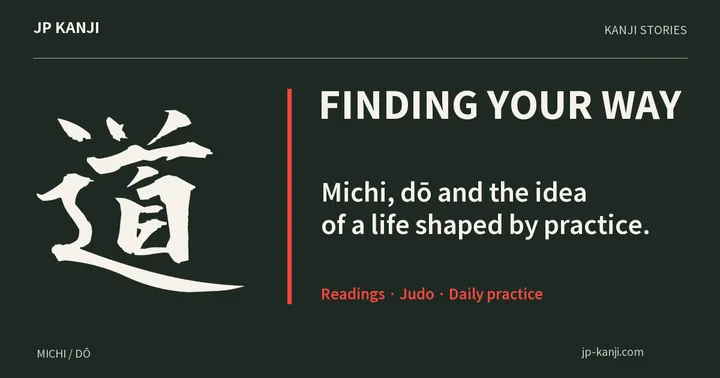
道 means road or path. A branching map gives that idea a literal creative use, while your invented story determines what the different paths mean.
Wear this character