Style & making michi / dō
Organise creative reference books by the questions they help answer
Find a useful source without rebuilding your entire bookshelf.
Wear this characterStart with a scene
A creative reference library becomes useful when you can find information for a real task. Choose a current project and list three questions, such as how a fold works, how a surface looks, or how a scene is arranged. Identify the books that help with those questions first.
A closer look
Start with one project and its questions
Make a small index with the book title, relevant pages and the reason you saved them. ‘Pages 34–37: overlapping leaves’ is easier to use than ‘good art book’. Keep quoted words distinct from your own notes, so a later draft does not confuse somebody else's writing with your observations.
Use categories that match your work rather than copying a library system you do not need. One book may belong to several categories in the index while remaining in a single physical place. Record that shelf location simply, especially if similar volumes are stored in different rooms.
See it in words
- 道
- michiA road or path
- 書道
- shodōCalligraphy
- 柔道
- jūdōJudo
A meaning to make your own
A thought to give
For someone building a reference collection, ask which subject is genuinely missing. A road-themed garment can accompany a specific book recommendation without pretending to replace the reference itself.
Make a gift cardOne more question
Should I reorganise all my books?
Not at first. Index a few sources for one project and see whether the method helps. Expand only when it saves you time in actual use.
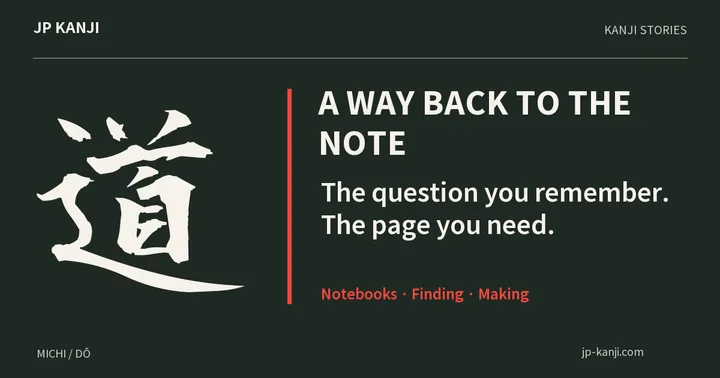
A character to carry with you 道
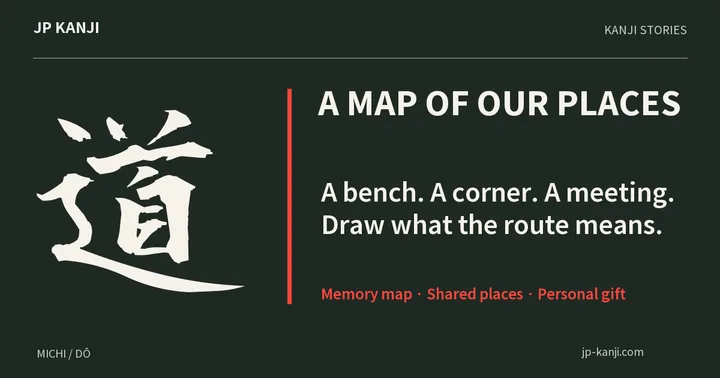
道 means road or way. The connection here is a usable route back to information, allowing curiosity to continue without starting every search from the beginning.
Wear this character