Sayings & idioms yūshū no bi
What makes a good ending?
After the final artwork or presentation, an impression remains. A thoughtful goodbye leads to 有終の美 and another way to think about beauty.
Wear this characterStart with a scene
Imagine the final evening of a small exhibition. The last visitors leave, the maker thanks the helpers, and each borrowed piece is returned with care. The exhibition ends successfully, but the goodbye also shapes what people remember. This scene is our illustration of completion, not a historical account or a dictionary example.
A closer look
What does a good ending leave behind?
有終の美, yūshū no bi, describes bringing something to a fine conclusion. [1] Its focus is on how an effort ends. Beauty here is more than an attractive object: the phrase asks you to notice the completed result.
Now imagine preparing your own final presentation. What would let the audience leave with a clear understanding? Perhaps a concise conclusion, a useful handout, or time for one unanswered question. A dramatic extra slide may matter less than making the existing work understandable. Define the ending before adding another flourish.
See it in words
- 有終の美
- yūshū no biA fine, successful conclusion
- 有終
- yūshūCarrying something through to the end
- 美
- biBeauty or excellence
A meaning to make your own
A thought to give
“For everything you brought to this, right through the last day.” This can suit a completed project or a farewell. Celebrate what happened rather than using a gift to demand one final outstanding performance.
Make a gift cardOne more question
Does a strong finish erase earlier mistakes?
We would not use the phrase as an excuse to ignore them. An honest conclusion can acknowledge what changed or remained unfinished. Appreciation is more convincing when it describes a real result instead of pretending the whole process was flawless.
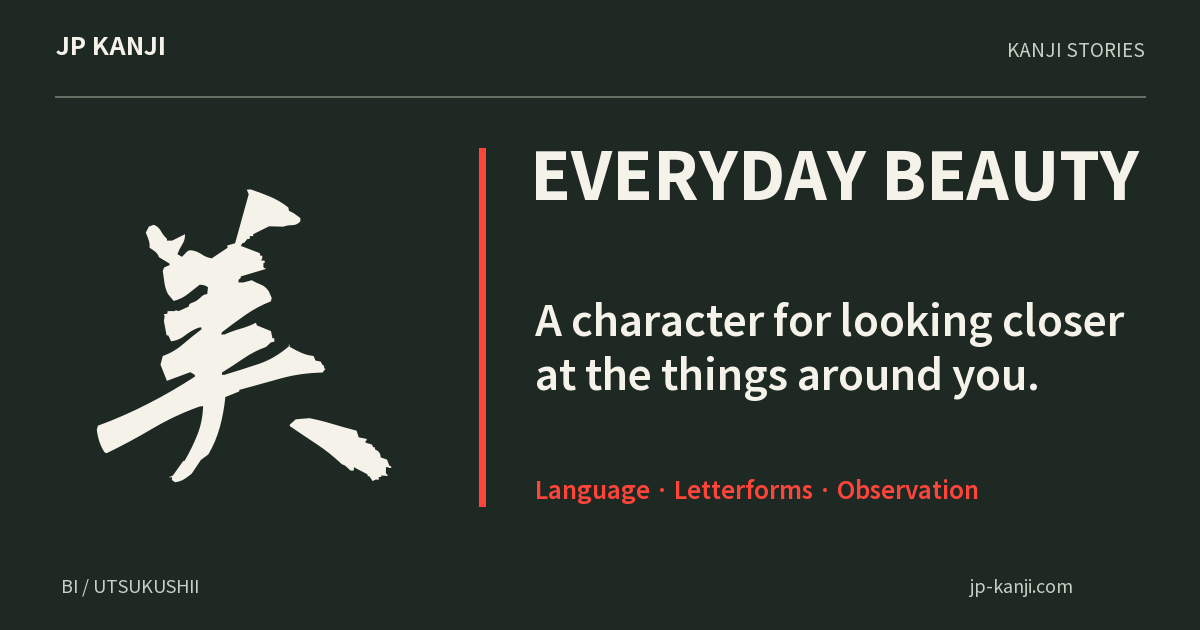
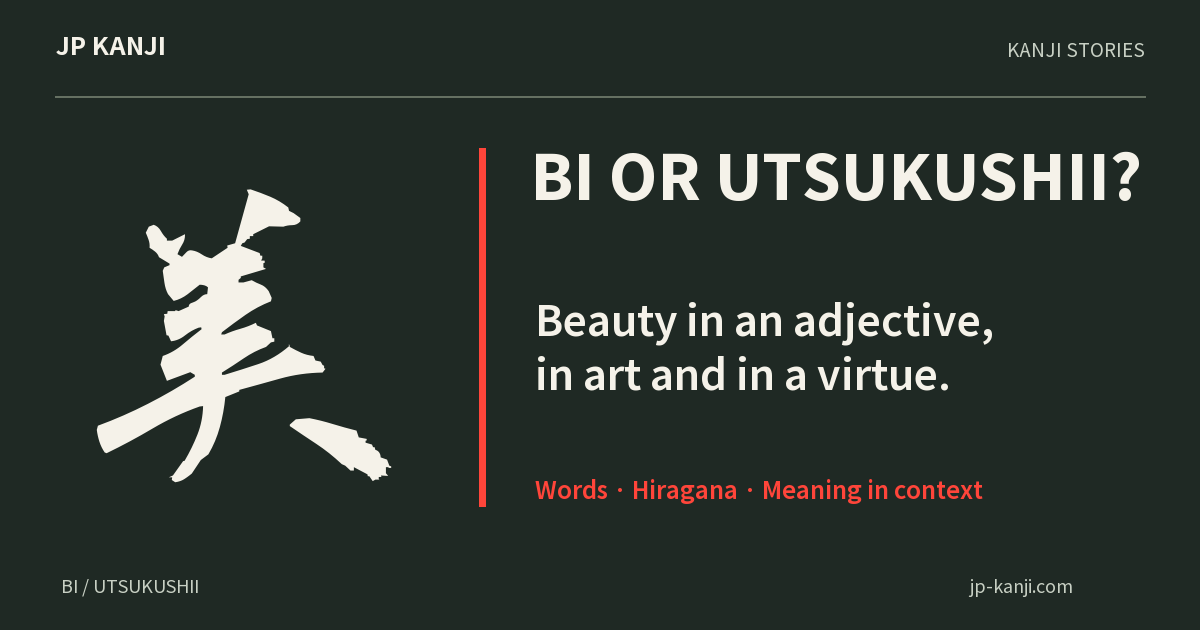
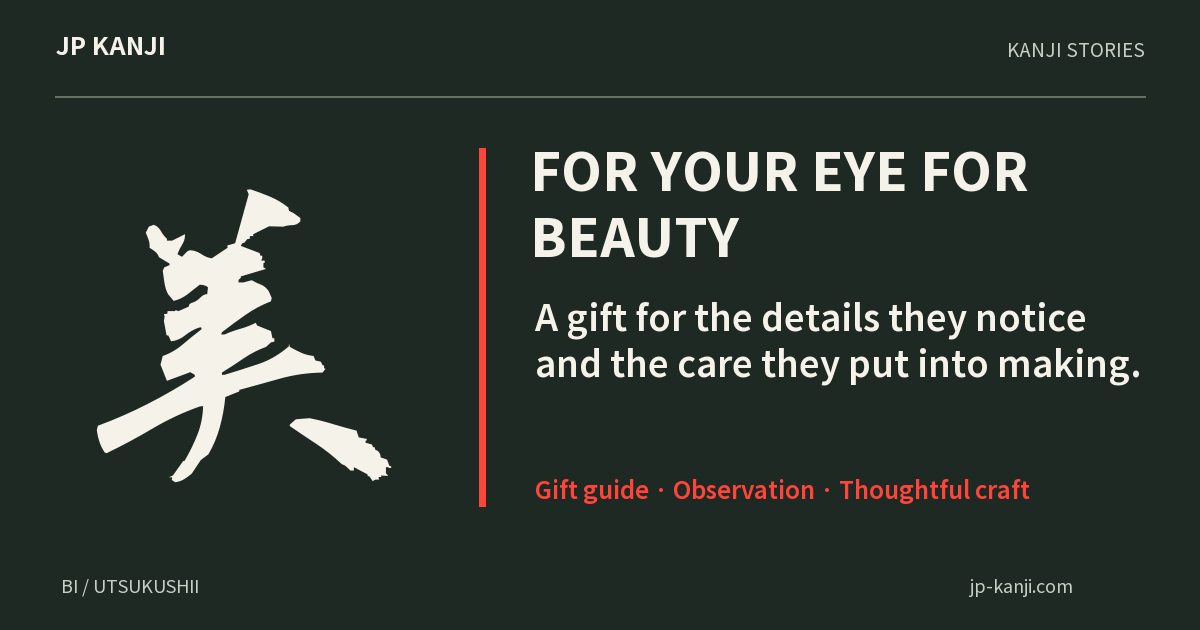
A character to carry with you 美
The 美 on our clothing is a single character associated with beauty and excellence. [2] It does not spell out the entire expression. Someone interested in craft or thoughtful presentation may enjoy the connection between visual care and finishing a task.
Wear this characterSources & editorial approach
Sources may be in Japanese or English.
Readings and cultural references are checked against the sources below. Styling and gift ideas are our suggestions. Written with AI assistance and source checks.