Style & making bi / utsukushii
Make a two-colour picture from paper silhouettes
Reduce a familiar scene to outlines and gaps. Move a few paper shapes until the picture remains readable without internal detail.
Wear this characterStart with a scene
Choose a scene with an outline you can describe: a chair beside a plant, a coat on a hook or a bird you invent. Use one colour of paper for the shapes and another for the background. Draw the largest form first. Leave out small markings, surface textures and shadows. You are asking what the outline alone can tell someone.
A closer look
Let the outer edge do the work
Cut or tear the pieces using tools you can handle comfortably. Move them around before attaching anything. Watch the spaces between forms as carefully as the forms themselves. A narrow gap can separate a handle from a cup; closing it may turn both into a single block. If something becomes unclear, enlarge the gap before adding another decorative piece.
Step back and view the arrangement at the size of a postcard. Does the intended subject still read? Rotate one shape or remove one piece and compare the result. When the composition feels clear, attach the pieces and keep a photograph of an earlier arrangement. That gives you a record of a decision, not just a finished picture.
See it in words
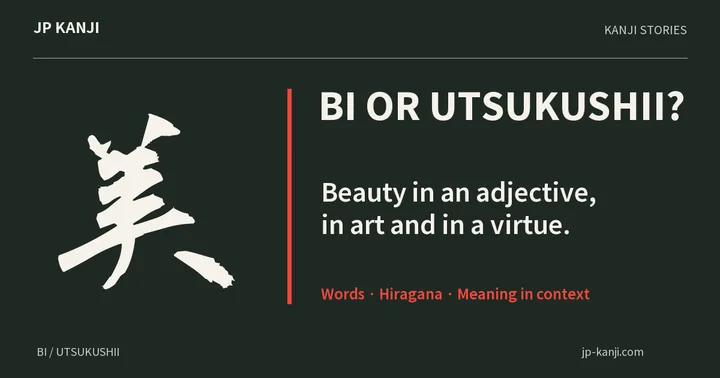
- 美
- biBeauty; read bi in many words
- 美しい
- utsukushiiBeautiful
- み
- miHiragana mi, historically linked to cursive 美
A meaning to make your own
A thought to give
A small paper scene can accompany a 美 garment for someone who enjoys graphic shapes. Use a subject they recognise and keep the note about your shared interest in making, rather than promising a special symbolic meaning.
Make a gift cardOne more question
Do I need to draw an accurate outline first?
No. An invented plant or a simple chair is enough. If you use a reference, choose your own photograph or material you have permission to adapt. Make the outline understandable for this picture instead of pursuing every visible detail.
A character to carry with you 美
美 means beauty. A silhouette study offers one personal route towards it: a clear relationship between an edge and the space around it. The exercise is your own design choice, not a rule attributed to Japanese art.
Wear this character