Culture & objects bi / utsukushii
A tea bowl can be beautiful in more than one way
Rustic surfaces are only one part of tea ceramics. A museum account helps make room for contrast, selection and individual objects.
Wear this characterStart with a scene
Imagine two bowls: one quiet and irregular, another vivid and carefully decorated. If you begin with a rule that Japanese beauty must always be rough or plain, one of them becomes difficult to see on its own terms. A broader question is more useful: what qualities does this object offer?
A closer look
Do not ask one label to explain every bowl
The Metropolitan Museum’s account of tea culture discusses wabi alongside varied, sometimes richly decorated wares.[1] That contrast is a reason to look at particular objects instead of reducing a whole tradition to one surface effect.
Choose two collection images and compare shape, colour and visible texture. Note what you can see and what would require handling or specialist knowledge. A photograph cannot tell you exactly how a bowl feels in the hand. Read each object’s record before making claims about its maker, use or date.
See it in words
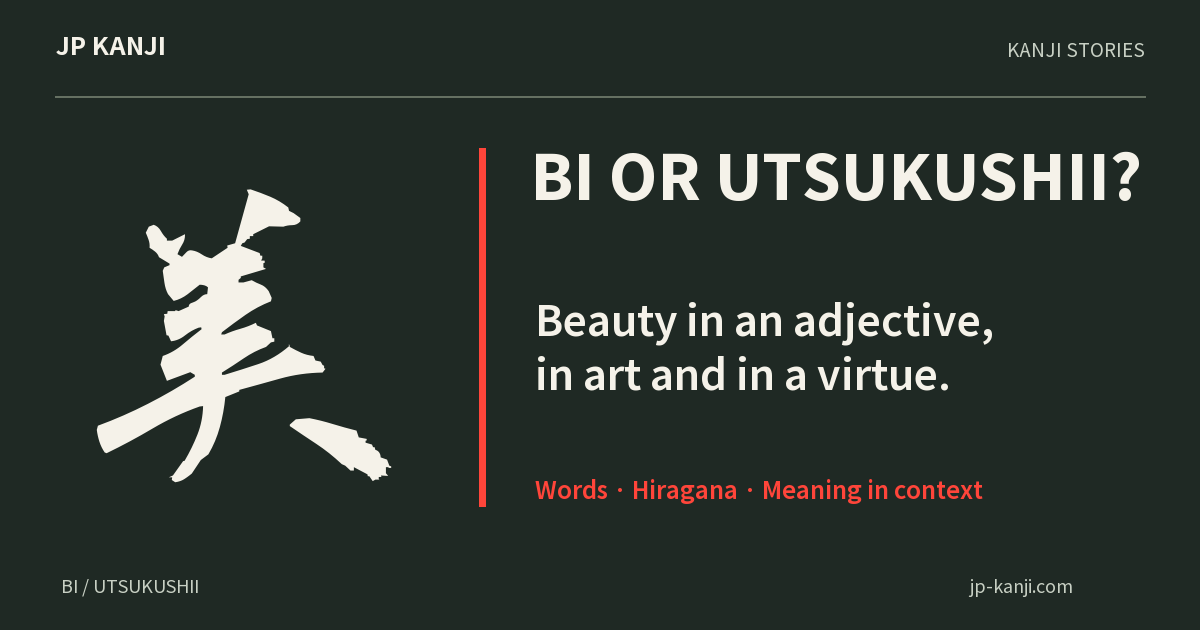
- 美
- biBeauty; read bi in many words
- 美しい
- utsukushiiBeautiful
- み
- miHiragana mi, historically linked to cursive 美
A meaning to make your own
A thought to give
For a ceramics enthusiast: “For the way you notice each piece on its own terms.” Mention the contrast that started your conversation.
Make a gift cardOne more question
Does imperfection alone make a bowl significant?
No single visible feature settles that question. Context, making, use and the individual object matter; the museum account itself presents a range of valued forms.
A character to carry with you 美
美 means beauty. It can leave room for contrasting qualities rather than prescribing one approved look. The character garment is a separate design, not a reproduction of a tea object.
Wear this character