Everyday stories bi / utsukushii
When a familiar object shows its history
A softened edge or a worn handle can make use visible. Describe the trace before deciding what story it tells.
Wear this characterStart with a scene
A wooden handle is smoother where a hand rests. A notebook opens easily at one section. These traces can make an object feel particular, but they do not tell you every event in its past. Begin with what you can observe before adding a story.
A closer look
A mark is a clue, not a complete biography
Choose one object you know well and name a change you actually remember. Perhaps the cloth softened after years of use or a cover faded near the window. If you do not know how a mark appeared, leave it as a question. Uncertainty can be part of looking carefully.
Consider function alongside appearance. A pleasing trace and a problem that needs attention may look similar at first. Follow the object’s care guidance rather than preserving damage for the sake of a romantic story. You can value its history while deciding to repair it, set it aside or replace it.
See it in words
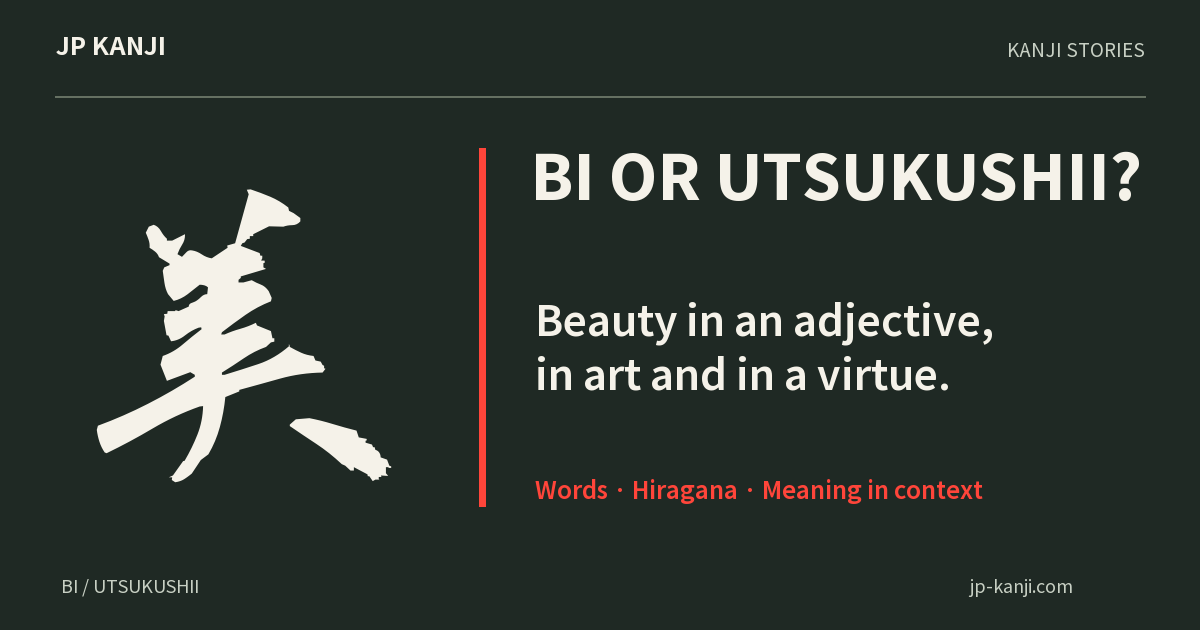
- 美
- biBeauty; read bi in many words
- 美しい
- utsukushiiBeautiful
- み
- miHiragana mi, historically linked to cursive 美
A meaning to make your own
A thought to give
“For the things that have accompanied you.” Ask which object they would choose before assuming that a particular possession carries a happy memory.
Make a gift cardOne more question
Is every sign of age wabi-sabi?
A broad aesthetic label can obscure the object you are looking at. Describe the actual surface and its known history first; a cultural term needs more context than the presence of wear.
A character to carry with you 美
美 can name beauty. Here it can connect with noticing the visible life of a familiar object, without requiring every worn surface to be admired.
Wear this character