Everyday stories bi / utsukushii
Looking at the same artwork twice, with a different question
The first glance finds an impression; the second can find its cause. Try a short method for looking without needing a grand interpretation.
Wear this characterStart with a scene
You call a picture calm before you can explain why. On a second look, you notice a low horizon and a large quiet area above it. The second description does not have to replace the first; it gives your impression something visible to connect with.
A closer look
From impression to evidence
Try two passes. In the first, name the immediate impression in a few words. In the second, look for three details that might have contributed to it. Read the label separately so you can notice which information came from the image and which came from the accompanying account.
Compare your response with someone else’s. They may notice a tense edge in the same picture you found calm. Ask which detail led them there instead of rushing to decide who is right. A shared viewing can reveal different paths through the same work.
See it in words
- 美
- biBeauty; read bi in many words
- 美しい
- utsukushiiBeautiful
- み
- miHiragana mi, historically linked to cursive 美
A meaning to make your own
A thought to give
“For teaching me to look twice.” Add the work or detail you saw differently after their comment.
Make a gift cardOne more question
Do I need to know art history first?
You can begin with careful observation. Historical questions then need appropriate sources; noticing a colour does not require the same evidence as identifying its cultural purpose.
A character to carry with you 美
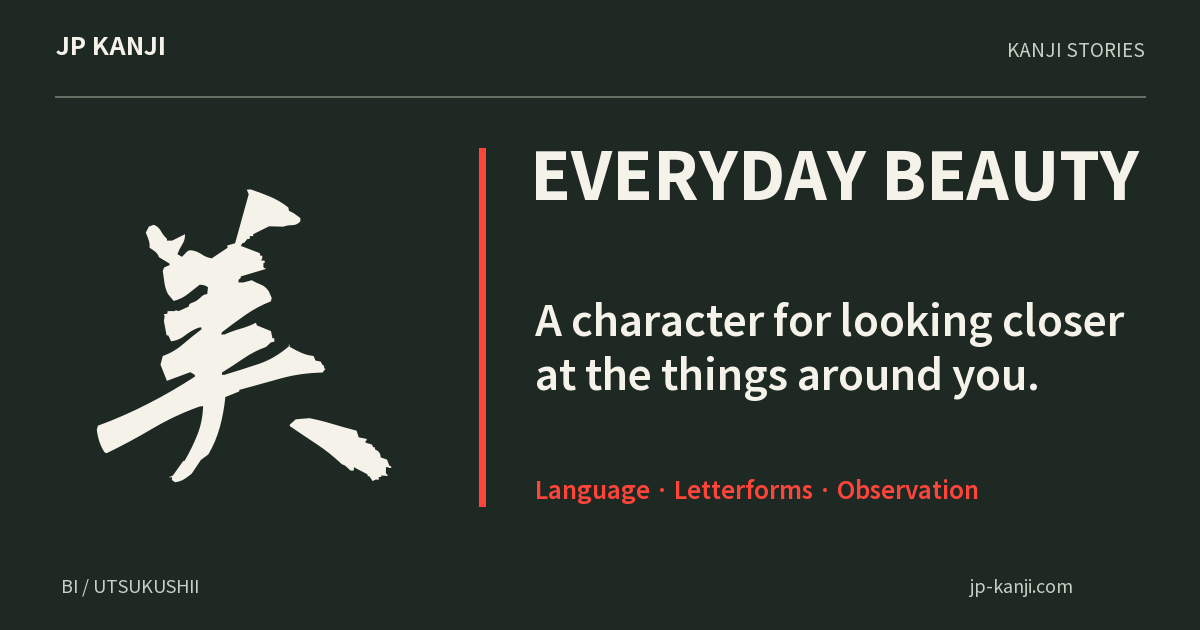
美 names beauty. You can connect the character with the willingness to look again, including at work that does not appeal to you immediately.
Wear this character