Style & making bi / utsukushii
A still life made from three things already on your table
A cup, a folded cloth and a piece of fruit can become an exercise in attention. Change the arrangement before searching for better objects.
Wear this characterStart with a scene
Put three ordinary objects on a table. At first they may look like things you have not put away. Move one closer to another, leave a gap, and look again. The exercise begins when you notice how the objects relate, rather than how expensive or unusual each one is.
A closer look
Make one relationship visible
Choose one question for the arrangement: contrast of shape, difference of height, or a repeated colour. Turn the objects so that question becomes easier to see. You can sketch or photograph the result, but neither is essential; a careful comparison is already part of the activity.
Make a second version with only one change. Move the cloth, turn the cup, or alter the space between two objects. Keeping the rest steady helps you identify what changed the impression. When you are finished, return the objects to use. An arrangement can be temporary and still change the way you see a familiar thing.
See it in words
- 美
- biBeauty; read bi in many words
- 美しい
- utsukushiiBeautiful
- み
- miHiragana mi, historically linked to cursive 美
A meaning to make your own
A thought to give
For someone with an eye for small things: “You made this ordinary table worth another look.” Name the detail they noticed.
Make a gift cardOne more question
Do I need special props?
No. Using familiar objects keeps the comparison focused on placement and attention. Interesting materials can come later if they serve a question you actually want to explore.
A character to carry with you 美
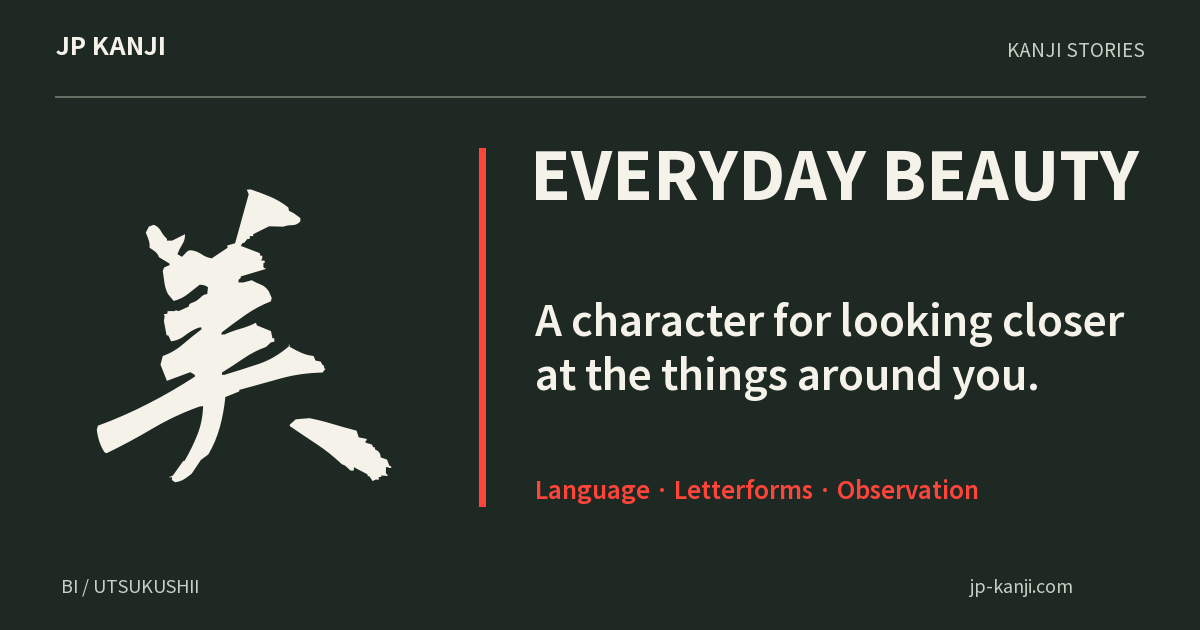
美 concerns beauty. The character can recall a habit of arranging and looking, where attention gives ordinary objects a fresh relationship.
Wear this character