Style & making ryū / tatsu
Choosing a brush-lettered kanji shirt: look beyond the silhouette
Look at the character, its small spaces and its place on the garment before choosing a brush-lettered design. Three views can answer different questions.
Wear this characterStart with a scene
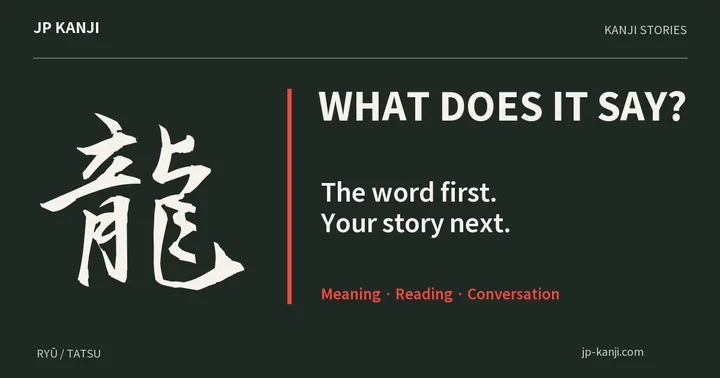
A brush-lettered character may catch your eye before you know what it says. That first impression is a useful beginning, but give the design a second look. Find the exact character and its meaning in the listing. Then compare the printed form with a clearly identified reference. A dramatic shape is not enough to establish a translation, and a search result showing a similar silhouette may be a different word.
A closer look
Read the word, then look at the marks
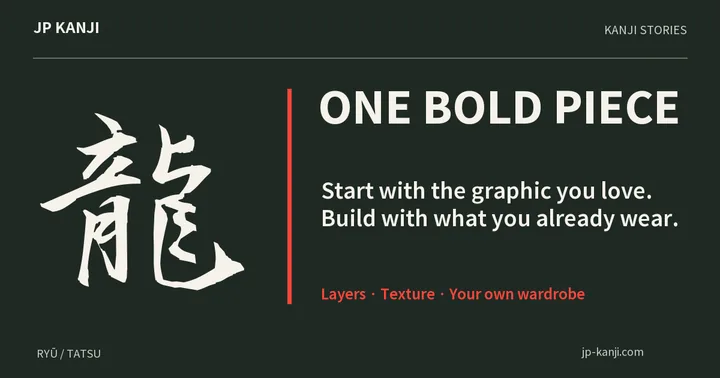
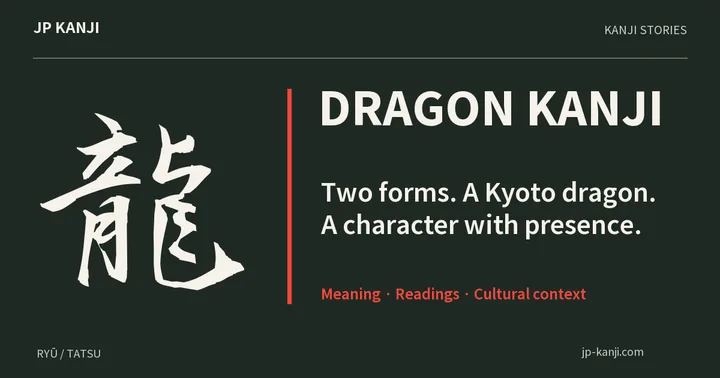
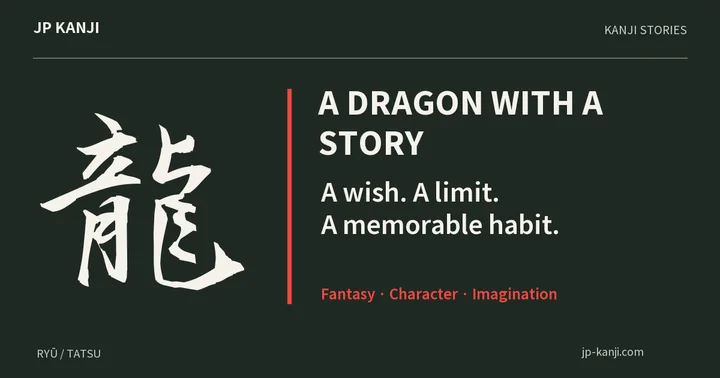
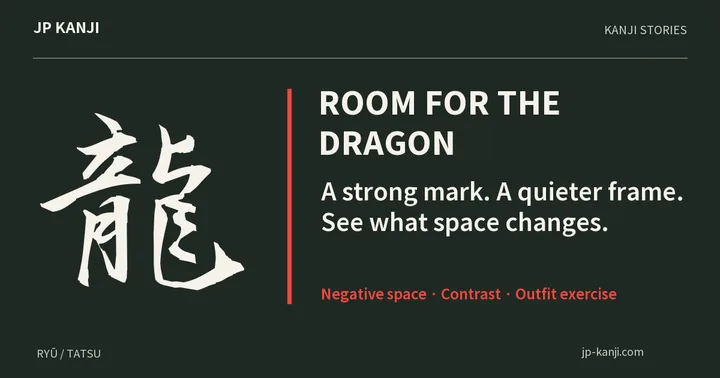
Zoom in to see what makes this particular version appealing. Notice where a broad mark narrows, where an edge becomes uneven and where the background remains visible between strokes. Describe what you can actually see: a long sweep, a compact upper section, an open gap. You do not need to name a calligraphy style or invent a story about how fast the brush moved to explain why you like it.
Now return to the complete garment. A close-up tells you about the artwork; the product view helps you judge its position relative to the neckline, sleeves and hem. Compare the colour and garment shape you intend to choose. Styling images can suggest an outfit, while the actual product information is the place to check the offered item. Do not expect every screen, fabric and print to reproduce the same appearance.
See it in words
- 龍
- ryū / tatsuThe fuller form used in our design
- 竜
- ryū / tatsuAnother Japanese form for dragon
- 龍神
- ryūjinA dragon deity
A meaning to make your own
A thought to give
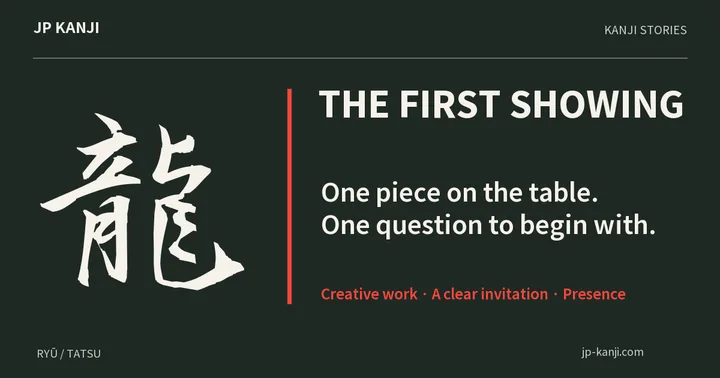
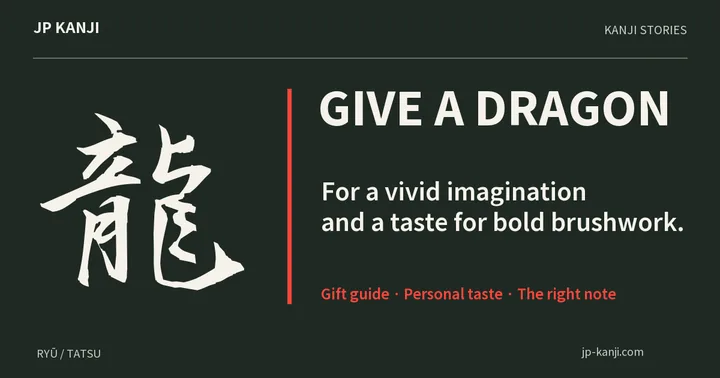
For a gift, share the word and the detail that caught your attention: “Dragon — I liked the long sweep of this version.” Leave the recipient room to enjoy a different part of it.
Make a gift cardOne more question
Does a rough edge mean a print is faulty?
It may be part of the artwork, but a picture alone cannot settle every printing question. Compare the design reference with the product images. If the delivered item differs from what was offered, use the seller’s relevant order-support options.
A character to carry with you 龍
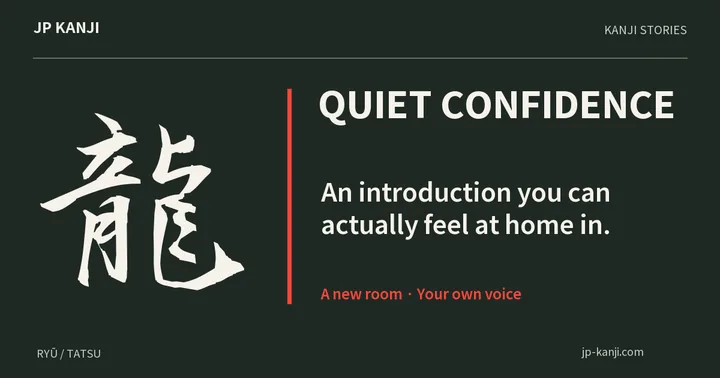
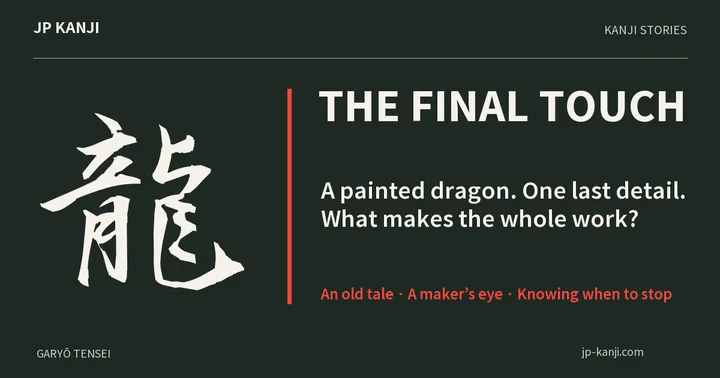
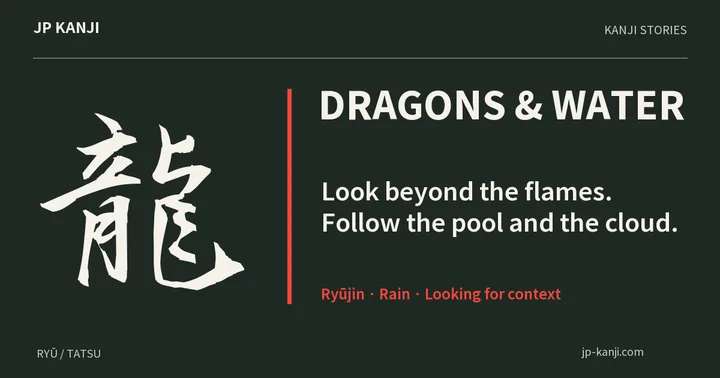
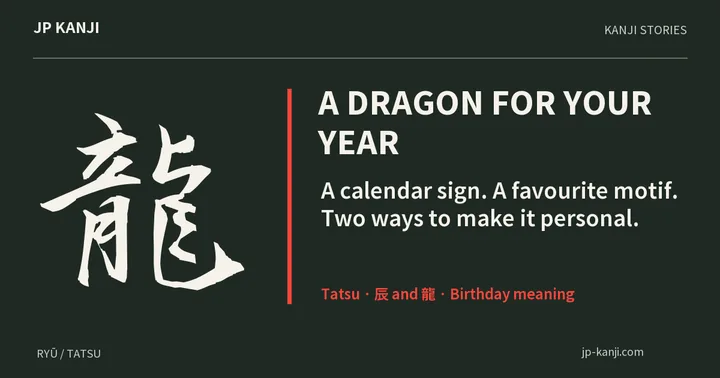
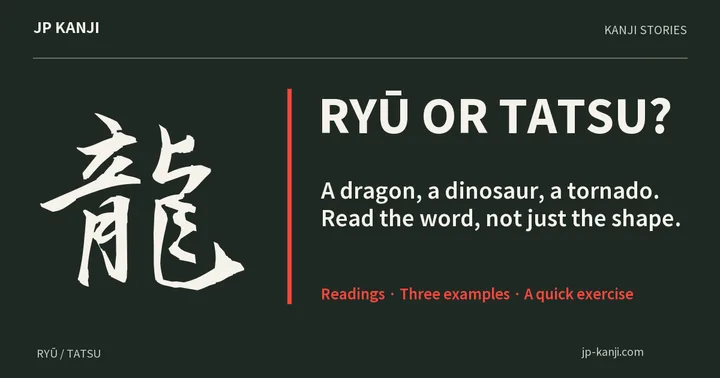
龍 means dragon, with ryū and tatsu among its Japanese readings. The character can carry both a recognisable meaning and a strong visual presence. Looking closely lets you choose this particular lettering rather than relying on a general idea of what a “Japanese-looking” shirt should be.
Wear this character