EN · Language
English日本語DeutschFrançaisItalianoEspañol

Everyday stories yume / mu

A notebook for ideas that are not ready yet

Catch a colour, a phrase or an unfinished question without turning every page into a project plan.

Wear this character

Start with a scene

A colour combination catches your eye while you are doing something else. By evening you remember liking it but not what it was. A small note can preserve the useful detail without requiring you to decide immediately what it should become.

A closer look

Give the fragment a place to wait

Try three kinds of entry: something seen, something heard, and a question. “Blue door beside orange flowers” is more recoverable than “nice colours”. Keep a quotation distinct from your own wording, and note where it came from. A notebook works better when you can later tell observation, borrowed material and invention apart.

At the end of a few pages, choose one fragment to revisit. Add a sketch, combine it with another note, or write why it no longer interests you. Nothing needs to become a finished work. The collection can help you notice recurring interests while leaving room for surprising one-off details.

See it in words

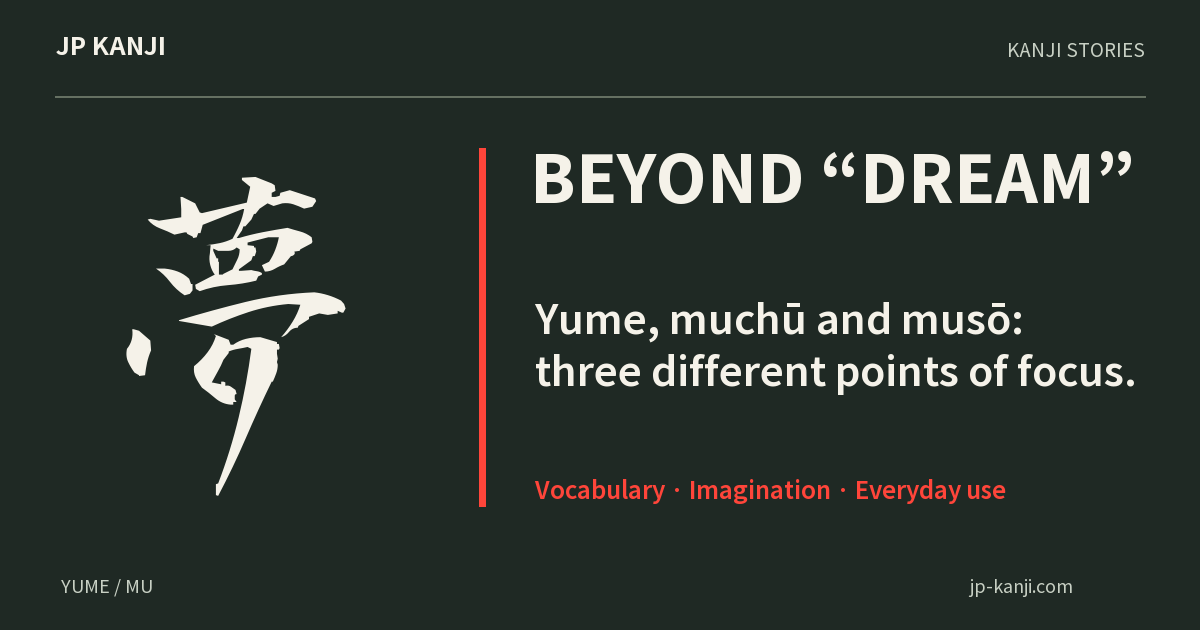
夢
yumeA dream
夢を見る
yume o miruTo have a dream while sleeping; context matters
夢を持つ
yume o motsuTo hold a dream or aspiration
Examples of usage, not a diagram of the character’s historical development.

A meaning to make your own

A thought to give

Pair the character with one open question in a card: “What have you been noticing lately?” It invites a conversation without assigning homework.

Make a gift card

One more question

Does an idea notebook need a daily schedule?

No. Use it when there is something you want to retain. If a schedule makes the pages feel mechanical, keeping fewer, more specific observations may suit you better.

A character to carry with you 夢

夢 includes the idea of dreaming. As a personal connection, the character can accompany a notebook of possibilities: ideas you are willing to keep before knowing where they lead.

Wear this character

Share this story

More about this character 夢

All stories →

Meaning & background

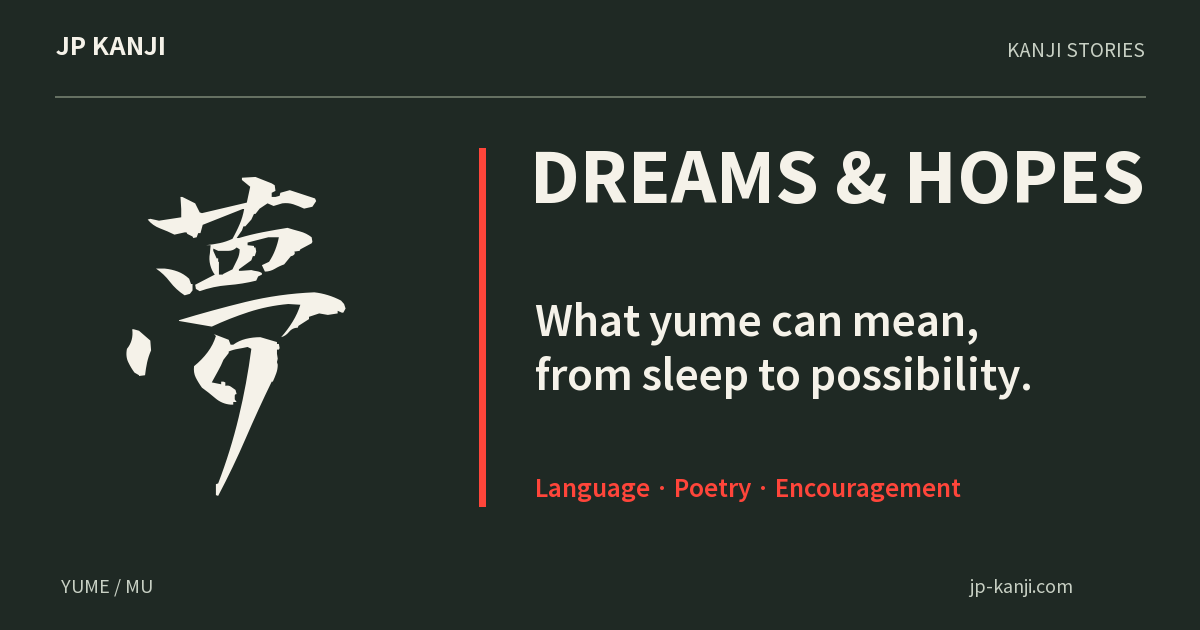
夢: the Japanese kanji for dreams, hopes and possibility

A dream can happen while you sleep or belong to a future you imagine. Explore 夢 through language, poetry and the thought of encouraging someone.

Read the story

Sayings & idioms

The same trip, different expectations: what are we imagining?

Two friends look forward to the same weekend, but picture different days. An everyday conversation leads to the expression 同床異夢.

Read the story

Culture & objects

Hatsuyume: reading a New Year dream as an image, not a forecast

Fuji, a hawk and an aubergine make an unexpected trio. A museum print offers a way into Japan’s first-dream imagery.

Read the story

Style & making

Make a small version of the idea you keep describing

A paper mock-up can answer one question that another long explanation cannot. Decide what you need to learn first.

Read the story
4 more stories

Everyday stories

Returning to an old idea without returning to an old deadline

An unfinished story in a drawer may still interest you. Begin by finding what matters now, rather than recreating the original plan.

Read the story

Everyday stories

Why an unfinished story can stay with you

An open ending leaves a question active. Explore the difference between a deliberate invitation and a missing piece of information.

Read the story

Words & readings

Yume, muchū and musō: three words around 夢

A dream, being absorbed in something, and imagining possibilities are related ideas, not interchangeable translations.

Read the story

Giving & choosing

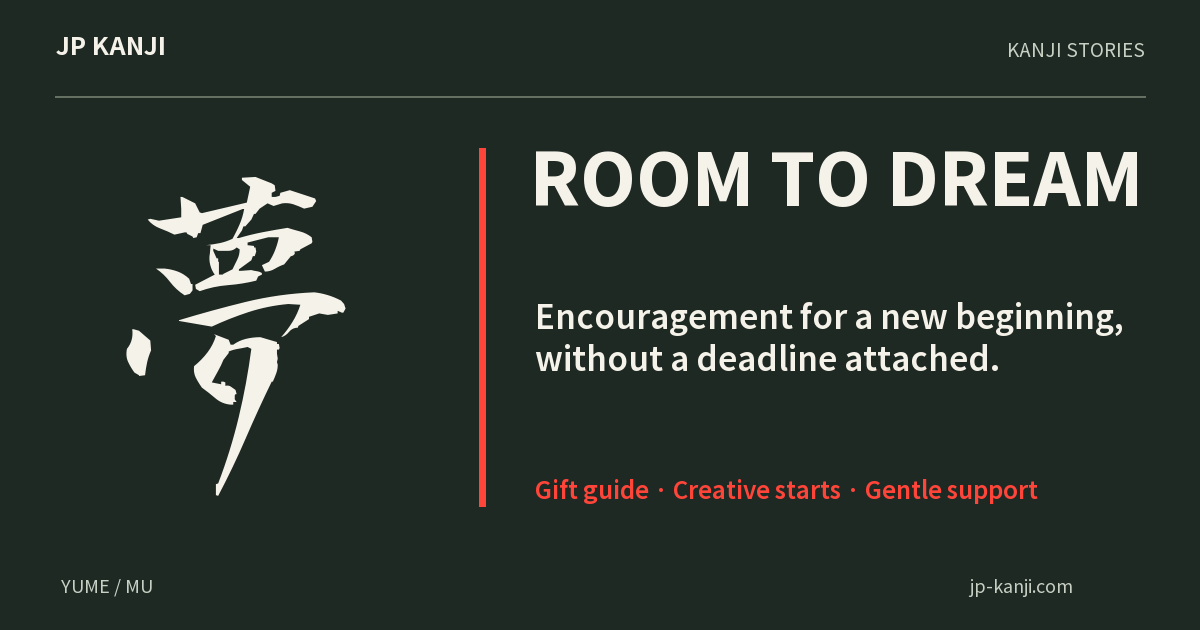
A 夢 gift that encourages a dream without adding pressure

For a new idea, a graduation or a creative restart: recognise what matters to them without demanding a result.

Read the story

Another character, another perspective

All stories →

Style & making

A small colour palette that still feels like you

Try two colours and one accent using clothes or objects you already own. Harmony can include a deliberate difference.

Read the story

Style & making

How to suggest wind in a still photograph

Show what the air touches: fabric, leaves or a reflection. Begin with visible evidence before inventing a story around it.

Read the story

Everyday stories

When a familiar object shows its history

A softened edge or a worn handle can make use visible. Describe the trace before deciding what story it tells.

Read the story