Everyday stories yume / mu
Returning to an old idea without returning to an old deadline
An unfinished story in a drawer may still interest you. Begin by finding what matters now, rather than recreating the original plan.
Wear this characterStart with a scene
You open a folder and find a story outline you once loved. The date makes you think first about how long it has waited. Try covering the date for a moment and reading the page for interest: which scene still makes you want to know what happens?
A closer look
Meet the idea as you are today
Separate the idea from the old obligation attached to it. You may still like the setting while no longer wanting to write a novel. A short scene, a drawing or a conversation could hold the part that remains alive. Returning does not require reinstating every promise you made when you began.
Choose a small way to visit it again. Read one page aloud, redraw one object, or explain the premise in a few sentences. Then decide whether you want another visit. You are allowed to discover that the idea belonged to an earlier season of your life. Keeping a fond memory is also a possible ending.
See it in words
- 夢
- yumeA dream
- 夢を見る
- yume o miruTo have a dream while sleeping; context matters
- 夢を持つ
- yume o motsuTo hold a dream or aspiration
A meaning to make your own
A thought to give
“I remember how your eyes lit up when you told me about this.” Offer interest and room, rather than asking when the old project will finally be done.
Make a gift cardOne more question
Must I finish every idea I return to?
No. A brief revisit can tell you enough. Decide what you want to carry forward; the existence of an old outline does not create a new deadline.
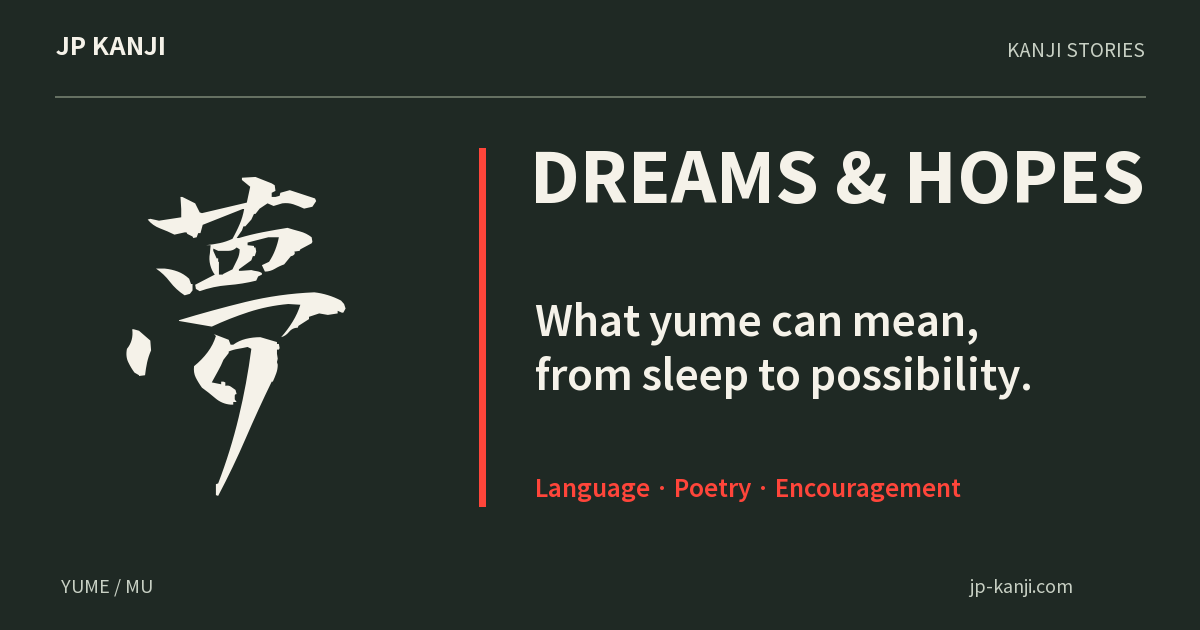
A character to carry with you 夢
夢 can hold an aspiration. The character can mark a continuing interest even when the form changes. A dream need not remain identical to its earliest description to feel recognisable.
Wear this character