Everyday stories tabi / ryo
Make a small phrase card for the conversations your trip may need
Choose a few practical questions, check their intended meaning with a fluent reader and prepare a way to ask for a written answer. Keep the card easy to find.
Wear this characterStart with a scene
Think of four to six ordinary situations you expect on a trip: finding an entrance, checking an opening time, asking whether a service reaches a stop or explaining that you do not understand. Write the intention of each question in your own language first. A small set you can locate quickly is more useful than a long list you cannot navigate while someone waits.
A closer look
Prepare a conversation, not a performance
Have a fluent reader check the wording for the destination language and the setting. Explain what you mean, who you will ask and whether you need polite everyday speech. Do not assume that an automatic translation has preserved every detail. Keep the verified written form alongside a pronunciation aid if that helps, while recognising that the aid will not capture every sound perfectly.
Add a way to ask the person to write, point or repeat more slowly, and a brief expression of thanks. Practise finding the right line, not only reciting it. Leave a space for an answer or a place name. Keep sensitive personal details off a card you may hand to a stranger, and use specialist support for communication where an error would have serious consequences.
See it in words
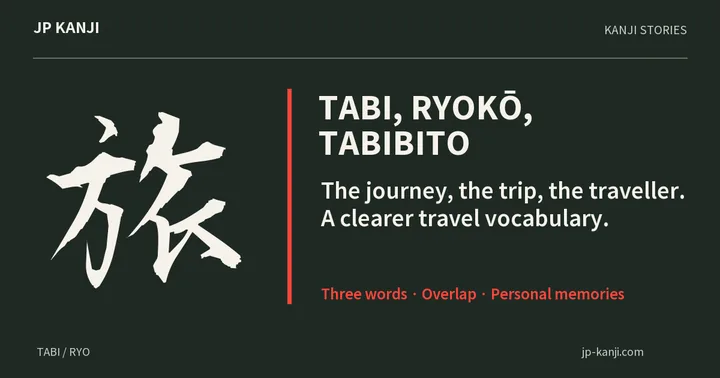
- 旅
- tabiA journey
- 旅行
- ryokōTravel; a trip
- 旅人
- tabibitoA traveller
A meaning to make your own
A thought to give
A 旅 gift can accompany a blank pocket card or notebook for someone preparing a journey. Offer to help if they want it; let the useful phrases follow their own route and communication needs.
Make a gift cardOne more question
Should I hide the card and try to remember everything?
Use it openly when it helps. The aim is an understandable exchange, not a language exam. If the answer goes beyond your prepared lines, ask for another form of explanation rather than pretending you understood.
A character to carry with you 旅
旅 can connect with the small effort of reaching another person across a language gap. A 旅 design may recall curiosity and willingness to ask, without claiming that a handful of memorised phrases makes you fluent.
Wear this character