Style & making tabi / ryo
Send a postcard from home as if someone were visiting your ordinary day
Choose one local detail and write a small scene instead of waiting for a holiday worth announcing.
Wear this characterThe short answer
A postcard from home can share a part of your everyday surroundings with someone far away. Choose one detail: the shop sign you pass, a changing tree or the sound outside your window. You do not need an impressive destination to give another person a sense of place.
A closer look
Notice what a visitor would not already know
Write a short scene before adding news. Mention what happened, one thing you noticed and why it made you think of the recipient. This gives the card a particular moment rather than a list of tasks from the week.
Use an image you are allowed to reproduce if making your own card. Avoid including private addresses or identifiable people without appropriate consideration. Check the postal service’s current size, postage and addressing requirements for the card you plan to send.
See it in words
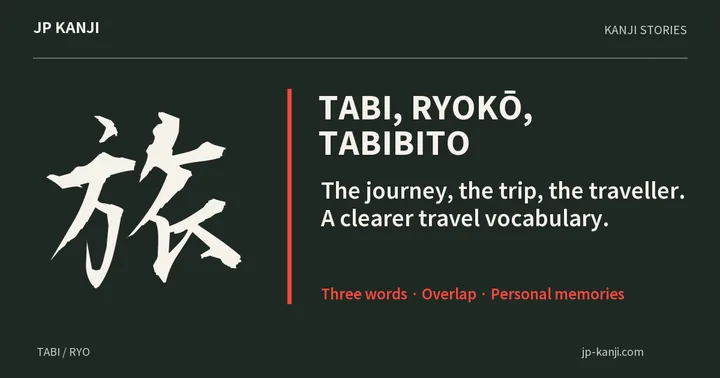
- 旅
- tabiA journey
- 旅行
- ryokōTravel; a trip
- 旅人
- tabibitoA traveller
A meaning to make your own
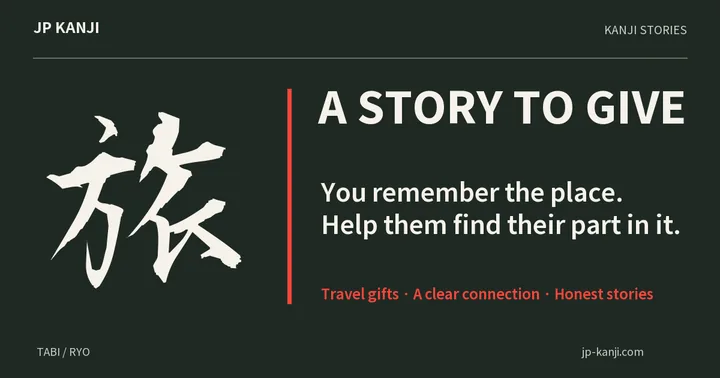
A thought to give
A 旅 design can suit a friend who enjoys exchanging these glimpses of place. Pair it with a note about a shared route or a future visit, and let the garment choice follow their real preferences.
Make a gift cardOne more question
What if nothing interesting happened?
Choose something precise rather than dramatic: a new window display, the first open café table or a familiar sound. Explain why you noticed it today. A friend may enjoy the ordinary detail because it belongs to your life.
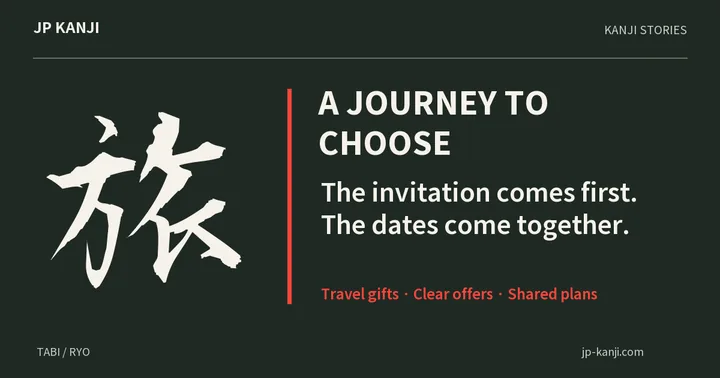
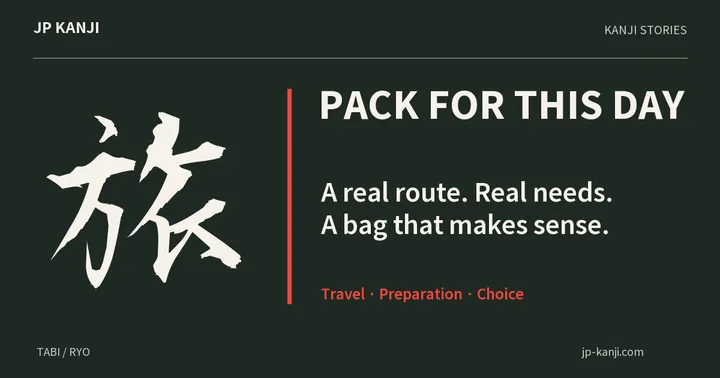
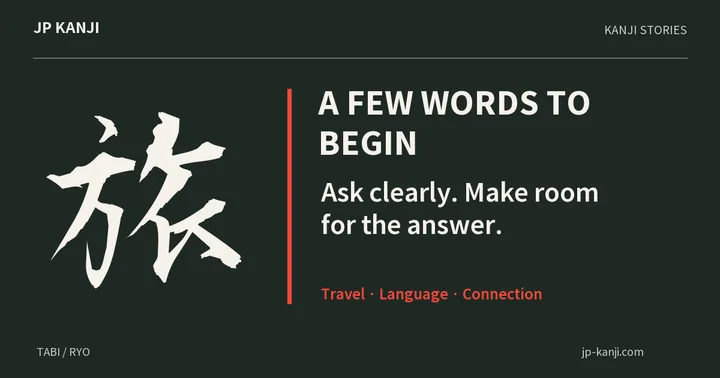
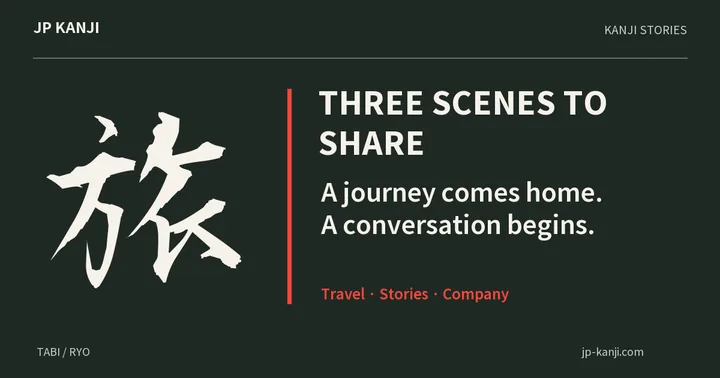
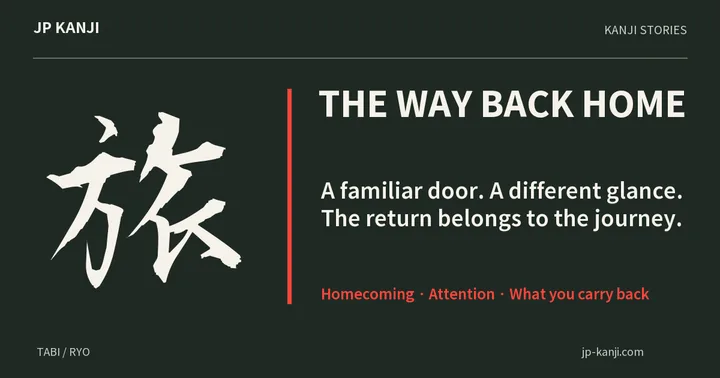
A character to carry with you 旅
旅 means travel. A postcard lets a small account of your day make a journey even when you stay home. That is an imaginative connection with the character, not a claim that ordinary life must be presented as tourism.
Wear this character