EN · Language
EnglishDeutschFrançaisItalianoEspañol

Style & making tabi / ryo

Choose souvenir clothing you will still wear after the trip

Look beyond the holiday moment when choosing a souvenir T-shirt or layer. Connect the memory to a garment that fits life at home.

Wear this character

Start with a scene

A T-shirt feels right while you are travelling: you like the place, the afternoon and the story around it. Before choosing it, picture an ordinary day at home. Which trousers, shoes or layer would you wear with it? You do not need to make the souvenir practical in every situation. One believable outfit can tell you more than the feeling that the garment belongs to the trip.

A closer look

Imagine an ordinary day back home

Read what is printed on it and ask about anything you do not understand. Check the actual size information, composition and care instructions rather than judging only a display sample. If you are buying online later, confirm the offered colour, fit and delivery options for your country. A familiar destination name or Japanese character does not by itself tell you where a garment was made or who created its artwork.

Keep the memory somewhere besides the receipt. Write a sentence about where you were when you chose the garment, who was with you or what you want it to recall. That personal association can belong to a simple design as much as to a detailed picture of a landmark. You can also decide that the best souvenir is a photograph or a note, especially if the clothing would remain unworn.

See it in words

旅
tabiA journey
旅行
ryokōTravel; a trip
旅人
tabibitoA traveller
Examples of usage, not a diagram of the character’s historical development.

A meaning to make your own

A thought to give

For someone who travelled with you, add a precise memory and let them choose the size and colour. “For that last walk before the train” can make a simple character personal without turning the clothing into a uniform for shared memories.

Make a gift card

One more question

Does a souvenir have to be bought at the destination?

That is a personal choice. Something selected later can recall the journey too. Be straightforward about its origin and why you chose it. The memory does not require an invented story about where the object was made or purchased.

A character to carry with you 旅

旅 means travel or a journey. On a garment, it can name the experience without claiming a connection to one specific destination. A 旅 design chosen after returning can still hold a real memory; it need not pretend to have been bought during the trip.

Wear this character
旅

旅

Share this story

More about this character 旅

All stories →

Meaning & background

旅: tabi, travel and the stories you bring home

旅 is the kanji for a journey. Explore how a place can become a memory, and how to turn a travel-inspired design into a personal gift.

Read the story

Everyday stories

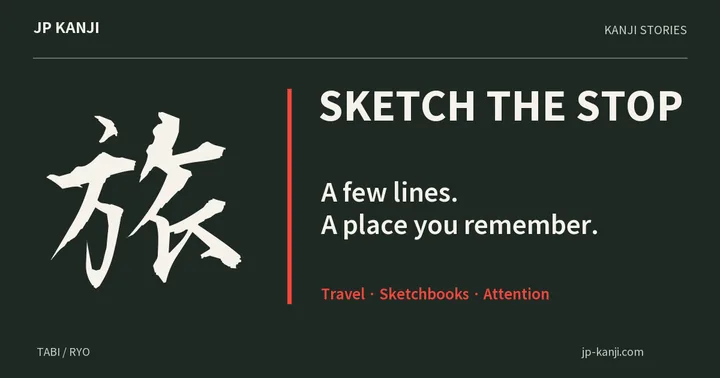
Sketch a place with a few lines instead of chasing a perfect view

Choose one shape, one overlap and one detail for a travel sketch. Leave enough context to remember where you stopped and what caught your attention.

Read the story

Everyday stories

Make a travel playlist that remembers the journey in order

Turn a few songs into a personal route through a trip. Keep the connection specific with a place, a moment and one line of your own.

Read the story

Everyday stories

Travelling with a friend when your ideal days are different

Agree on pace, spending and time apart before a trip, so shared memories do not require an identical itinerary.

Read the story
8 more stories

Sayings & idioms

Remembering the journey, and the people who made it easier

An improvised lunch can stay with you longer than a missed train. A story of companionship leads to 旅は道連れ世は情け.

Read the story

Everyday stories

The small souvenir that remembers a whole afternoon

A ticket, postcard or sketch can carry a precise moment. Keep the memory attached before the object becomes anonymous.

Read the story

Everyday stories

Spending time on one street instead of collecting more stops

Choose a small area and a few questions. A modest outing can give you something specific to remember without a crowded itinerary.

Read the story

Style & making

A travel journal you can write in five lines

Record one place, one detail, one exchange, one surprise and one question. Keep it small enough to finish while the day is still clear.

Read the story

Everyday stories

The return journey: noticing home after being away

A familiar room can look slightly different when you return. Record the difference before ordinary routines cover it again.

Read the story

Everyday stories

Giving a travel memory to someone who was not there

A souvenir becomes easier to receive when its story connects with the recipient, not only with the traveller.

Read the story

Words & readings

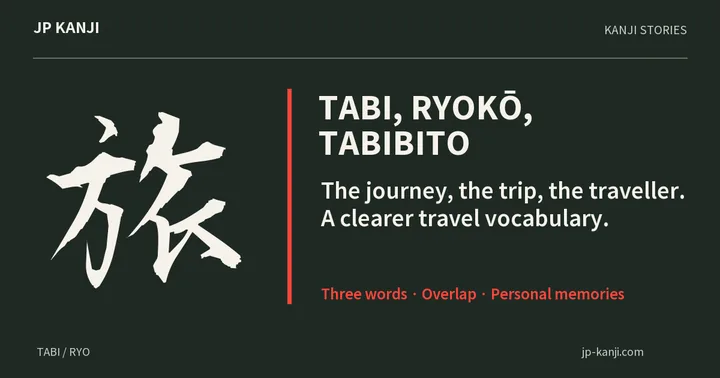
Tabi, ryokō and tabibito: three Japanese travel words

A journey, travelling and a traveller: learn the differences without turning them into a rigid “tourist versus explorer” rule.

Read the story

Giving & choosing

A 旅 gift for a travel companion: turn one memory into a note

Choose a detail from a shared journey instead of a generic list of destinations or a promise of the next trip.

Read the story

Another character, another perspective

All stories →

Style & making

How to build an outfit around one bold graphic

Start with clothes you already wear. Compare layers, texture and contrast before adding more statement pieces.

Read the story

Style & making

A small colour palette that still feels like you

Try two colours and one accent using clothes or objects you already own. Harmony can include a deliberate difference.

Read the story

Style & making

Finding your visual style by noticing what you repeat

Collect examples you genuinely return to, then describe their common details. A personal style can emerge from choices rather than a label.

Read the story