Sayings & idioms tabi wa michizure, yo wa nasake
Remembering the journey, and the people who made it easier
An improvised lunch can stay with you longer than a missed train. A story of companionship leads to 旅は道連れ世は情け.
Wear this characterStart with a scene
Imagine missing a train with a friend. One checks the next departure while the other finds a place to sit. Later, the two remember the improvised lunch more clearly than the delay. Our example gives the proverb an ordinary setting: companionship can mean sharing the small work of making a day manageable.
A closer look
Remember the person beside the destination
旅は道連れ世は情け, tabi wa michizure, yo wa nasake, values companionship in travel and mutual kindness in life. [1] Its two halves move from a journey you can picture to the wider experience of living alongside others.
You can try the same question with a journey you took alone. Who explained a ticket machine, recommended a quiet route or made an unfamiliar place less confusing? Travelling solo does not erase the kindness received along the way. The memory need not be a dramatic rescue to deserve a thank-you.
See it in words
- 旅
- tabiA journey
- 道連れ
- michizureA travelling companion
- 情け
- nasakeCompassion or kindness here
A meaning to make your own
A thought to give
“I remember the view, but I also remember how you made the difficult parts easier.” For a travel companion, add one small moment that would mean little to anyone else.
Make a gift cardOne more question
Does the saying argue against solo travel?
We read it as appreciation for company and consideration, not a rule about how to book a trip. You can enjoy your own company and still value the people you meet. That application is ours; the proverb’s core is mutual support.
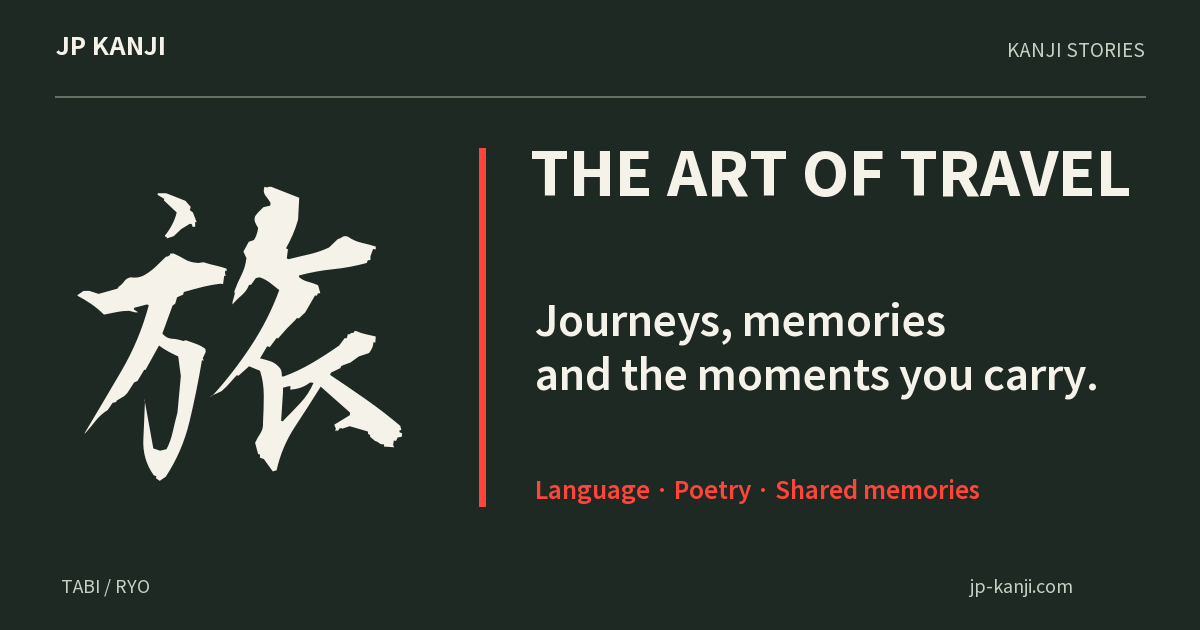
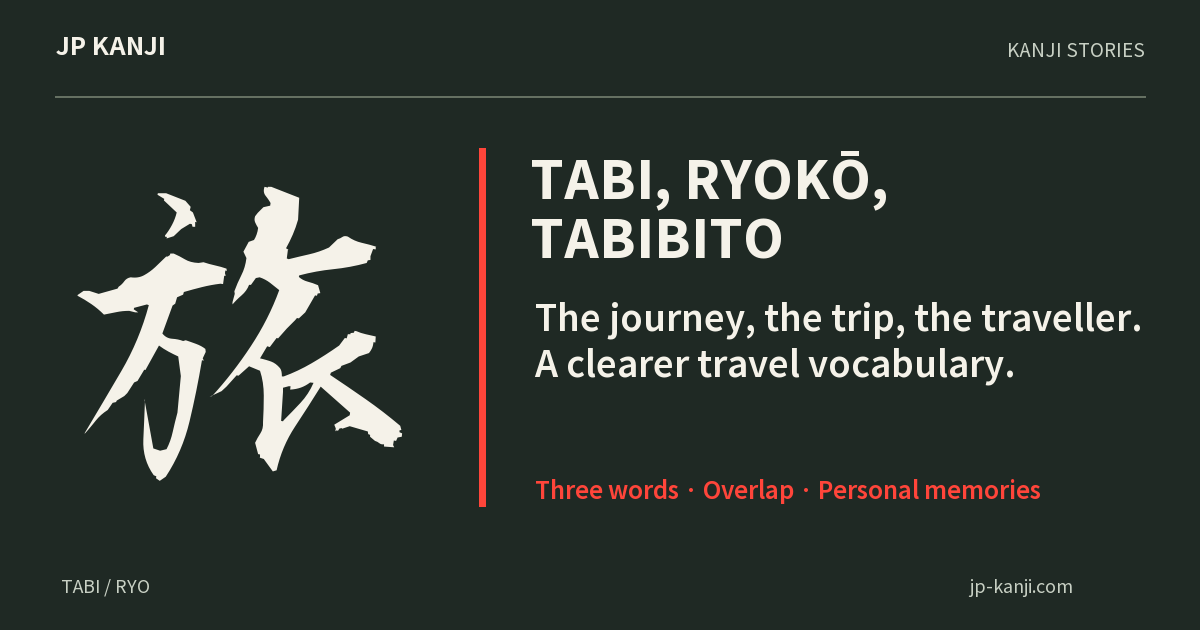
A character to carry with you 旅
The character 旅 can hold a memory of companionship as well as a destination. [2] Our design does not name a particular country or route, leaving you free to connect it with a long trip, a nearby visit or the journey home.
Wear this characterSources & editorial approach
Sources may be in Japanese or English.
Readings and cultural references are checked against the sources below. Styling and gift ideas are our suggestions. Written with AI assistance and source checks.