Everyday stories tabi / ryo
The small souvenir that remembers a whole afternoon
A ticket, postcard or sketch can carry a precise moment. Keep the memory attached before the object becomes anonymous.
Wear this characterStart with a scene
You find an old ticket in a pocket. The date is readable, but the reason you kept it is not. A few words written at the time could have preserved the delayed train, the unexpected conversation or the place you finally reached.
A closer look
Give the keepsake its missing caption
Choose one small keepsake and add a caption with three parts: where, who and what happened. It does not have to summarise the whole trip. “The museum we entered to escape the rain” may be enough to bring back an afternoon more clearly than a long list of sights.
Decide what you actually want to keep. A photograph of a bulky object may serve better than storing it; a sketch may capture the detail that matters. Check what may be taken from a place rather than treating everything found as a souvenir. A bought postcard or your own note can hold plenty of meaning.
See it in words
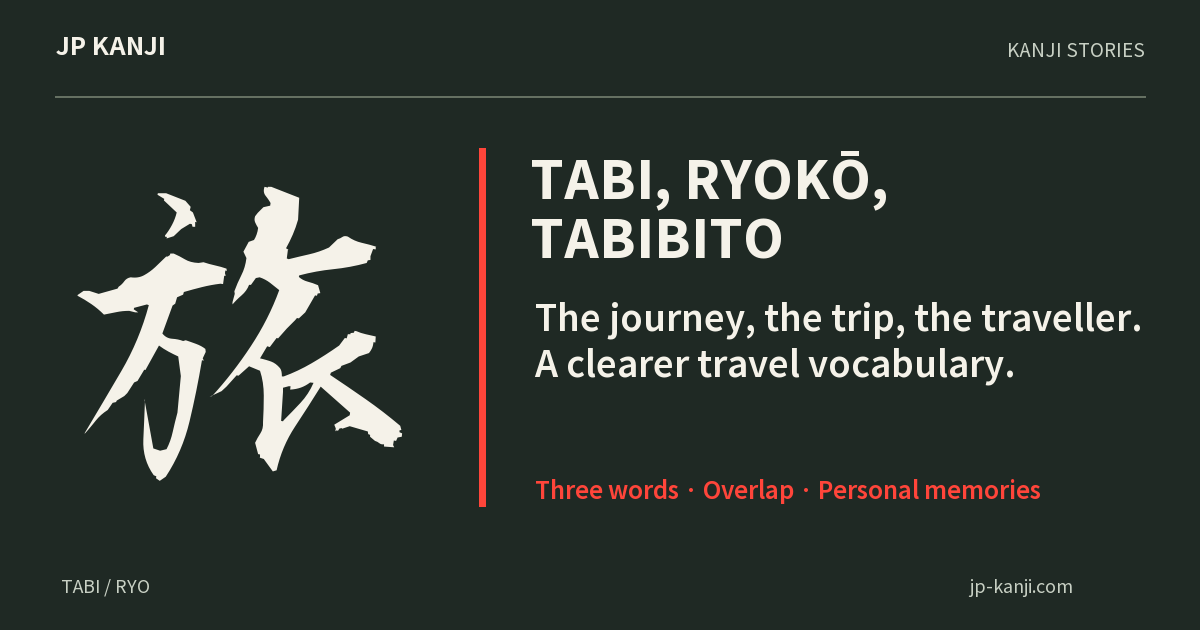
- 旅
- tabiA journey
- 旅行
- ryokōTravel; a trip
- 旅人
- tabibitoA traveller
A meaning to make your own
A thought to give
“A little reminder of the afternoon we did not plan.” Explain the moment so the recipient receives a shared memory rather than an unexplained object.
Make a gift cardOne more question
Must a meaningful souvenir be unusual?
No. An ordinary item can become particular through a known story. The point is the connection you can honestly describe, not how rare the object appears.
A character to carry with you 旅
旅 means travel or journey. The character can recall one modest moment from the way, leaving the precise story in the note you choose to keep.
Wear this character