Everyday stories susumu / shin
Learning with a friend without turning it into a race
Two people can work on different questions and still help each other. Make the purpose of feedback clear before comparing results.
Wear this characterStart with a scene
Two friends bring drawings to the same table. One wants help with proportion; the other is exploring colour. Comparing which picture looks more finished would miss both intentions. Begin by asking what each person was trying to understand.
A closer look
Share attention, not a single scoreboard
Give each learner a short turn to explain the question, show an example and request one kind of response. You can describe what you notice before offering a solution. “My eye goes here first” may help more than an unexplained instruction to change the whole composition.
At the end, each person chooses their own next action. They might practise different things or decide that one question needs another source. Keep ownership clear: useful feedback offers information, while the person making the work decides how to use it. Different paces can coexist at the same table.
See it in words
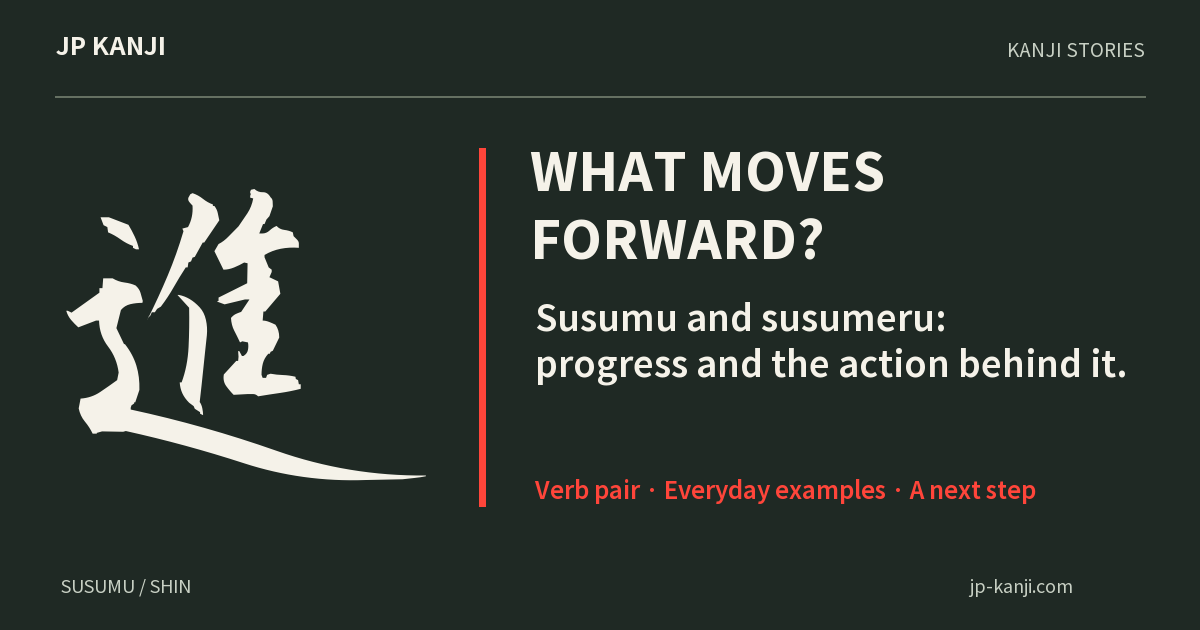
- 進む
- susumuTo move forward
- 進める
- susumeruTo move something forward
- 前進
- zenshinForward movement
A meaning to make your own
A thought to give
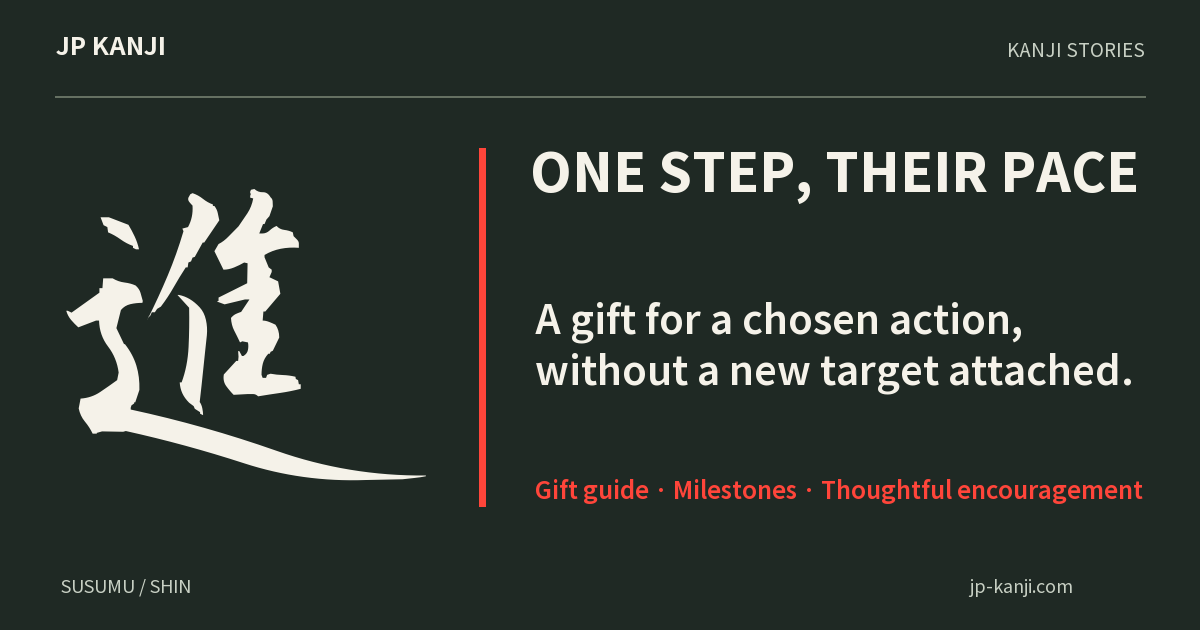
“For the questions we worked through together.” Name one useful exchange so the gift recognises partnership rather than competition.
Make a gift cardOne more question
Can a beginner give useful feedback?
A beginner can describe their own experience of the work. Technical corrections may need further expertise, but an honest observation can still reveal where meaning or attention changes.
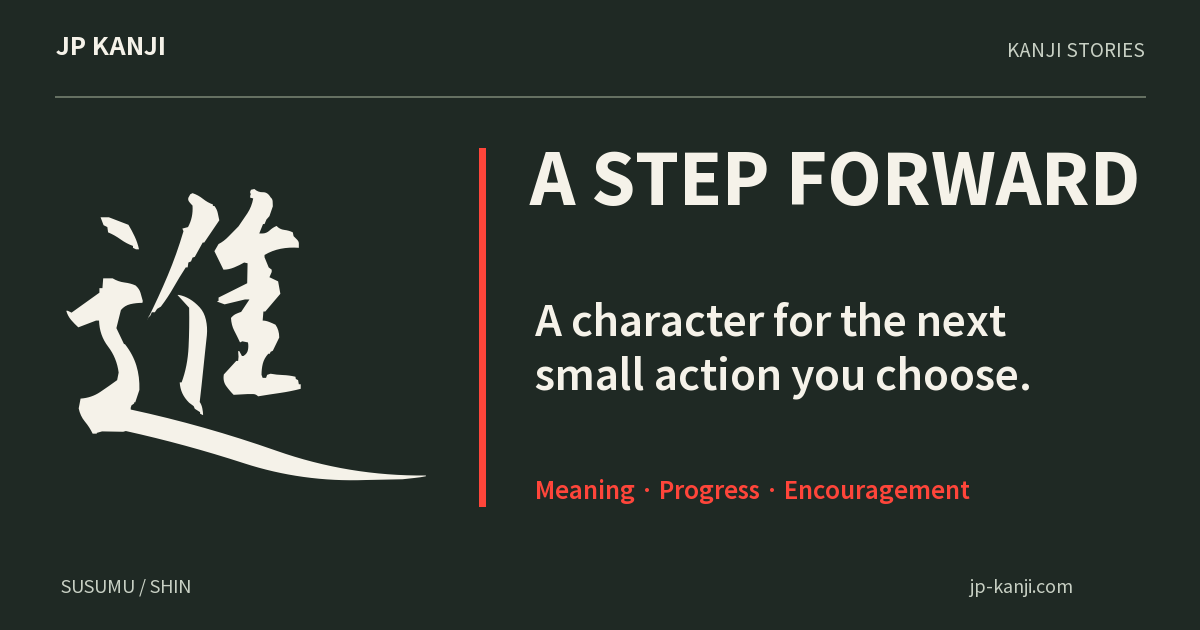
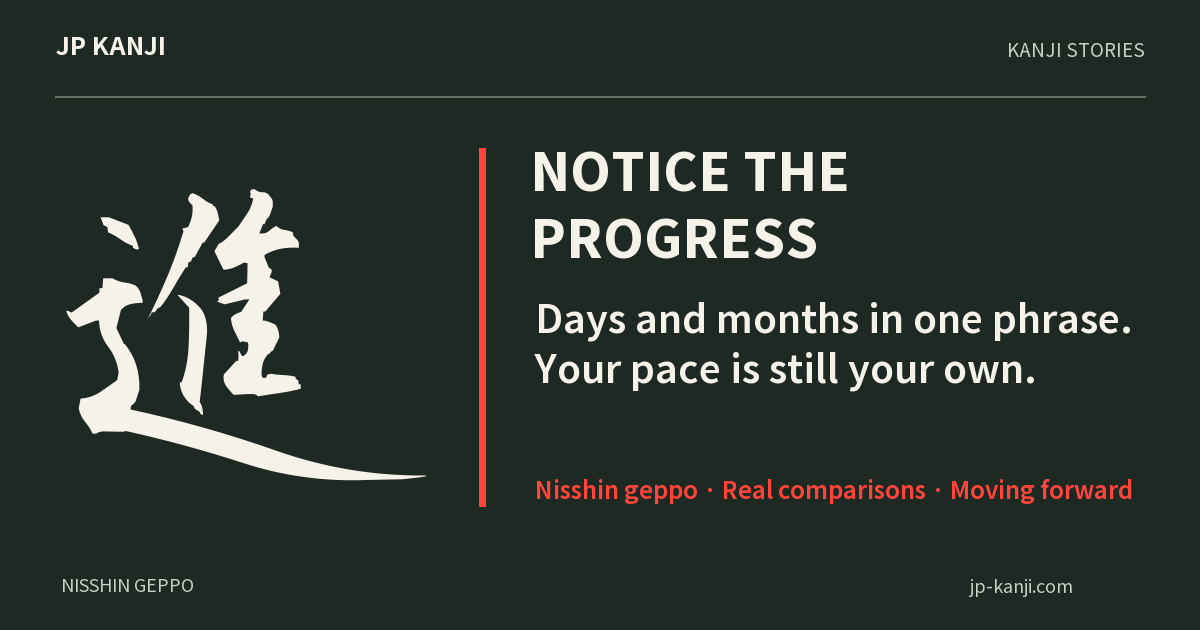
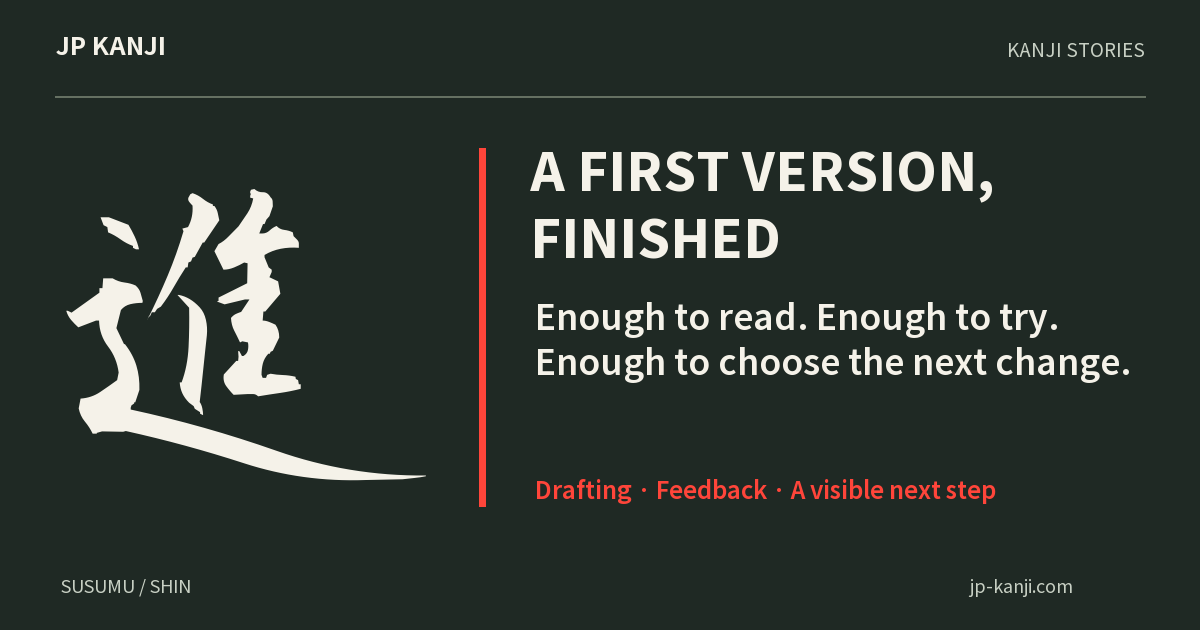
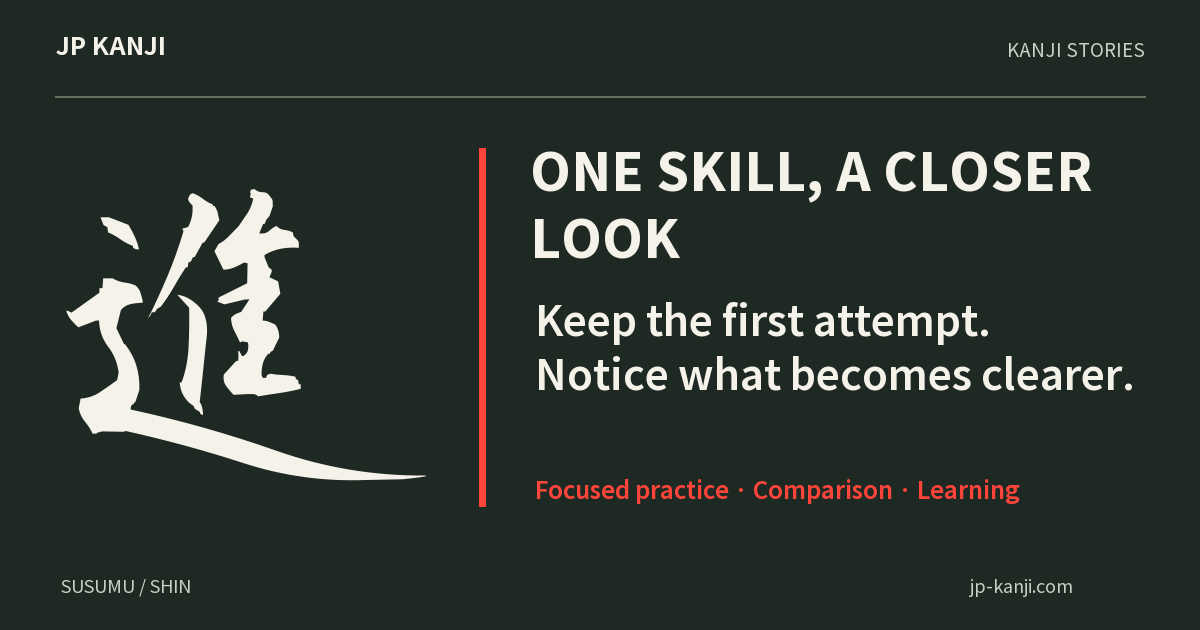
A character to carry with you 進
進 can mean moving forward. In this setting, it can recall learning supported by another person’s attention, without requiring both people to travel at the same speed.
Wear this character