EN · Language
EnglishDeutschFrançaisItalianoEspañol

Style & making susumu / shin

Plan an eight-page zine that feels complete when you turn the last page

Choose a small subject, make a numbered paper dummy and test the reading order. An eight-page booklet gives the idea a useful boundary.

Wear this character

Start with a scene

An interesting zine can begin with something smaller than a life story: five unusual doorways, a tiny collection of invented signs, or a week of lunch-break drawings. Choose one subject you can show through a few pages. Write a sentence about what the reader will encounter. This is a private guide for your decisions, not a promise that every page needs to explain a large theme.

A closer look

Make the empty booklet before filling it

Fold two sheets in half and place one inside the other to make an eight-page paper dummy. Number every page in reading order, including the front and back covers. Give each page a job before designing it: introduction, first example, contrast, close view, a small surprise, a pause, an ending. Some of those jobs may share a spread. Leave a quiet page if the next image needs room.

Sketch directly on the dummy before arranging a printable version. The order on a flat sheet can differ from the order in the assembled booklet, so check with a physical proof. Turn every page, look into the fold and inspect whether small text remains readable. If an image loses an important edge, change the placement before making more copies. For a first experiment, a hand-drawn booklet is a complete result in its own right.

See it in words

進む
susumuTo move forward
進める
susumeruTo move something forward
前進
zenshinForward movement
Examples of usage, not a diagram of the character’s historical development.

A meaning to make your own

A thought to give

Give the booklet with a short dedication, or pair a 進 design with a friend’s first small publication. Celebrate the finished object at its own scale; it does not need to be the beginning of a commercial project.

Make a gift card

One more question

What if the subject will not fit into eight pages?

Choose a narrower question or make this issue about one part. Do not shrink every caption until it is difficult to read. The page limit is a useful editing choice, and you can change it if the material genuinely needs another format.

A character to carry with you 進

進 can mean moving forward. A small zine makes that movement tangible as a sequence of pages. The character can mark the moment when a private collection of ideas becomes an object someone else can hold and explore.

Wear this character
進

進

Share this story

More about this character 進

All stories →

Everyday stories

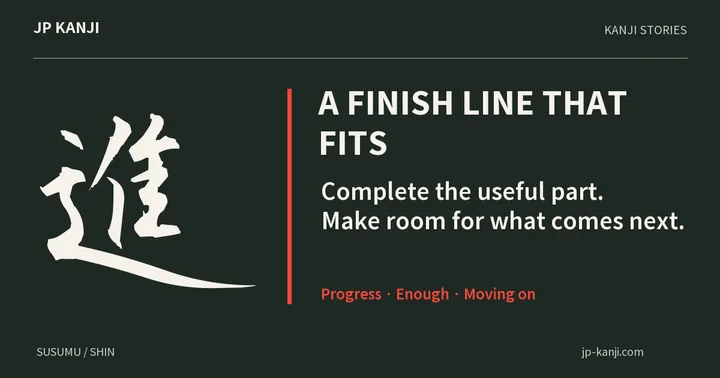
How to decide when a small project is done

Define a useful finish line before polishing forever. Progress can mean completing, handing over and making room.

Read the story

Meaning & background

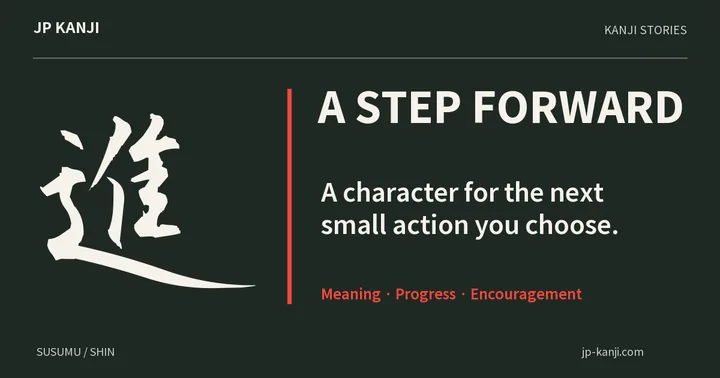
進: the Japanese kanji for moving forward, one step at a time

Learn how 進 appears in words about advancing, then find a way to make the character an encouraging reminder rather than a demand.

Read the story

Style & making

Make a paper shape move in a short stop-motion loop

A fixed camera, a paper shape and a few small movements are enough to explore animation. Plan the return to the starting point as carefully as the movement itself.

Read the story

Everyday stories

Name creative file versions so you can find the one you meant

Separate working drafts, meaningful alternatives and exported copies. A small naming rule makes it easier to return to a design without guessing which file is final.

Read the story
12 more stories

Style & making

Turn one event notice into a layout you can use again

Separate the parts that stay from the details that change. Test a reusable layout with awkward real examples before calling it a template.

Read the story

Everyday stories

Pack a small making kit someone can use without you beside them

Prepare a paper activity for another adult with clear contents, a visible first step and a way to keep unfinished work together.

Read the story

Everyday stories

Leave a restart note before putting a creative project aside

Help your future self return to an unfinished project with the current version, the open question and one clear next action.

Read the story

Everyday stories

Teach one small skill with a demonstration someone can follow

Show a clear result, slow down the difficult transition and give the learner a chance to try. A useful demonstration does not need to cover everything you know.

Read the story

Everyday stories

Make creative progress visible with a before-and-after record

Compare two versions of your work around one specific question. A small record can show what changed without turning a hobby into a scoreboard.

Read the story

Sayings & idioms

Nisshin geppo: reading 日進月歩 without turning it into a deadline

The expression describes continuing progress. Learn its rhythm, then distinguish a description of change from a demand to improve every day.

Read the story

Everyday stories

Practising one small skill without turning everything into a score

A narrow question can make a practice session easier to understand. Compare examples, then decide what to work on next.

Read the story

Everyday stories

Starting a hobby again after a long gap

Begin with the activity as it fits your life now. A return does not need to recreate your former schedule.

Read the story

Everyday stories

Helping the next person continue where you stopped

A useful handover explains the current state, the next action and the unresolved questions. Progress can mean making continuation easier.

Read the story

Everyday stories

Learning with a friend without turning it into a race

Two people can work on different questions and still help each other. Make the purpose of feedback clear before comparing results.

Read the story

Words & readings

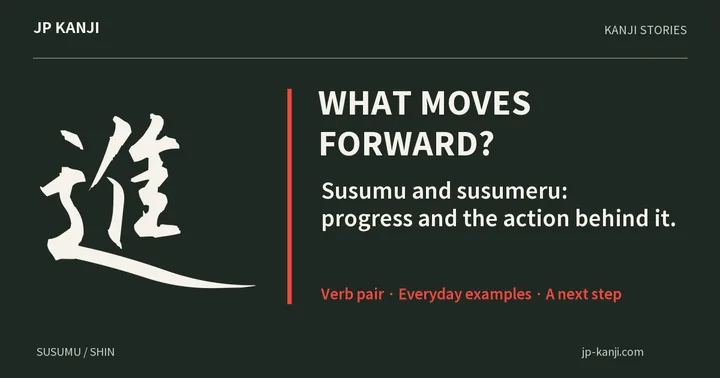
Susumu and susumeru: who is moving things forward?

Two verbs built from 進 place the focus differently. Learn the distinction with a meeting and a plan.

Read the story

Giving & choosing

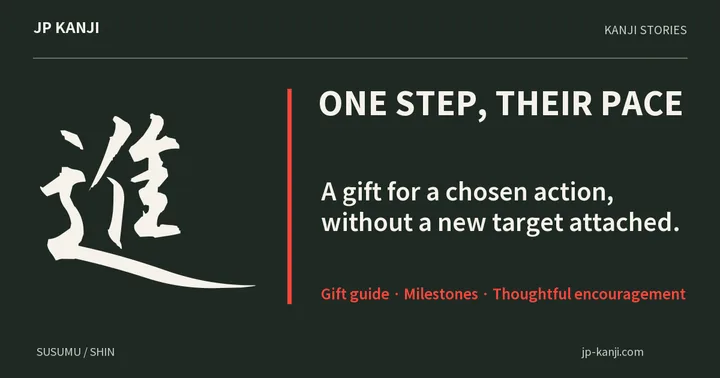
A 進 gift for a next step that belongs to them

Mark a launch, a return or a small achievement with encouragement that does not become a demand for speed.

Read the story

Another character, another perspective

All stories →

Sayings & idioms

Garyō tensei: the dragon and the finishing touch

Why would a painted dragon need one final detail? Explore 画竜点睛 and the difference between finishing a piece and adding more to it.

Read the story

Sayings & idioms

What makes a good ending?

After the final artwork or presentation, an impression remains. A thoughtful goodbye leads to 有終の美 and another way to think about beauty.

Read the story

Everyday stories

A final check before printing words that matter

Review wording, letterforms and placement separately before approving a small print project. Keep the approved version easy to identify.

Read the story