Sayings & idioms nisshin geppo
Nisshin geppo: reading 日進月歩 without turning it into a deadline
The expression describes continuing progress. Learn its rhythm, then distinguish a description of change from a demand to improve every day.
Wear this characterMeaning at a glance
日進月歩, nisshin geppo, describes ongoing progress. [1] The day and month in its written form give it a memorable rhythm. They do not provide a measured schedule for how much an individual must achieve before bedtime.
See it in words
- 日進月歩
- nisshin geppoContinuing progress from day to day
- 進歩
- shinpoProgress or advancement
- 進
- shinAdvancing; a character within the expression
A closer look
A description is not a personal timetable
Imagine comparing two versions of a drawing tool made several years apart. The newer one may make a once awkward operation simple. That scene helps illustrate change over time. It tells us nothing by itself about whether every artist should replace a familiar tool or learn every new feature immediately.
For a project of your own, choose something you can actually compare: a clearer sketch, a more accurate pronunciation, or a task completed with fewer interruptions. Save an earlier example and revisit it later. This is our suggested way to notice progress; it is not a definition of the idiom or proof that improvement happens at a constant rate.
A meaning to make your own
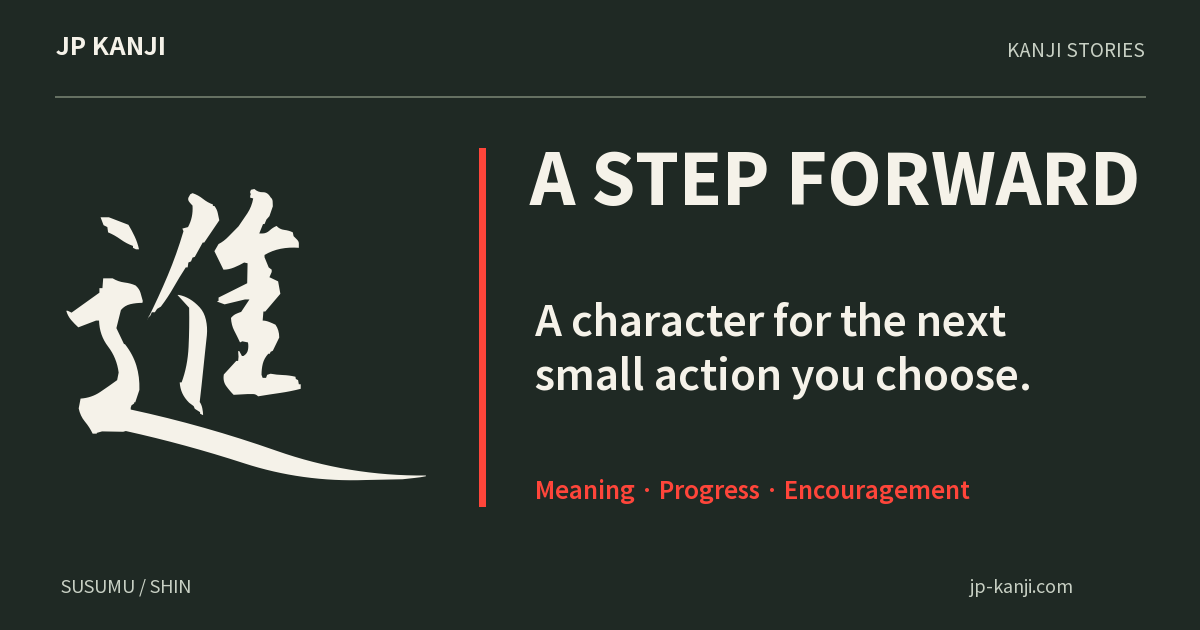
進 carries the idea of moving forward. [2] The single-character garment can mark a direction you chose without printing a productivity slogan. Let it stand for the step that matters to you, rather than someone else’s pace.
A thought to give
“I can see how much clearer your work has become.” Point to a real example when giving 進 to someone. A specific observation recognises their effort more gently than an instruction to keep improving forever.
Make a gift cardOne more question
Does 日進月歩 promise that progress is automatic?
No promise follows from the phrase alone. It describes a pattern of advancement; it does not explain its causes or guarantee future results. In a personal message, say what you have noticed and leave room for an uneven learning process.
Sources & editorial approach
Sources may be in Japanese or English.
Readings and cultural references are checked against the sources below. Styling and gift ideas are our suggestions. Written with AI assistance and source checks.