EN · Language
English日本語DeutschFrançaisItalianoEspañol

Style & making susumu / shin

Finishing a first version that someone can respond to

A usable draft needs a clear job. Decide what it should let another person see before polishing every corner.

Wear this character

Start with a scene

You have polished the first page of a small booklet while the last page is still blank. A reader can admire the opening but cannot tell you whether the whole sequence makes sense. The next useful step may be a complete rough version rather than a more beautiful first page.

A closer look

Make the version complete enough for its question

Write the job of this version in one sentence: test the order, explain the idea, or show the size. Include enough to do that job and label temporary material clearly. A rough image is acceptable when nobody mistakes it for a final promise.

Give a reader a focused request, then note where they hesitate without immediately explaining everything. Their confusion may reveal missing context. Choose the next revision from that observation. Finishing a first version creates something you can discuss; it does not require declaring the work finished forever.

See it in words

進む
susumuTo move forward
進める
susumeruTo move something forward
前進
zenshinForward movement
Examples of usage, not a diagram of the character’s historical development.

A meaning to make your own

A thought to give

“For the version that gave the conversation a starting point.” Honour what became possible, not a prediction of future success.

Make a gift card

One more question

Should I show every rough draft?

No. Choose a reader and stage that suit the question. Some drafts are for private exploration; others become useful when someone else can respond.

A character to carry with you 進

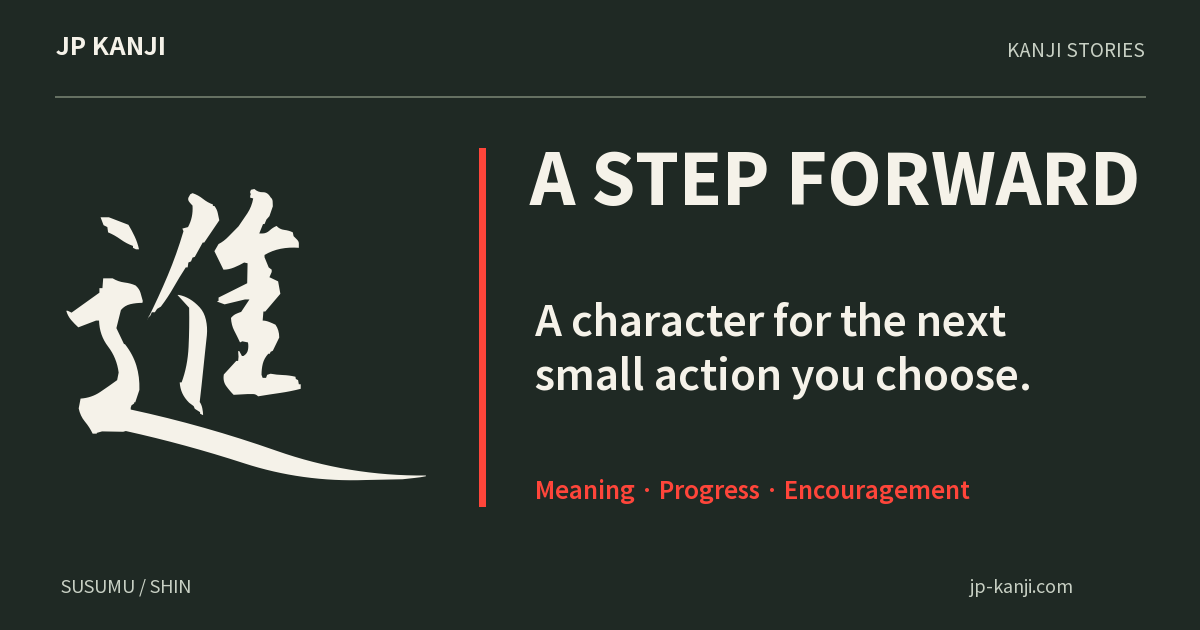
進 can express moving forward. For this project, the character can mark the step from an idea held privately to a version another person can usefully see.

Wear this character
Share this story

More about this character 進

All stories →

Meaning & background

進: the Japanese kanji for moving forward, one step at a time

Learn how 進 appears in words about advancing, then find a way to make the character an encouraging reminder rather than a demand.

Read the story

Sayings & idioms

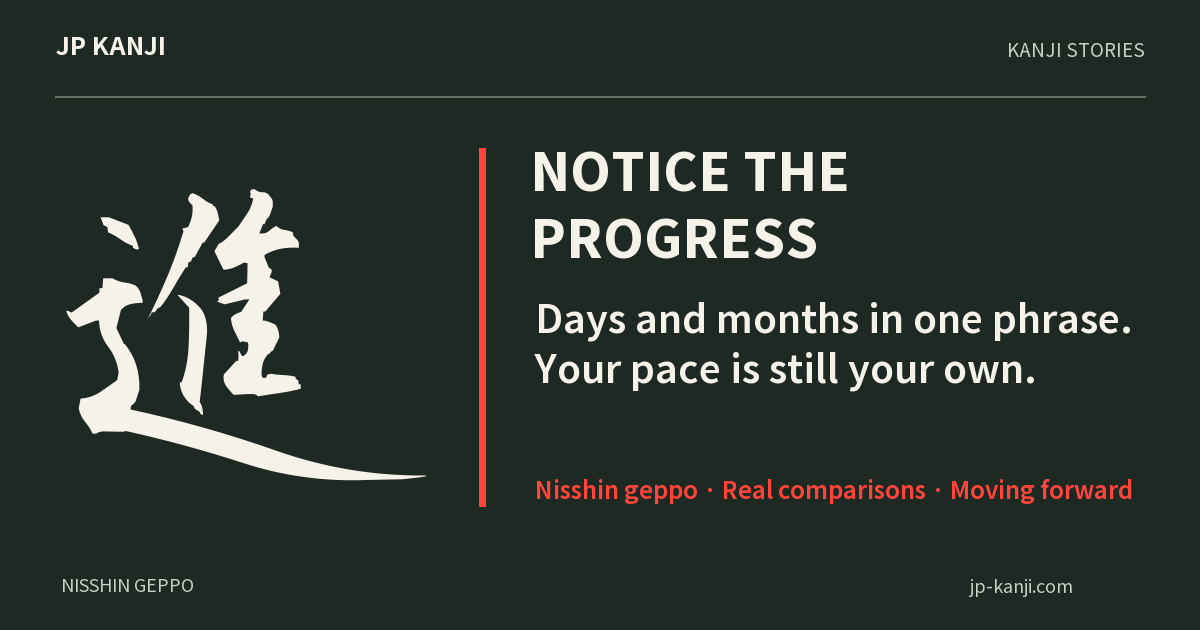
Nisshin geppo: reading 日進月歩 without turning it into a deadline

The expression describes continuing progress. Learn its rhythm, then distinguish a description of change from a demand to improve every day.

Read the story

Everyday stories

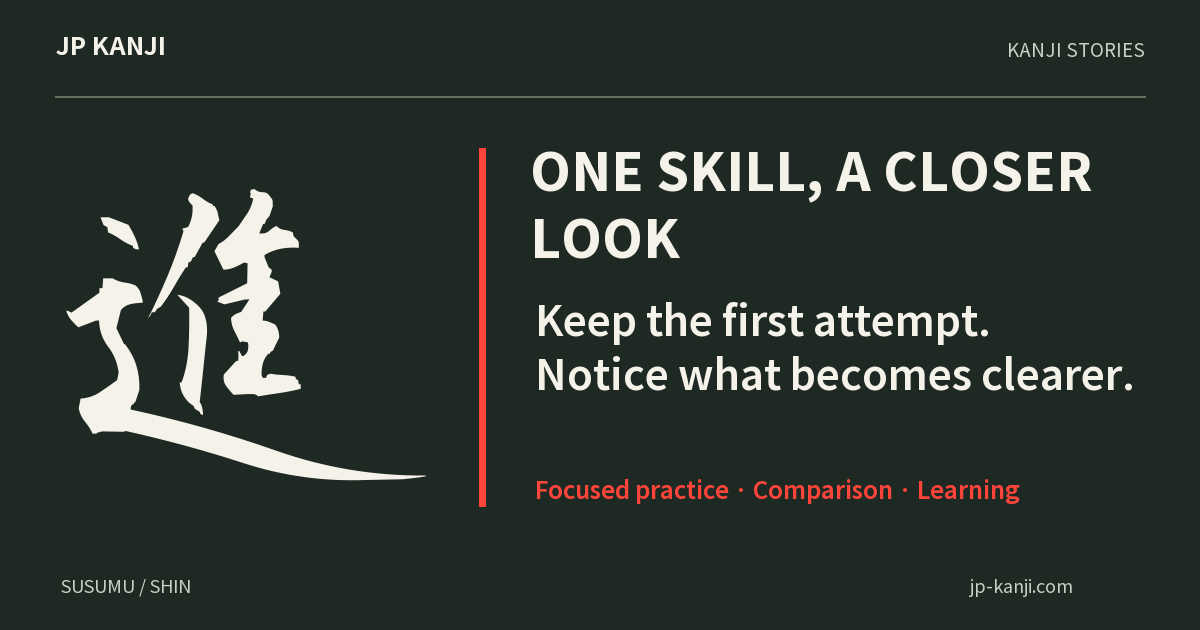
Practising one small skill without turning everything into a score

A narrow question can make a practice session easier to understand. Compare examples, then decide what to work on next.

Read the story

Everyday stories

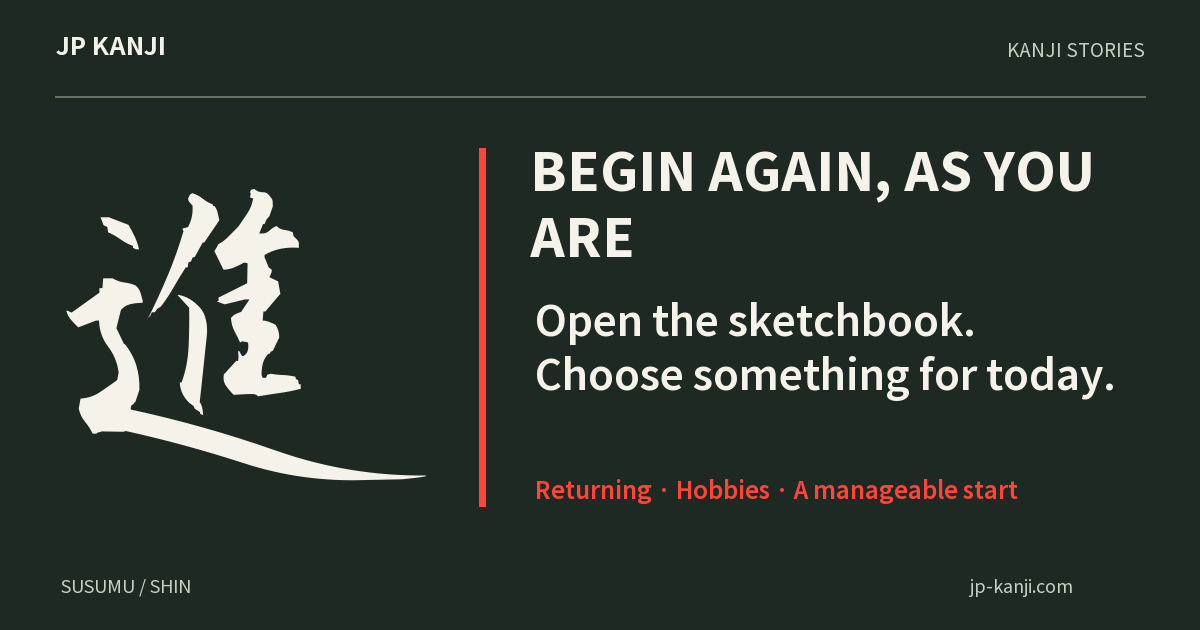
Starting a hobby again after a long gap

Begin with the activity as it fits your life now. A return does not need to recreate your former schedule.

Read the story
4 more stories

Everyday stories

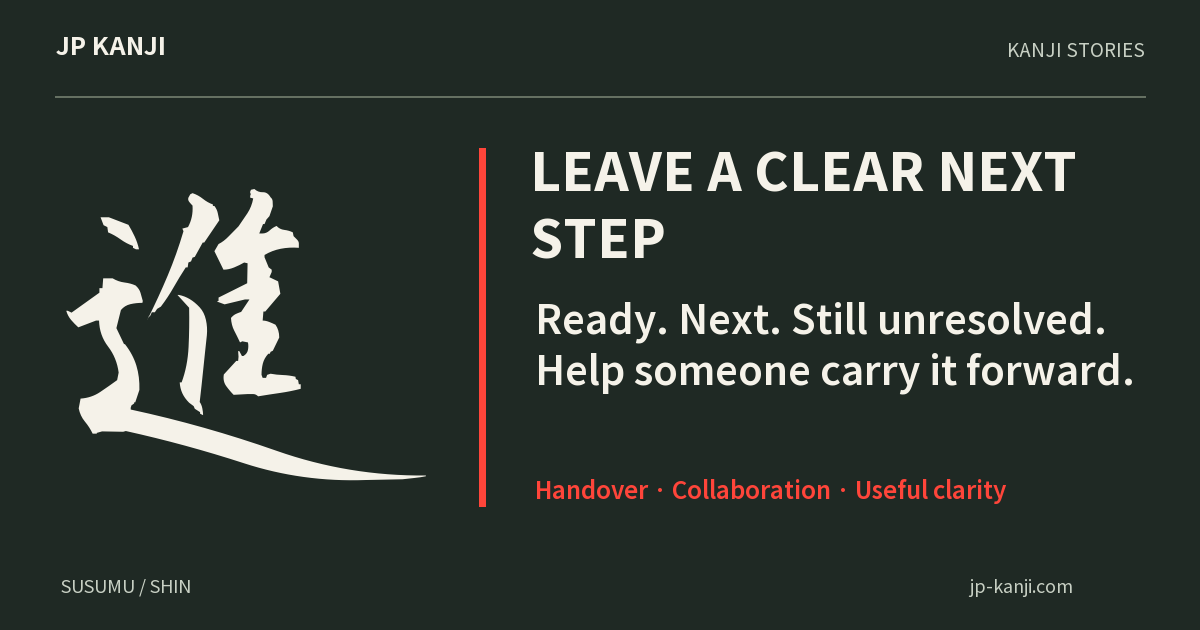
Helping the next person continue where you stopped

A useful handover explains the current state, the next action and the unresolved questions. Progress can mean making continuation easier.

Read the story

Everyday stories

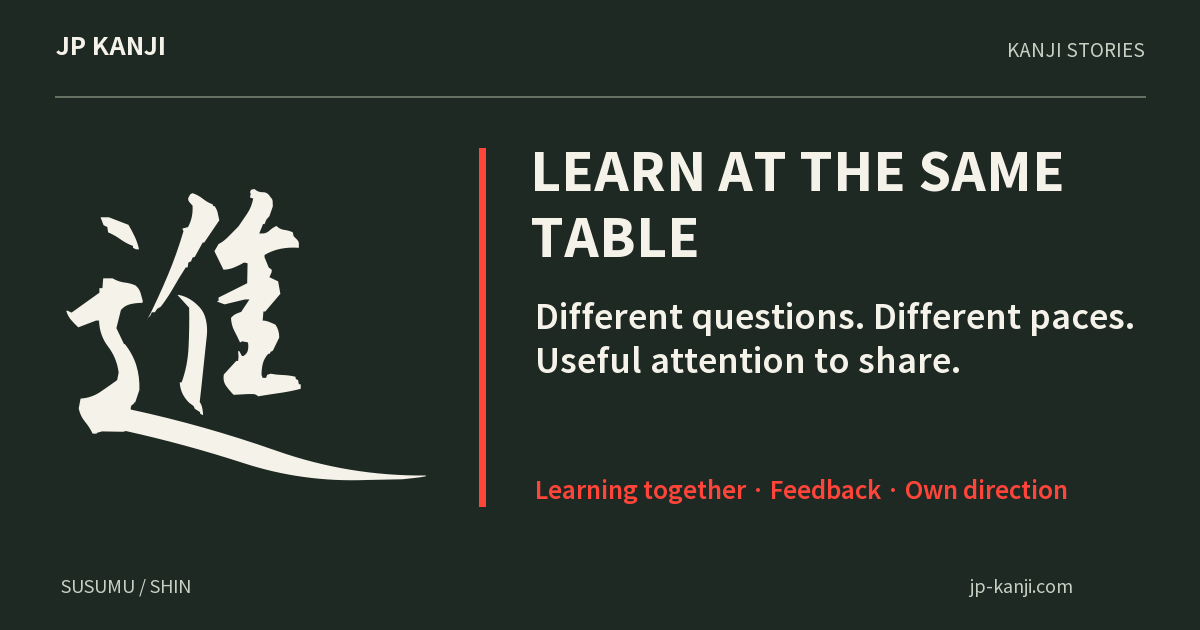
Learning with a friend without turning it into a race

Two people can work on different questions and still help each other. Make the purpose of feedback clear before comparing results.

Read the story

Words & readings

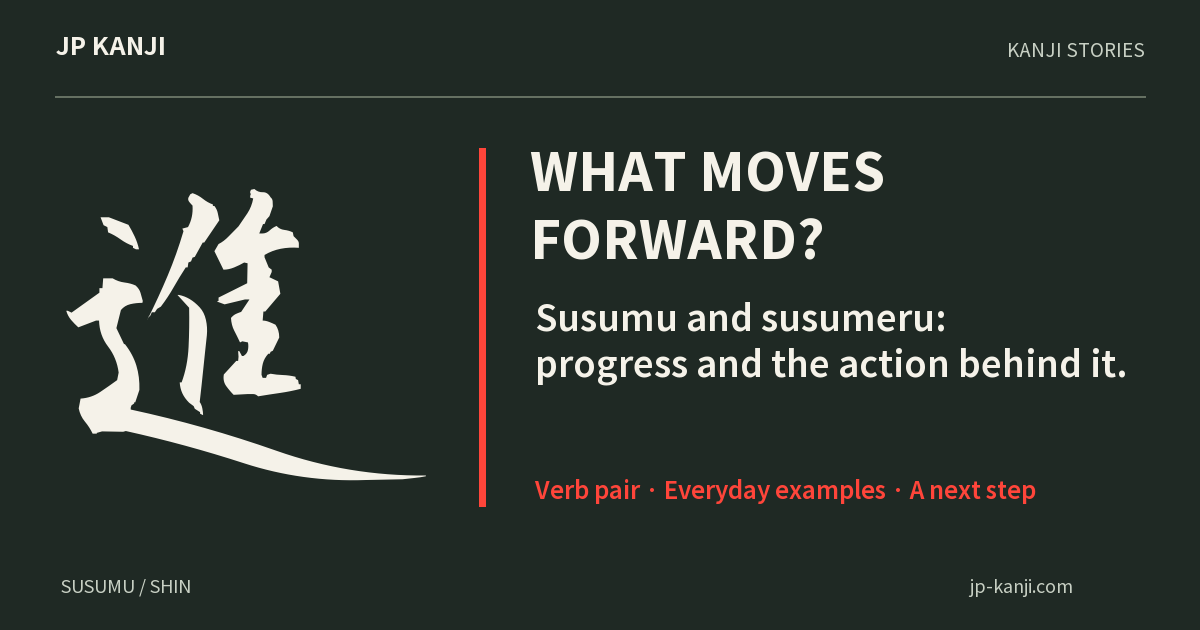
Susumu and susumeru: who is moving things forward?

Two verbs built from 進 place the focus differently. Learn the distinction with a meeting and a plan.

Read the story

Giving & choosing

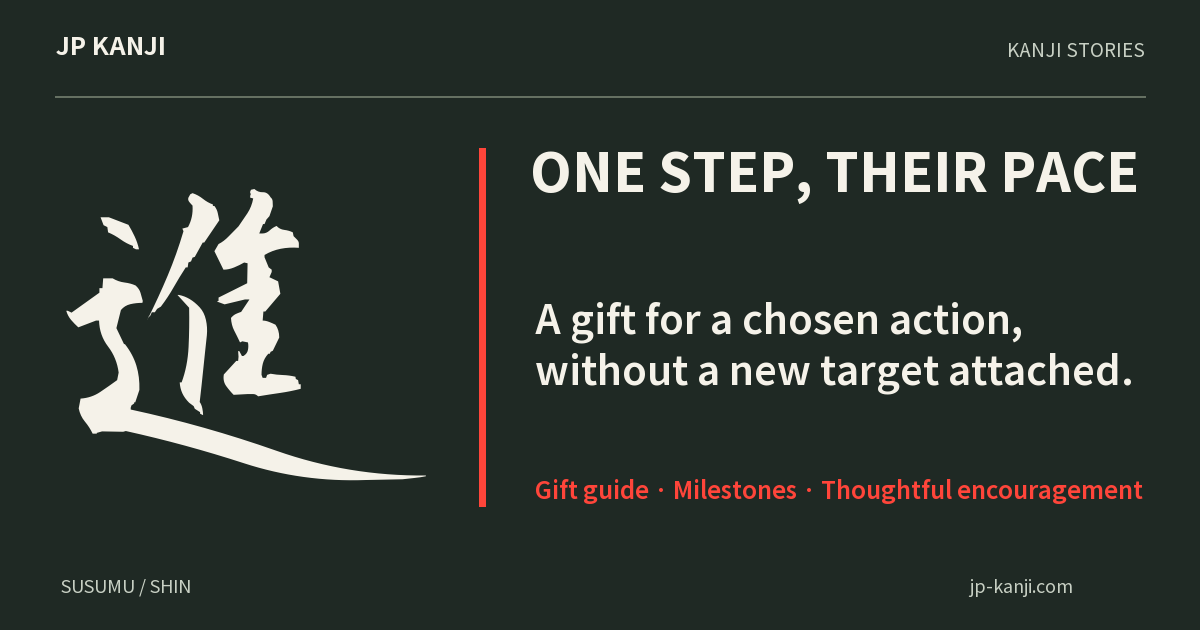
A 進 gift for a next step that belongs to them

Mark a launch, a return or a small achievement with encouragement that does not become a demand for speed.

Read the story

Another character, another perspective

All stories →

Culture & objects

Why a Japanese dragon can bring rain, not fire

A dragon beside water opens a different story from the familiar fire-breathing monster. Start with the word ryūjin, then look again.

Read the story

Culture & objects

What makes a shared meal feel shared?

Preparing, passing and clearing can matter as much as the menu. Washoku offers a cultural starting point for noticing those connections.

Read the story

Culture & objects

Fūrin: hearing the breeze before you notice it

A small bell makes a moving breath of air audible. Explore the object, its sound and the summer association without confusing them.

Read the story